


People with active brown fat are significantly less likely to develop type 2 diabetes, high blood pressure and psychiatric conditions such as depression and anxiety, according to the largest study of its kind. Researchers used artificial intelligence to analyse 18F-FDG-PET-CT scans from 101,243 adult patients, mapping the clinical effects of the calorie-burning tissue in a paper published in the journal Nature.
Detectable brown fat was associated with a lower prevalence of cardiometabolic and psychiatric conditions, while higher measured activity in individual depots was linked to more favourable cardiometabolic outcomes. The work was led by the Laboratory of Molecular Metabolism at Rockefeller University under Paul Cohen, together with researchers Heiko Schöder and Daniel Lafontaine from Memorial Sloan Kettering Cancer Center.
The patients whose scans were analysed had received PET/CT imaging for cancer care at Memorial Sloan Kettering Cancer Center, giving researchers an unusually large window into how the tissue behaves across ages, body types and health histories.
Brown fat linked to heart and mental health
The team considered more than 500 diagnostic codes — far more than earlier studies — and examined six depots of the tissue across the body. Increased activity in the armpit depot was most strongly tied to cardiometabolic health. The analysis also uncovered a new connection: patients with more of the tissue had a lower incidence of anxiety and depression, a link reported for the first time in this study.
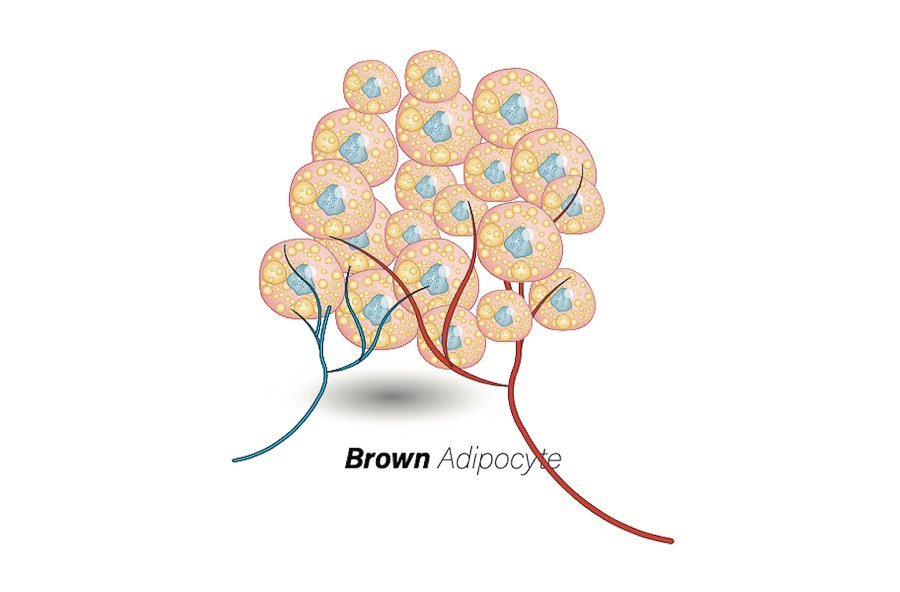
Brown fat, also known as brown adipose tissue, differs from ordinary white fat. Instead of storing excess calories, it pulls sugar and fatty acids from the bloodstream and burns them to generate heat. Tucked around the neck, armpits and chest, the tissue was long thought to vanish after infancy until landmark research in 2009 proved that adults retain it.
How brown fat burns energy
The AI-enabled analysis doubled the patient numbers of the team’s 2021 study of about 50,000 patients, which had found lower odds of coronary artery disease and type 2 diabetes in people with more of the tissue. The new work shows that not only the presence but the activity level of brown fat matters: the more active it is, the greater the apparent protection. The researchers also mapped the associations separately for each of the body’s six depots, finding that the relationships held across all of them even though the armpit depot showed the strongest signal.
Because the study is retrospective, more work is needed to prove that the tissue itself causes the benefits rather than merely accompanying them — a caveat acknowledged by the authors and outside experts alike. Outside experts not involved in the work called the analysis impressive in scope while stressing that only prospective trials can establish whether activating the tissue directly improves health outcomes.
Could a blood pressure drug activate brown fat?
The study’s pharmacological profiling flagged losartan, a widely prescribed angiotensin receptor blocker used to treat high blood pressure, as a candidate for further investigation. Experiments in cultured fat cells and mice showed the drug increased thermogenic activity and energy expenditure, although its effects on the human tissue have not been tested in clinical trials.
Crucially, the researchers found that losartan’s effects on the tissue were driven by different molecular pathways from those behind its blood pressure-lowering action. That separation is advantageous, the team said, because it means future therapies could potentially stimulate brown fat in people with normal blood pressure.
- 101,243 patients analysed with AI — the largest study of its kind
- Greater tissue activity tied to better heart and metabolic health
- First reported link between the tissue and lower anxiety and depression
- Losartan boosted thermogenic activity in cells and mice; human trials still pending
For now, the tissue can also be activated by cold exposure and exercise, researchers note — but the hunt is on for safe medicines that can switch it on. Outside experts have described the work as one of the most comprehensive studies in the field. Whether boosting brown fat becomes a clinical strategy will depend on trials that test the idea in people. The team plans further work to identify which patients might benefit most from therapies that raise the tissue’s activity.