
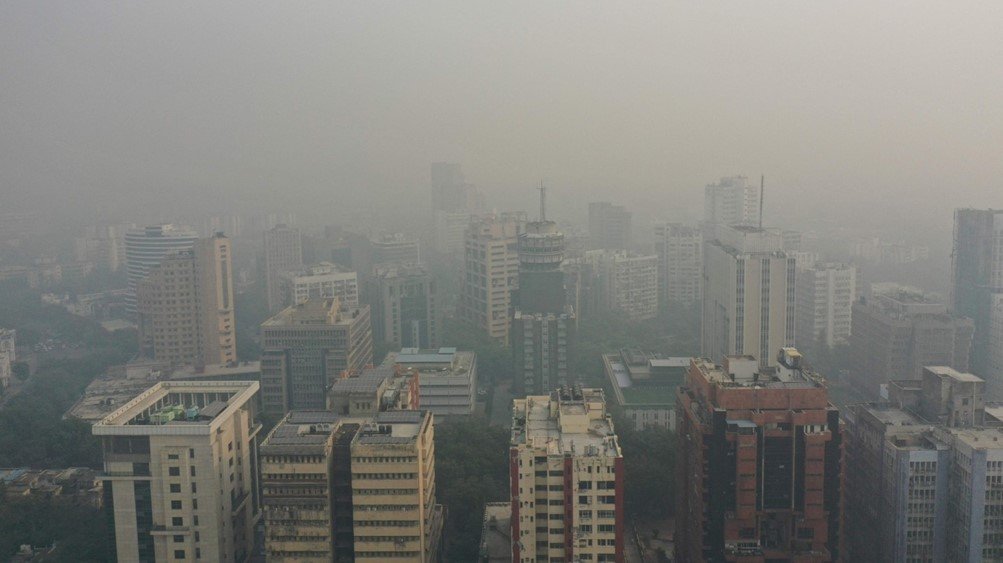


Delhi pollution curbs took effect on Sunday, 1 November 2026, as the capital began its fixed winter plan to cut smog at the start of the season when cold air traps pollutants close to the ground. The measures cover vehicles, offices, parking and building sites, and they will stay in force for different periods through January and February 2027.
The Delhi pollution curbs were notified by the Delhi government on 23 June 2026. They apply on set dates regardless of the air quality recorded on a particular day, which sets them apart from the Graded Response Action Plan, under which the Commission for Air Quality Management adds or withdraws restrictions in stages based on current or forecast conditions.
Delhi Chief Minister Rekha Gupta appealed on Saturday to citizens, vehicle owners, construction agencies, institutions, resident welfare associations and commercial establishments to follow the restrictions from Sunday. The Environment Department said the Transport Department, Delhi Traffic Police, Delhi Pollution Control Committee, Municipal Corporation of Delhi and other agencies had been directed to enforce them.
Delhi pollution curbs for vehicles entering the capital
Petrol and diesel vehicles registered outside Delhi that do not meet BS-VI emission standards are barred from entering the capital from 1 November 2026 to 31 January 2027. The ban covers vehicles at BS-IV or older standards. Electric vehicles, CNG vehicles, ambulances, fire tenders, police vehicles and other notified exempt vehicles are not covered by the entry ban.
Under the Delhi pollution curbs, vehicles without a valid Pollution Under Control Certificate will also be denied fuel at petrol stations. The Delhi pollution curbs link fuel supply to that certificate, and enforcement teams will monitor compliance through automatic number plate recognition cameras and the artificial intelligence enabled Integrated Command and Control Centre. Reports put the number of fuel stations with such cameras at around 500.
Environment Minister Manjinder Singh Sirsa told The Hindu that the vehicle restriction applies to non-Delhi registered vehicles below BS-VI standards.
Delhi pollution curbs for offices, parking and building work
Government and private offices in Delhi are to keep physical attendance at a maximum of 50 percent of staff until 31 January 2027, with the rest working from home. Essential and emergency services are exempt. To stagger travel, Municipal Corporation of Delhi offices will run from 8:30 a.m. to 5 p.m., while Delhi government offices will run from 10 a.m. to 6:30 p.m. between 1 November and 28 February 2027.
Under the Delhi pollution curbs, parking charges at authorised parking facilities across Delhi will be doubled from 1 November 2026 to 28 February 2027. Parking spaces owned and managed by the Delhi Metro Rail Corporation are excluded from the increase. The Delhi pollution curbs use higher parking charges to discourage private vehicle use during the winter months.
All dust generating demolition and outdoor construction activity is banned from 1 November to 31 January 2027, with essential public infrastructure projects exempt under conditions. The construction ban is aimed at dust, one of the main contributors to winter smog alongside vehicle exhaust and smoke from burning crop residue in neighbouring states.
Delhi pollution curbs and the scale of winter smog
Delhi is one of the most polluted capitals in the world, and the smog that settles over the city from November to January is a recurring winter event. Cooler temperatures trap pollutants close to the ground, and monitors frequently record fine particulate matter at levels far above health guidelines during peak winter months.
On Sunday, monitors recorded PM2.5 at 201 micrograms per cubic metre, over 13 times the World Health Organization daily guideline, a reading that was likely helped by intermittent rain over the previous few days. PM2.5 refers to tiny particles that can penetrate deep into the lungs and bloodstream. Last year, pollution levels in Delhi peaked at 846 micrograms per cubic metre, or 56 times the WHO guideline.
Vehicles account for 23 percent of Delhi winter pollution, while biomass burning, including farm stubble fires, contributes 20 percent, according to India’s environment ministry. A 2024 study published in The Lancet Planetary Health estimated that 3.8 million deaths in India between 2009 and 2019 were linked to air pollution.
Under the Delhi pollution curbs, similar efforts in previous years have done little to prevent the annual smog, and the test for the new fixed term plan will be whether enforcement holds through the winter. The vehicle entry ban and the construction ban run to 31 January 2027, while doubled parking charges and staggered office hours run to 28 February 2027.