


The Disney Adobe AI deal will put custom generative AI models into the media giant’s theme parks, studios and sports broadcasts, the two companies said on Monday. Disney and Adobe struck a multi-year agreement to co-develop models trained on Disney’s own characters, worlds and visual styles, with the models kept private and owned by Disney. Adobe becomes Disney’s official AI Innovation Partner under the deal, which was announced at Adobe MAX in Miami Beach. Neither company disclosed financial terms.
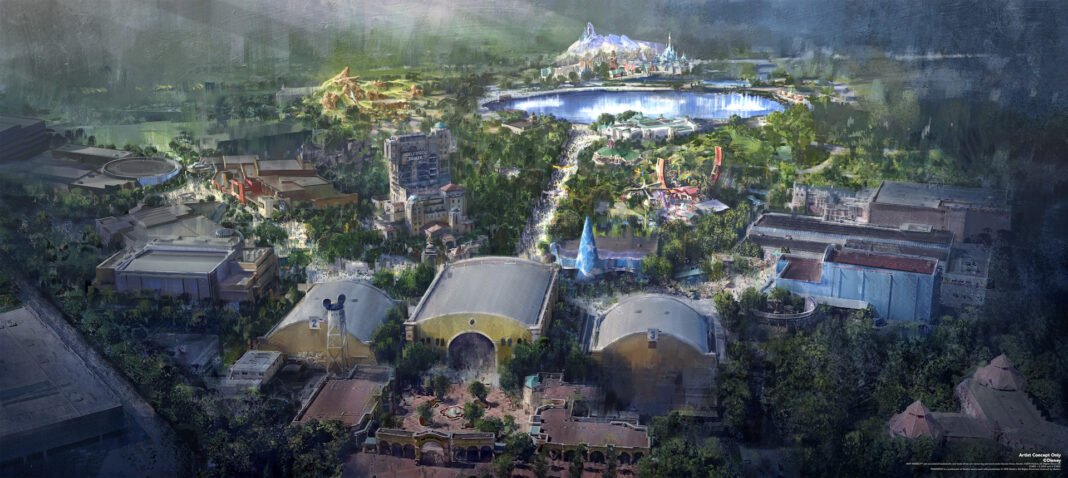
Under the Disney Adobe AI deal, the work starts with Walt Disney Imagineering, the design and research arm behind Disney’s parks, resorts and cruise lines. Imagineering is already using two models built with Adobe’s Firefly Foundry: one that turns hand drawn sketches into finished 2D concept art, and one that generates images true to Disney franchises such as Frozen, Cars, Moana and Lilo and Stitch. Company officials said the tools have cut concept timelines from months to hours or days. The models are built on Imagineering assets and on Adobe’s commercially available Firefly models.
Disney Adobe AI deal reaches studios and ESPN
The Disney Adobe AI deal also covers Disney’s StudioLAB, the innovation hub inside Walt Disney Studios, where the companies will test new production workflows. Adobe will work with ESPN Edge, the sports network’s innovation center, to use AI tools to raise fan engagement and bring more of ESPN’s archive to audiences. Adobe will give Disney early access to Firefly, Firefly Foundry, Premiere and Photoshop, along with dedicated engineering and research staff. The agreement is the latest in a run of AI partnerships Disney has struck as it looks for ways to use the technology across its businesses.
Under the Disney Adobe AI deal, the models will be trained only on Disney’s own material, and the companies said the outputs are meant to be commercially safe and ready for production. That matters to Disney, which is suing the AI image company Midjourney over copyright alongside Universal and Warner Bros. Discovery, with court filings due on 23 November. Disney also appointed Karandeep Anand, the former chief executive of Character.AI, as its first chief technology officer. The partnership follows the collapse of a planned $1 billion Disney investment in OpenAI, which ended in March 2026 when OpenAI shut down its Sora video tool.
Why the Disney Adobe AI deal matters for artists
The Disney Adobe AI deal raises the same questions that have followed AI in Hollywood: how artists are credited, whether jobs change, and what audiences will see. Neither company said whether Disney+ viewers will see AI generated content, or how artists will be credited for work the models produce. Adobe said Firefly Foundry lets a business build a model trained on its own content, keeping the output on brand and cleared for commercial use. Disney said the Imagineering models stay true to the visual language of its franchises, which the company has spent decades building.
For now the work is aimed at the design stage, not the screen. Concept art and early visuals are where the models are already in use, and the companies described the first phase as speeding up project development at Disney Experiences, the division that runs the parks, resorts and cruise lines. The Disney Adobe AI deal leaves wider use, such as full 2D to 3D prototyping, out of the announcement. The companies also said nothing about job numbers or costs, leaving the effect on Disney’s creative staff an open question.
The Disney Adobe AI deal gives Adobe its most prominent customer for Firefly Foundry, the enterprise service that builds a model for one company from that company’s own content. For Disney, it is a way to use generative AI without handing its characters to a model trained on the open internet. The test will be whether the tools stay in the design studio or spread to the films, shows and parks that audiences see. The companies said the work is already under way, so the first results will show up in how fast new attractions move from sketch to plan.