
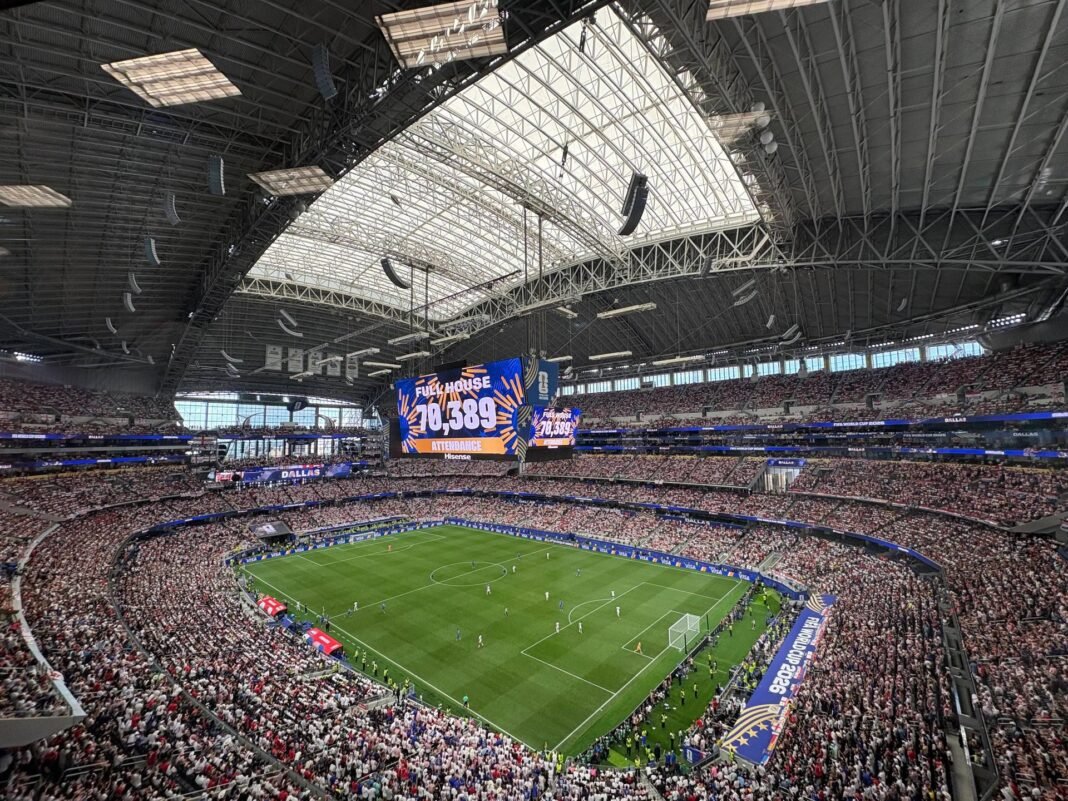


The FIFA World Cup lifted sales tax revenue in Dallas by more than $3 million, but the gain did not make up for months when the city’s sales tax came in below budget earlier in the year.
That is the picture from the city’s latest figures, reported by KERA on Tuesday. The FIFA World Cup brought a boost to Dallas in June and July, when nine matches were played at the stadium in Arlington, but under-budget months through the rest of the year offset the windfall, leaving the city’s sales tax revenue still short of what its budget had counted on.
Dallas had been behind on sales tax revenue well before the FIFA World Cup arrived. In a memo to the City Council in March, Chief Financial Officer Jack Ireland wrote that the city was $5 million behind on sales tax revenue, adding pressure as it debated whether to repair or relocate its nearly 50-year-old City Hall.
FIFA World Cup sales tax lift
Revenue was growing, up about 2 percent over the last year, but not fast enough to meet the city’s budget expectations, Ireland wrote. Sales tax revenue had fallen short of budget projections in most months, including nearly $3 million less in November and $1.5 million lower in January. The city launched its “Spend It in Dallas” campaign in November to encourage local spending.
The FIFA World Cup was supposed to help close that gap. Dallas boosters had projected up to $2.1 billion flowing into the region from the FIFA World Cup, and FIFA president Gianni Infantino has called the economic impact of the event equal to “three Super Bowls a day.” The Dallas-Fort Worth area hosted nine matches, including four knockout games and a semifinal on July 14 at AT&T Stadium in Arlington, which was called Dallas Stadium during the tournament.
The FIFA World Cup games did bring money in. Arlington Mayor Jim Ross said early returns looked strong, with June hotel revenue in Arlington topping $31 million, up from about $23.5 million in November 2024, when the city hosted three Cowboys home games and the Mike Tyson-Jake Paul fight. Ross put preliminary estimates of Arlington’s World Cup economic impact at around $160 million, roughly half of the city’s typical annual impact from AT&T Stadium.
Dallas budget gaps came first
Dallas, though, was already short before the first ball was kicked. By April the city was short about $34 million and had pressed the pause button, putting a freeze on hiring and on any spending that was not mission critical. The shortfall looked small against the city’s $5.2 billion budget for the year, but the causes behind it, a ballooning police budget under a voter-approved charter mandate, higher health insurance costs and a slowdown in sales tax revenue, were set to carry into the next budget.
The FIFA World Cup money that did reach Dallas came through sales tax on spending by visitors, not through the games themselves. Host cities and their local organising committees paid for security at the matches, for retrofitting stadiums to fit soccer and for running fan festivals. In return, they received no slice of game-day revenue from ticket sales, concessions, merchandise or parking, according to an investigation by ProPublica, the Texas Tribune and the Houston Chronicle.
That deal was struck long before the FIFA World Cup. Cities had to agree to FIFA’s demands before the United States, Mexico and Canada even submitted their bid in 2017 to host the World Cup, and many of the host city contracts remain secret, with financial details redacted.
FIFA World Cup costs fell on host cities
Dallas also spent $15 million to upgrade part of the Kay Bailey Hutchison Convention Center to host the International Broadcast Center for the tournament. Federal and state money helped offset some of the costs, with Governor Greg Abbott announcing $116 million in state public safety grants for Texas host cities, part of a broader $625 million federal programme for all US host cities.
FIFA has said the World Cup would generate $11 billion in profits, while the 11 US host cities agreed to shoulder hundreds of millions of dollars in costs between them. Houston and Dallas will fare slightly better than some host cities because they have access to the state’s Major Events Reimbursement Program, though that does not mean Dallas will make money back on its outlay.
The full accounting is still months away. Organisers say they are still separating forecasts from reality on hotel, sales, rental car and alcohol tax collections across the region, with venue move-out costs stretching into late August. The figures show the tournament delivered for Dallas, with more than $3 million in extra sales tax, and that the money was not enough to cover the shortfalls that came before it.