
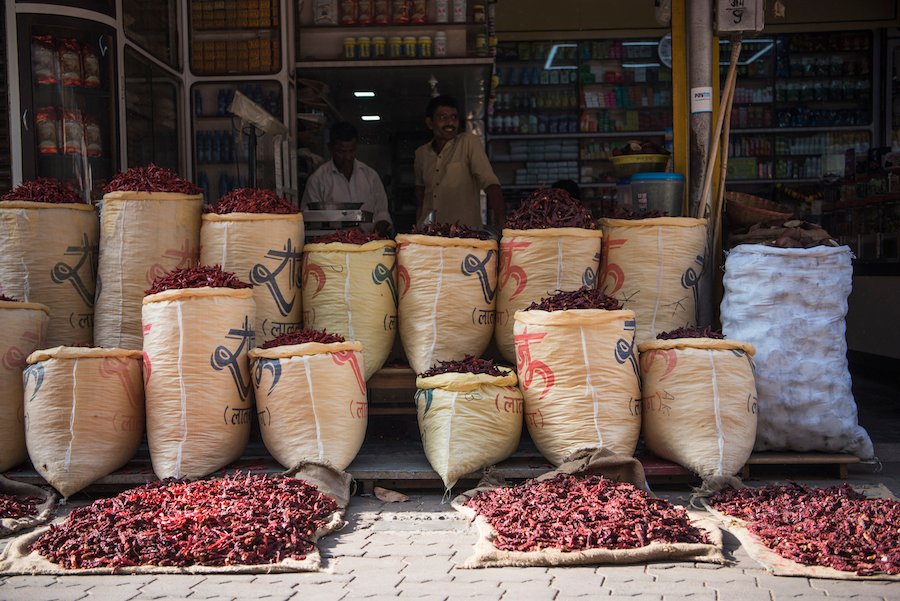


Mumbai, Oct 18 (TNS): The Maharashtra loose masala ban has split traders at Mumbai’s iconic Lalbaug spice market, one of the city’s oldest hubs for ground spices, as the state Food and Drug Administration’s order prohibiting the sale of loose and unpackaged spice powders takes effect across Maharashtra. The directive, issued by Food Safety Commissioner Tukaram Mundhe on October 15, requires all spice powders and blended masalas to be packed and sealed at the place of manufacture before distribution or sale.
The order — part of a wider state crackdown on food adulteration — covers a broad sweep of everyday products: turmeric, chilli, coriander, cumin, black pepper, cinnamon, cardamom, cloves, asafoetida, saffron, garam masala and other blended spice mixtures. It applies to the entire supply chain: manufacturers, wholesalers, retailers, traders, e-commerce platforms, hotels, restaurants, caterers and institutional kitchens.
The regulator’s stated aim is to improve traceability and reduce adulteration and contamination in the spice supply chain. According to the FDA, loose spices are vulnerable to tampering, with adulterants such as artificial colourants, fillers and spent or extracted spices — from which essential oils have been removed — a persistent food-safety concern. Under the new framework, sealed packs must carry the product name, full ingredient list, manufacturer details, FSSAI licence number, batch number, packing date and a best-before date, and businesses can no longer make unproven claims about purity or organic status.
Why Lalbaug traders are divided over the Maharashtra loose masala ban
At Lalbaug’s famous Mirchi Galli and the surrounding spice lanes, the Maharashtra loose masala ban has landed very differently depending on whom you ask. A section of established traders backs the move, arguing that sealed, labelled packaging will level the playing field by making it harder for fly-by-night operators to sell adulterated or inferior powder at lower prices and undercut honest sellers. For them, the ban is long-overdue consumer protection that also protects the reputation of Mumbai’s traditional spice trade.
But many smaller grinders and retailers — the backbone of the Maharashtra loose masala ban’s affected trade — fear for their livelihoods. The new rules mean a mere trade licence is no longer enough to grind or manufacture spices; only a licence from the national food regulator counts. Smaller units worry about the cost of compliant packaging, labelling and licensing, and about enforcement inspections landing hardest on the smallest players while larger brands sail through.
The Maharashtra loose masala ban also rewrites a centuries-old way of buying. For generations, households across Maharashtra have bought spices scooped from open sacks, ground fresh at neighbourhood mills, and trusted the shopkeeper’s blend over a branded pack. The Maharashtra loose masala ban effectively ends that retail format for powders and blended mixes, a cultural shift as much as a regulatory one.
How the Maharashtra loose masala ban will be enforced
The FDA has signalled that enforcement will begin with inspections at wholesale markets and institutional buyers, with penalties under the Food Safety and Standards Act, 2006 — including seizures, licence cancellations, fines and possible criminal prosecution — for non-compliance. Industry bodies and traders are expected to seek clarification on transition timelines, and the exact scope of any grace period or exemptions should be confirmed from the official FDA order.
Officials have also flagged a series of related prohibitions: the addition of artificial colours, synthetic chemical components, sawdust or foreign adulterants is banned; selling spent or extracted spices is banned; the use of ethylene oxide is strictly prohibited; and spices can no longer be dried in public spaces, on asphalt roads, near gutters, garbage dumps or cattle sheds. Storage facilities must be clean, dry and free of hazardous chemicals, artificial dyes and toxic substances.
What the Maharashtra loose masala ban means for consumers
For consumers, the Maharashtra loose masala ban promises a clear upside: every packet of turmeric or garam masala bought in the state should now carry a traceable manufacturer, a licence number and a best-before date, making it easier to identify and avoid adulterated products. Consumers cannot reliably tell by colour, texture or smell whether a spice has been adulterated, so the shift to sealed, labelled packs is designed to put verification back in their hands.
The open question is cost. Compliant packaging and licensing add overheads that could push up retail prices of everyday masalas, at least in the short term — and whether the smallest neighbourhood grinders survive the Maharashtra loose masala ban transition will decide whether the ban is remembered as a purity reform or a consolidation of the spice trade into fewer, bigger hands. For now, Lalbaug’s divided traders are waiting to see how the order plays out on the ground.