
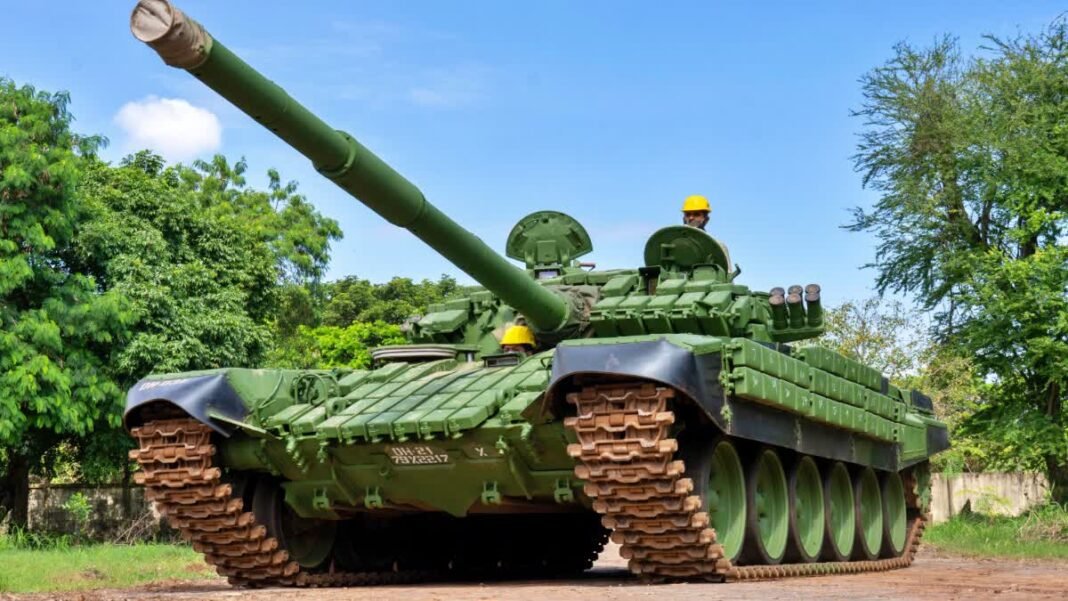


New Delhi, October 18 — The Defence Research and Development Organisation has opened its indigenous lightweight STANAG-6 armour technology to Indian industry, issuing an Expression of Interest for Transfer of Technology after successfully developing and testing armour panels designed to withstand 30mm armour-piercing ammunition.
The panels were developed by DRDO’s Research & Development Establishment (Engineers) in Pune, known as R&DE(E), which specialises in engineering technologies for the armed forces. According to reports, the STANAG-6 armour complies with Level 6 protection standards under NATO’s STANAG 4569, the benchmark that defines protection levels for military vehicles against ballistic and blast threats.
The decision represents another advance in India’s push towards self-reliance in military protection systems. By offering the technology to domestic manufacturers through the Transfer of Technology route, DRDO intends to accelerate the panels’ journey from development to production, creating an indigenous supply chain for advanced armour materials while reducing dependence on imported protection technologies.
The indigenous panels have been designed for potential integration into next-generation Main Battle Tanks, Light Tanks and Future Infantry Combat Vehicles (FICVs). These platforms are expected to form an important part of the Indian Army’s future armoured warfare capabilities, where protection, mobility and survivability must be balanced against weight and operational requirements across varied terrain.
How the STANAG-6 armour was developed
A defining feature of the system is its lightweight construction. Modern combat vehicles require high levels of ballistic protection while retaining mobility across challenging terrain, and cutting armour weight helps platforms preserve operational flexibility without surrendering protection against medium-calibre threats. That trade-off between protection and weight lies at the centre of the STANAG-6 armour development effort.
STANAG 4569 is a NATO standard that defines graded protection levels for military vehicles against ballistic, blast and mine threats. Level 6 represents a high tier of protection against specified medium-calibre kinetic-energy threats, placing the DRDO system among advanced vehicle-protection solutions developed indigenously. Successfully engineering such armour at a reduced weight is technically demanding because ballistic resistance typically increases with the mass and thickness of the protective material.
Testing and development were completed at R&DE(E), DRDO’s Pune-based engineering establishment, which has a long record of delivering combat engineering systems for the services. With trials concluded, the organisation has moved to the industrialisation phase, inviting Indian companies to acquire the technology and set up manufacturing capabilities for the armour panels.
Why STANAG-6 armour matters for future combat vehicles
Modern battlefields are placing growing emphasis on survivability against armour-piercing ammunition and other kinetic threats, according to defence analysts. Advanced armour has therefore become a critical component of vehicle design, alongside active protection systems, electronic warfare capabilities, situational awareness suites and other defensive technologies. The STANAG-6 armour programme directly addresses this requirement for next-generation Indian platforms.
The Army’s future fleet — including new Main Battle Tanks, Light Tanks and FICVs — must operate across environments ranging from deserts to high-altitude terrain. Lighter armour that still defeats medium-calibre projectiles allows designers to meet protection goals without burdening vehicles with excessive weight, which in turn affects speed, fuel consumption, bridge-crossing limits and air-transportability. Indigenous development also gives the services greater control over the technology and its future upgrades.
What the STANAG-6 armour transfer means for Indian industry
The Expression of Interest gives Indian companies the chance to acquire the manufacturing know-how and produce the STANAG-6 armour panels at scale. Domestic participation could create a homegrown supply chain for advanced armour materials, generate skilled employment and position Indian firms to support both domestic programmes and potential export opportunities in the future.
The initiative also aligns with the broader Atmanirbhar Bharat objective of strengthening the domestic defence-industrial base. By involving Indian industry at the manufacturing stage, DRDO seeks to widen adoption of the technology across future platforms and build durable production capacity for specialised military protection systems rather than relying on foreign suppliers.
With the testing phase complete, the next challenge is industrialisation and large-scale production. The Expression of Interest is expected to draw interest from established defence manufacturers and materials firms, and the indigenous STANAG-6 armour could, if successfully inducted, enhance the protection of India’s armoured fleet while demonstrating the growing maturity of indigenous military research.