
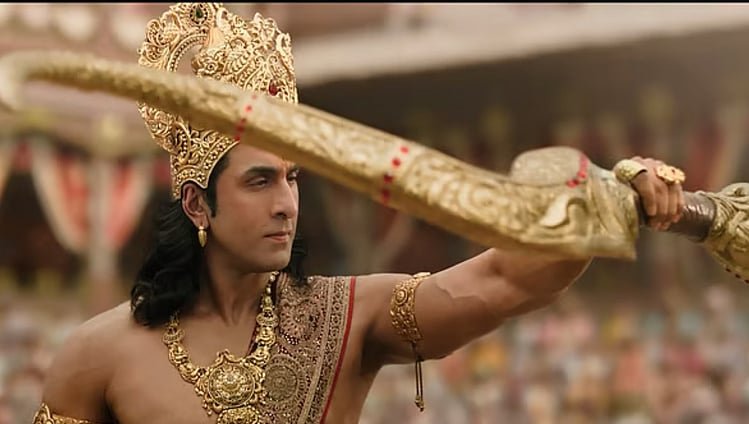


The makers of Ramayana: Part One released the song Mangal Rang on Sunday 25 October, and the track drew swift criticism online. Several listeners questioned its originality and musical style, with some comparing it to a qawwali and to AR Rahman’s song Kun Faya Kun from Rockstar. Others alleged similarities with a Tamil song, and clips comparing the tracks spread quickly on social media.
Mangal Rang features Ranbir Kapoor as Lord Ram and Sai Pallavi as Sita. It is sung by Shreya Ghoshal and Arijit Singh, with lyrics by Kumar Vishwas. The song presents the bond between the two characters through large-scale visuals, and it is linked in coverage to the wedding sequence in the film. The Mangal Rang criticism began within hours of the release, and it soon became one of the most discussed film music topics of the weekend.
One user on X wrote that the makers had taken the Kun Faya Kun formula, fitted it into Mangal Rang and called it Ramayana music. Another listener called the track a recycled qawwali with a Tamil song. A third comment described it simply as a qawwali in Ramayana and said Rahman never misses a chance to disappoint. The posts were quoted widely in entertainment coverage of the reaction.
Mangal Rang criticism centres on style and similarity
The complaints fall into two broad groups. The first concerns style: listeners who expected a devotional or folk sound said the track felt closer to Sufi music than to the world of the epic. The second concerns similarity: listeners pointed to Kun Faya Kun, to the phrase Aaj Rang Hai and to the Tamil song Enna Solla Pogirai, and argued that elements of those works could be heard in the new song.
One user wrote that the use of the word rang in the chorus recalled Aaj Rang Hai, that a bulbul tarang was played on guitar, and that the song had been lifted from Enna Solla Pogirai. Those claims are the views of individual listeners, and they have not been confirmed by the makers or by any music label statement quoted in the coverage. The Mangal Rang criticism therefore remains a matter of audience reaction rather than an established finding about the composition.
Other listeners were unhappy with the visuals as well as the music. One post described Shreya Ghoshal as a phenomenal singer given a lifeless song, and said Sai Pallavi lacked the presence expected of Sita. That post compared her unfavourably with Anushka Shetty as Devasena in Baahubali.
How the Mangal Rang criticism fits the wider reaction
The response to Mangal Rang did not arrive in isolation. Rahman has faced mixed reactions to earlier Ramayana music, including the Ravana Tandav score released around Dussehra, which also drew complaints from some listeners. After the album launch event in Chennai, several of those listeners changed their tone and apologised to the composer, praising the wedding song Jodi Jodi and other tracks performed live.
That earlier swing in opinion is relevant to the latest row. Listeners who heard Mangal Rang and Jodi Jodi performed live at the launch described the music in warm terms, with some calling the wedding material beautiful and rooted in Mithila wedding traditions. The online criticism of the studio version of Mangal Rang therefore sits alongside praise for other songs from the same album, and the two reactions are running in parallel.
Rahman himself has reacted with amusement to the shifting responses, according to an interview published by Hindustan Times. He said he could not repeat his work from his first ten years, and that Ramayana required something different because the story is known to almost every Indian. He also spoke about breaking his usual rule against collaborations to work with Hans Zimmer on the film.
What the reaction means for the film
Ramayana is directed by Nitesh Tiwari and is planned as a two-part saga. The first part is scheduled to release in theatres on 5 November 2026. The cast includes Ranbir Kapoor, Sai Pallavi, Yash as Ravana, Sunny Deol as Hanuman, Ravi Dubey as Lakshman, Kajal Aggarwal, Lara Dutta, Rakul Preet Singh and Vivek Oberoi.
The film is reported to carry a budget of about Rs 4,000 crore, a figure that has been repeated in coverage but not confirmed in a statement from the makers quoted in the reports. With that level of attention, every song release is likely to be examined closely, and the Mangal Rang criticism shows how quickly a comparison or a stylistic objection can spread.
For now, the makers have not responded to the specific similarity claims. The song remains available, the debate continues online, and the next test for the music will come when audiences hear it in full inside the film after the 5 November release.