
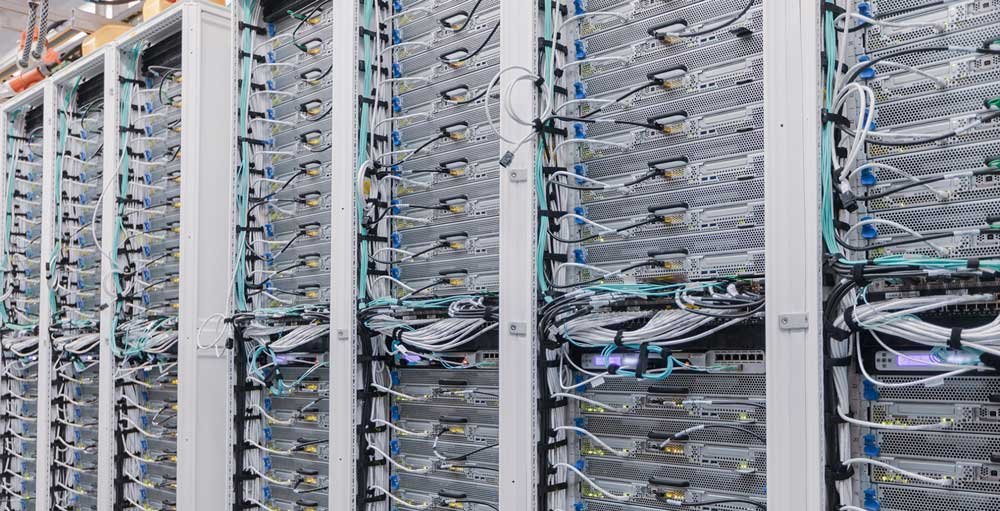


Microsoft has been pressing the Trump administration to halt plans to bar Chinese imports of a key component used in artificial intelligence data centers, three people familiar with the situation told Reuters. The parts are optical transceivers, the modules that move data over fiber-optic cables inside data centers. Microsoft data centers depend on them, and the company has warned that a ban could slow the buildout of Microsoft data centers and the AI facilities they house.
What the ban would cover
Reuters reported in August that the Trump administration wants to ban United States imports of new models of Chinese optical transceivers. Microsoft data centers would be among the first hit, because the company buys more of the parts than almost any other American firm. The stated concern is that Beijing could use the parts to steal data, install malware or disrupt service at American data centers. The Federal Communications Commission, which oversees the United States telecom industry, is working on the ban. The commission has not addressed the issue in public, and no rule text, threshold or date has been published.
Morgan Stanley said in an October client note that the administration was considering barring Chinese transceivers capable of handling 3.2 terabits of data per second. Those models are not expected to ramp up production until 2028, with widespread installation expected in 2029. Two of Reuters’ sources said officials are looking at that cutoff. Microsoft data centers would be hit first, since the company’s building pipeline is the largest in the country. Chinese companies make about two-thirds of the world’s transceivers, according to industry figures cited in coverage of the dispute, which is why the supply question is hard to solve quickly.
The parts are small and cheap next to the chips they connect, but a data center cannot run without them. Every server rack in a Microsoft data center needs transceivers to move data between machines at the speed the AI models demand, and the company has no domestic supplier ready to ship them in volume. That is why the lobbying has been so direct, and why the trade group joined in.
Why Microsoft data centers are exposed
Microsoft has 35 data centers under construction in the United States and another 134 planned, according to Cleanview, a market intelligence company that tracks data center development. That pipeline makes the company one of the largest buyers of optical transceivers in the world. Microsoft was one of a handful of firms that met officials from the White House Office of Science and Technology Policy and the National Security Council in September to flag the supply chain problems a ban would create.
The industry’s main trade group has made the same case in public. The Information Technology Industry Council sent a letter to the Federal Communications Commission on August 13 calling on the regulator to refrain from adding optical transceivers to a trade blacklist. John Miller, the group’s general counsel, told Reuters the plan could grind the data center rollout to a halt. Microsoft data centers sit at the center of the argument because of the scale of the company’s pipeline. A report from the Foundation for American Innovation, cited by Reuters, said American makers lack the scale to replace Chinese supply.
Microsoft data centers and the supply gap
Coherent, one of the American makers named as a possible alternative supplier, cannot fill the gap soon. Its chief executive, Jim Anderson, said on a call on November 4 that calendar 2027 is basically booked out, and customers are already booking calendar 2028. A ban that takes effect before American production catches up would leave Microsoft data centers and other AI facilities waiting on parts, with chips already bought and installed but no way to connect them at full speed.
Microsoft declined to comment on the report. It has not said how Microsoft data centers would cope if the ban goes ahead. The White House, the Federal Communications Commission and the Chinese embassy in Washington did not respond to requests for comment. Reuters published the account on November 10, based on three people familiar with the lobbying, two of whom described the September meeting. The ban remains under consideration, and Microsoft has not said what it will do if the administration goes ahead.
What happens next
The Federal Communications Commission is still drafting its approach, and the 3.2-terabit threshold reported by Morgan Stanley would cover only future models rather than the parts already in use. Industry groups will keep pressing their case while the rule is written, and the administration has given no date for a decision. Microsoft data centers will need the parts either way, and the question is whether they arrive from China or from suppliers that are not yet ready to deliver them.