
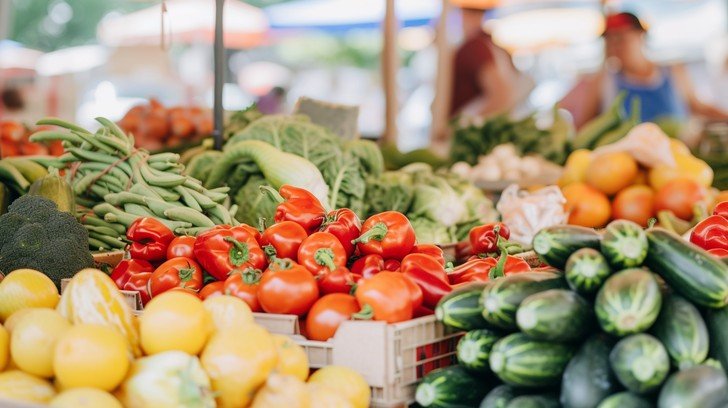


A new food pyramid built by 22 nutrition experts puts plant foods at the base of a healthy diet, with vegetables, fruits, whole grains, and legumes forming the foundation. The guide, published in the journal Advances in Nutrition in September, ranks foods by quality rather than by amount, and it takes a different line from the updated United States dietary guidelines released earlier this year.
The new food pyramid was designed by a research team led by Karen Della Corte, a professor at Brigham Young University, with nutritionists from Europe, Canada, the United States, and Australia. It echoes the traditional food pyramid used in the United States since 1992, but it reverses the emphasis of the federal guidelines issued in January under Health Secretary Robert F. Kennedy Jr., which put red meat and animal protein at the center.
The new food pyramid rests on three points. Plant foods come first: vegetables, fruits, whole grains, and legumes should form the base of the diet. Fats and proteins should come mainly from plants: unsaturated oils such as olive and canola oil ahead of butter and tallow, and poultry, fish, and legumes ahead of red and processed meats. Carbohydrate quality matters more than quantity, with fiber content, processing level, and glycemic index counting for more than the total grams.
New food pyramid favors plants over red meat
The new food pyramid does not cut out animal foods. Lean animal proteins still have a place, and the authors say the amount and the source should fit a person’s heart and metabolic health and their lab results. Plant-forward eating is not the same as a vegan or vegetarian diet, and the guide leaves room for dairy, eggs, and meat in smaller amounts.
Research behind the new food pyramid points to plant-forward patterns such as the Mediterranean and DASH diets, which may support heart health and help manage cholesterol, blood pressure, and blood sugar. The pyramid is a framework, not a personal prescription, and the authors say people should adapt it to their own health, age, and activity.
New food pyramid differs from US guidelines
The contrast between the new food pyramid and the federal guidelines is sharp. The 2025-2030 Dietary Guidelines for Americans, released on January 7 by the departments of Health and Human Services and Agriculture, flipped the old pyramid upside down, putting protein, vegetables, fruits, dairy, and healthy fats at the top and grains at the narrow base. They raised the daily protein target to 1.2 to 1.6 grams per kilogram of body weight, up from 0.8 grams, and urged Americans to eat protein at every meal.
The federal guide also calls for three servings of full-fat dairy a day with no added sugars, three servings of vegetables and two of fruit, and two to four servings of whole grains. It says no meal should carry more than 10 grams, or about two teaspoons, of added sugar, and that no amount of added sugar counts as part of a healthy diet. Saturated fat should stay under 10 percent of daily calories. Alcohol advice was softened to general guidance that less is better, with no set daily limit.
“These guidelines return us to the basics,” Kennedy said when the federal guide was released. “American households must prioritize whole, nutrient-dense foods, protein, dairy, vegetables, fruits, healthy fats, and whole grains, and dramatically reduce highly processed foods.” Some dietitians have said the federal protein target is too high and leaves too little room for nuts, beans, and legumes, while others welcomed the push against ultra-processed food.
The international guide takes the opposite view on meat. Where the federal pyramid puts red meat among the main protein sources, the new food pyramid ranks poultry, fish, and legumes ahead of it, and unsaturated plant oils ahead of butter and tallow. The two guides agree on the broad points, whole foods over processed ones, fewer added sugars, and more vegetables, but they part company on how much of the plate should come from animals. The new food pyramid gives its answer in plants.