
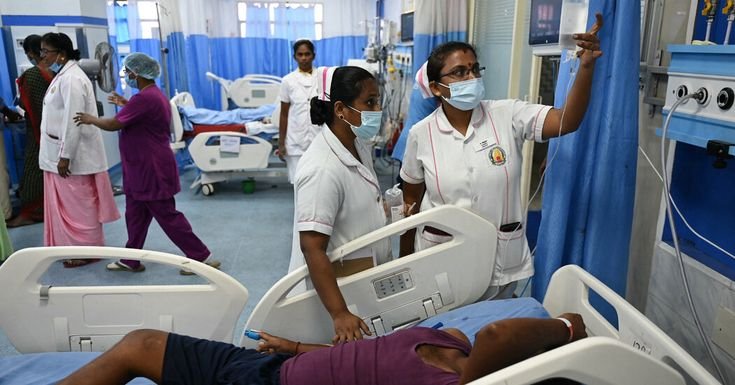


The National Commission for Allied and Healthcare Professions has proposed a new framework for provisional registration of eligible allied and healthcare professionals, with clear pathways for skill development, competency assessment and a move to regular registration. The commission, which works under the Ministry of Health and Family Welfare, invited public and stakeholder comments on the draft regulations on 11 November, and the window for comments closes on 4 December.
The draft is titled the Provisional Registration of Allied and Healthcare Professionals Regulations, 2026, and it is framed under the National Commission for Allied and Healthcare Professions Act, 2021. The Act was passed because India had no central regulatory body for allied and healthcare professions, and the commission now sets up a professional council for each recognised category and maintains a central register of professionals.
The 2021 Act, Act No. 14 of 2021, was enacted on 28 March 2021. It created the commission as a statutory body and set up a professional council for each recognised category of allied and healthcare professions. The commission maintains a central register of professionals, and regular registration goes into the appropriate central or state register.
What provisional registration would cover
Provisional registration is temporary recognition granted after eligibility checks and credential verification. It is not final registration, and the draft regulations set out rules on its validity, extension, termination and appeals. The framework provides prescribed eligibility criteria, verification of credentials and clearly defined registration procedures, so that professional recognition lines up with statutory requirements and competency standards. The aim is a single, standard route into the profession, with the same rules applying across states and categories.
The proposed framework aims to bring greater uniformity, transparency and accountability to professional registration. It also seeks to create structured chances for eligible practitioners to improve their qualifications and competencies in line with prescribed standards, with an emphasis on skill development, professional competence and regulatory accountability.
The path from provisional registration to regular status
Moving from provisional registration to regular status depends on demonstrated competence, not on time served. Under the framework, provisionally registered professionals may be asked to complete prescribed bridge courses, supervised clinical training and minimum qualifying examinations, wherever these apply, to build their skills and prove their competence.
Professionals who meet the prescribed educational and competency requirements would then be eligible to move to regular registration in the appropriate central or state register. The commission says the pathway is meant to strengthen competency standards and patient safety, while giving practitioners a clear route to full recognition instead of leaving them in an uncertain position. Practitioners who complete the requirements will hold regular registration, which places them on the central or state register and gives patients and employers a clear way to check that a professional meets the prescribed standards.
An online system for provisional registration
The draft regulations provide for an integrated online registration system to handle application submission, credential verification, eligibility assessment and the issue of provisional registration certificates. The system is intended to cut paperwork and delays, and to keep a clear record of each application from submission to decision.
Professionals granted provisional registration will receive a Provisional Registration Unique Identification Number, known as a PR UID, which will support systematic identification and regulatory oversight. The draft regulations are available on the commission website, ncahp.abdm.gov.in, and feedback can be sent to the commission by email.
Who can send comments
The commission has invited comments, suggestions and objections from professionals, associations, educational institutions, state allied and healthcare councils, healthcare institutions, experts and the general public by 4 December. The inputs received will be considered before the regulations are finalised.
The commission was set up under the 2021 Act as a statutory body, and the draft regulations are the operational next step under that law. Once finalised, the framework will give allied and healthcare professionals a single, standard route into the central register. The commission will consider the comments, suggestions and objections it receives before finalising the regulations, and the final version will set the rules that professionals, councils and institutions must follow.