
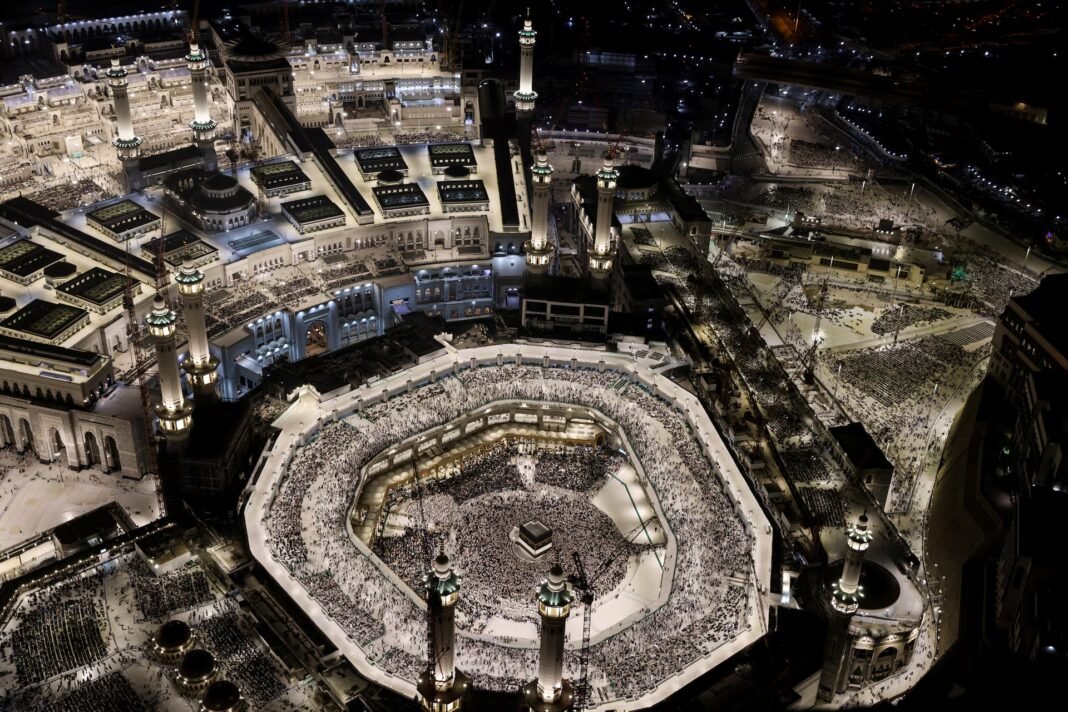


Saudi Arabia has executed two Bangladeshi nationals convicted of committing what authorities described as “immoral acts” inside a mosque in the holy city of Mecca, triggering a diplomatic row after Bangladesh said it was not informed before the sentences were carried out. The Saudi executions, announced by the Interior Ministry, have raised fresh questions about the kingdom’s use of capital punishment and its consular obligations to foreign nationals.
According to the Interior Ministry statement carried by the Saudi Press Agency on Wednesday, the two individuals were identified as Nazrul Islam Abdul Basir and Siti Akhtar, both Bangladeshi nationals. The ministry said security authorities arrested the pair after they were caught engaging in what it described as indecent acts inside a mosque in Mecca — an act it called a grave desecration of a place of worship. Following an investigation, the two were charged and referred to a competent court, which found them guilty and sentenced them to death under ta’zir, a discretionary punishment under Islamic law applied to offences violating public morality and sanctity.
The ministry said the court imposed the death sentences because of the seriousness of the offence and the violation of the sanctity of the mosque and the circumstances in which the acts occurred. The verdicts became final after being upheld by the relevant judicial authority, and a royal order was then issued authorising their implementation. The Saudi executions were carried out on Wednesday, October 14, 2026, in the Mecca region. The ministry reaffirmed the government’s commitment to preserving security and upholding justice, and warned that similar offences against places of worship would face severe punishment.
Saudi executions: what the Interior Ministry announced
Notably, the official Saudi account left several questions unanswered. The Interior Ministry’s statement did not specify the precise nature of the alleged acts, did not identify the mosque involved, and provided no detailed account of the arrests, the evidence presented, or the judicial proceedings. Some media reports have described the two Bangladeshis at the centre of the Saudi executions as a couple, and social media posts have claimed they travelled to Saudi Arabia to perform Umrah — but whether they were married to each other has not been independently established through official statements.
Saudi executions prompt Bangladesh’s demand for answers
Bangladesh reacted with unusual sharpness. Foreign minister Humaiun Kobir told reporters on Monday that Dhaka had sought an explanation from its “friendly bilateral partner” over the gap in information sharing. According to the Bangladeshi foreign ministry, officials knew the two were prisoners in Saudi Arabia because they appeared on a list shared between the countries — but Riyadh never communicated that it planned to execute them. The case carries particular weight because more than three million Bangladeshis live and work in Saudi Arabia, forming one of the largest migrant communities in the kingdom.
Legal experts note that ta’zir gives judges wide discretion, which is precisely why the Saudi executions have alarmed rights monitors. Unlike hadd punishments with fixed scriptural penalties, ta’zir sentences depend on judicial interpretation of gravity and context — and critics argue that opacity makes it harder to assess proportionality. In this case, the refusal to specify the alleged acts has made that assessment impossible, fuelling the diplomatic fallout.
Saudi executions and the wider capital punishment debate
The case has drawn attention well beyond the two individuals. Saudi Arabia has executed at least 175 people this year, many of them foreign nationals, according to monitoring reports — a pace that keeps the kingdom among the world’s most prolific users of the death penalty. Rights groups have long criticised the opacity of Saudi capital cases, from the vagueness of charges to the lack of consular access. For Dhaka, the immediate demand is narrower: an explanation of why it was not told. Until Riyadh explains both the charges and the silence toward Dhaka, the Saudi executions in Mecca will remain a case study in how capital punishment strains diplomacy.