
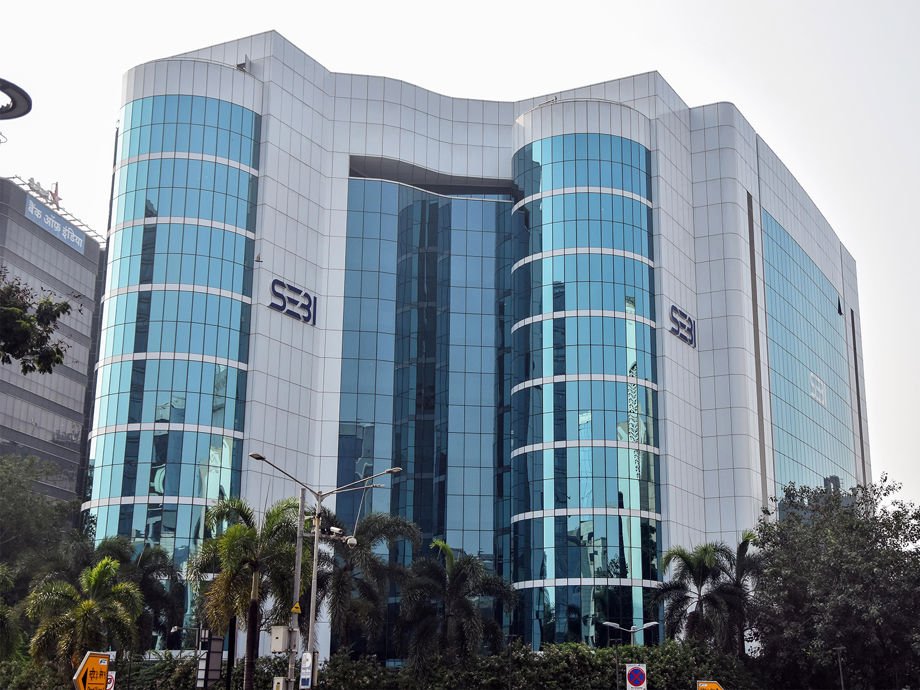


SEBI has no plan to extend stock market trading hours in India, its chairman Tuhin Kanta Pandey said on Wednesday, calling longer sessions a low priority for the regulator. Pandey said the case for round-the-clock trading had not been made, and he pointed to cybersecurity risks and thin liquidity as reasons to hold back.
Pandey spoke to reporters on the sidelines of the 65th general assembly and annual meeting of the World Federation of Exchanges in Mumbai, an event hosted by the National Stock Exchange. He was asked whether SEBI would follow exchanges abroad that have moved towards longer sessions. “We are not really looking at (it) as a very big priority,” he said.
India’s regular equity market runs from 9:15 am to 3:30 pm. The question has gained attention since NSE International Exchange said on 3 November that it had extended trading to 23.5 hours a day. Pandey’s answer made clear that SEBI will not push the domestic market down that path for now.
The regulator has watched other markets test longer hours, and Pandey suggested the results so far give India little reason to hurry. Exchanges in the United States have discussed sessions that run through the night, but the practical problems remain unsolved, from settlement and staffing to the risk of a cyber attack while most traders are asleep.
Why SEBI is holding back on longer hours
Pandey said any move to trade through the night would need a strong business case, and he questioned whether longer sessions would make the market work better. “Nobody has a clue of how they are going to handle the cybersecurity,” he said, adding that breaches are reported in the United States almost every day. He also warned that longer hours could split liquidity across the day, leaving thinner trading at each point in the session.
Retail investors would also bear the strain, in his view. “People will complain that the prices have gone up at night while they were sleeping. Extending the market hours is not necessarily a very efficient way,” he said. His remarks put the burden of proof on those who want change: they must show what longer hours would add, and at what cost.
SEBI reviews the margin trading facility
Alongside the debate on hours, SEBI is reviewing the margin trading facility, which lets investors buy shares with funds borrowed from brokers. Pandey said the regulator is weighing stronger safeguards, including possible limits on fresh leveraged positions in stocks based on their free float. He stressed that no decision has been taken. “The thought process is always there in our workings, in different ways. But no such decision has been taken yet,” he said.
The review matters to SEBI because margin-funded trading has grown fast. The outstanding margin trading book stood at Rs 1.53 lakh crore as of 13 November, up 29 per cent from a year earlier. Nearly two-thirds of that exposure sits in small and mid-cap stocks, where sharp price moves can leave borrowers owing more than they put in.
Pandey said the regulator wants to balance growth in leveraged trading with risks to market stability. That balance has become harder to strike as more retail investors borrow to buy shares, and as brokers compete to offer margin funding. Any new limits would aim to slow that growth without shutting the facility down.
What SEBI said on tokenisation and prediction markets
Pandey also ruled out two other ideas that have drawn attention in global markets. He said there was no immediate plan to move towards 24-hour trading, and he indicated that prediction markets were not a priority for the regulator. On tokenisation, he said extending the technology to equity markets was not feasible at present, given the scale of India’s equity market and the costs involved.
Corporate bond tokenisation is moving ahead through a three-phase pilot, he said. Equities would be a far larger task, and the regulator has chosen to wait. For now, the message from Mumbai was consistent across each topic: SEBI will move slowly, and only where the case is clear. SEBI has given no date for a decision on margin trading, and none is expected before the review is complete.