
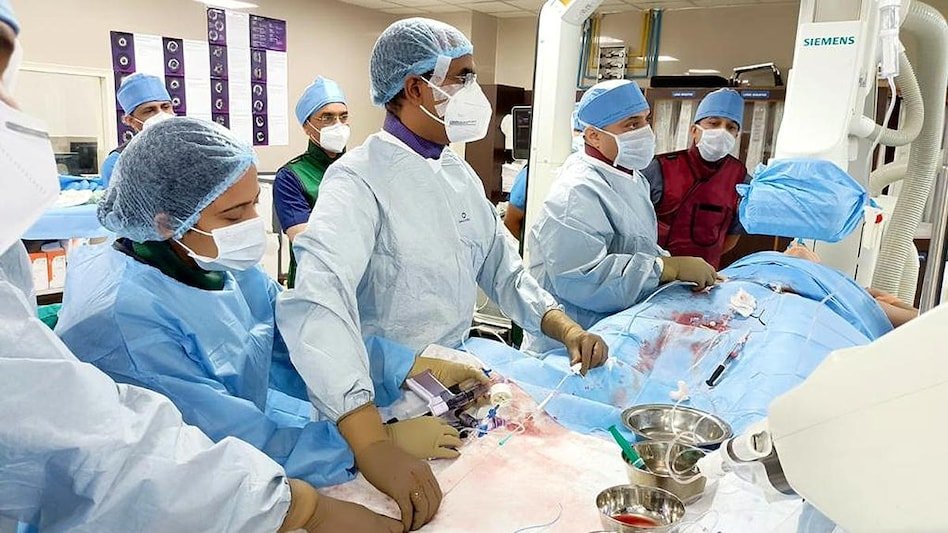


The Directorate General of Health Services has banned the reuse of single-use medical devices and disposable surgical items in every public and private hospital in the country, after finding that some corporate hospitals were sterilising these products for repeated use while charging patients the full price.
The DGHS letter, dated 16 October 2026 and reported on 23 October, says the practice came to light during inspections of private and corporate hospitals. Inspectors found single-use medical devices being reused mainly in cardiology, nephrology, oncology, cardiothoracic and vascular surgery, and neurosurgery departments.
Which single-use medical devices were being reused
The list inspectors found is long and reaches into some of the most sensitive areas of hospital care. It includes cardiac catheters, guidewires, balloon catheters and ablation catheters used in heart procedures, dialysers and blood tubing from dialysis units, surgical staplers, laparoscopic trocars, orthopaedic drill bits, and syringes and needles.
These products are certified by manufacturers for one procedure only. Hospitals that resterilise single-use medical devices do so against that certification, and the DGHS order says the practice must stop because the items were never validated for a second use.
Patients billed for devices that were not new
The billing angle is what gives the directive its force. In some cases, the full cost of the reused items was still being charged to patients or claimed from government authorities, even though the hospital had paid for the product once and used it several times over.
For families paying out of pocket, a cardiac catheter or a dialyser is a large line item on the bill. The order warns of infection risk and possible overcharging, and it frames the issue as both a patient-safety matter and a billing matter. The overcharging concern is specific: a patient billed for single-use medical devices should have received new ones.
The directive is an executive order from the DGHS. It is separate from the Supreme Court’s hospital-overcharging matter covered on 23 October, though both disputes turn on what patients are charged for hospital care.
Why reuse of single-use medical devices raises infection risk
Single-use products are designed, tested and packaged for one patient and one procedure. The DGHS warns that resterilising them leaves patients exposed to infection, and that reuse may also violate infection prevention protocols and biomedical waste management provisions.
The order cites possible violations of the Drugs and Cosmetics Act 1940, the Medical Devices Rules 2017, and the Clinical Establishments Act 2010. Together, those laws govern how devices are licensed, how hospitals are registered, and how procedure waste must be handled. A hospital found reusing single-use medical devices could face action under any of them.
The Association of Indian Medical Device Industry, or AiMeD, welcomed the directive. Rajiv Nath, the forum’s coordinator, said reuse can happen without the patient’s informed consent, and that responsibility for any harm caused by a reused device should rest with the hospital that reused it, not with the manufacturer.
A patient wheeled into a catheterisation lab has no way of knowing whether the catheter the doctor picks up is new or has been used before. Nath’s argument is that the patient never agreed to that gamble, and the hospital cannot pass the risk to the company that made the device.
How hospitals are expected to comply
The DGHS has written to state health secretaries, the Drugs Controller General of India, state drug controllers and the Central Government Health Scheme, asking them to enforce compliance, inspect facilities and take action under applicable laws. The letter puts state governments and the central drug regulator on the same enforcement track.
Hospital administrators now face a clear choice. They can tighten purchase and waste-disposal systems so that single-use medical devices leave the sterile field only once, or they can wait for an inspection to find otherwise. The directorate has made plain which outcome it prefers.
What the ban means for patients
Corporate hospitals carry the heaviest compliance burden. They perform the largest volumes of cardiac, oncology and dialysis procedures, the same departments where inspectors found the practice, and they bill at the highest rates. State drug controllers will be watching those facilities first.
For patients, the directive changes little on the day of a procedure and a great deal in the background. Nobody is expected to interrogate a surgeon about a guidewire. The DGHS position is that safety is the hospital’s duty, and when single-use medical devices appear on the bill at full price, they should have been new.
If a bill lists single-use medical devices at full price, the patient now has an official instruction saying the devices should have been new. Any hospital caught resterilising them after this written warning will be doing it on record, and that changes the legal position of everyone involved.