


Swiss glaciers suffer ‘disastrous’ ice loss following a series of intense summer heatwaves, according to recent climate reports from Europe.
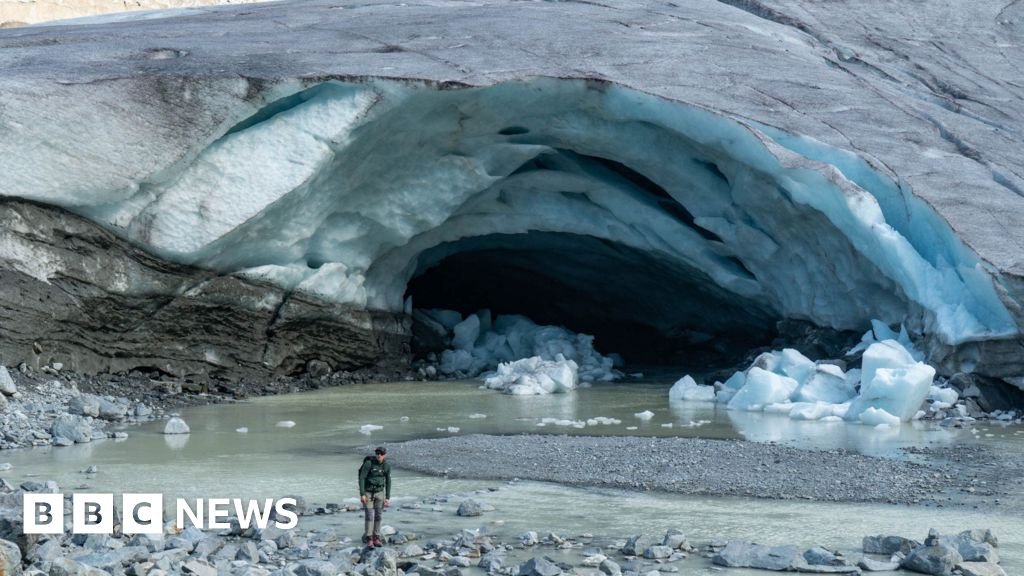
The Swiss Academy of Sciences announced this week that extreme temperatures have dramatically accelerated glacial decay, raising urgent concerns about future regional water security.
This unprecedented environmental shift highlights the rapid onset of climate change affecting Europe’s largest natural freshwater reserves.
This rapid environmental decline carries profound global significance as melting ice fields directly disrupt critical river systems. Millions of people throughout Europe depend on these glacial reserves for agricultural irrigation, domestic drinking water, and hydroelectric power generation.
As these frozen reservoirs vanish, the risk of severe seasonal water shortages and geopolitical strain over shared natural resources increases.
Why Swiss Glaciers Suffer ‘Disastrous’ Ice Loss
Recent scientific measurements from glaciological networks reveal that Swiss alpine ice fields have contracted at an unprecedented pace. Monitoring stations report that over 5% of the total glacial volume vanished during a single record-breaking summer heatwave.
This sudden volume reduction represents a massive acceleration in historical melting trends. Scientists warning that Swiss glaciers suffer ‘disastrous’ volume reductions stress that this level of rapid decay was previously not expected for decades.
The cumulative impact over the last five years is even more alarming for international climatologists. Approximately 20% of Switzerland’s total glacial mass has completely vanished since the middle of the last decade, reshaping local topography.
This rapid decline has triggered what prominent experts describe as an unprecedented explosion of melt rates. The accelerated thawing of these ancient frozen peaks disrupts the natural seasonal balance of downstream European river basins.
As temperatures continue to rise, seasonal snowpacks fail to protect the underlying glacial ice. This lack of protective winter snow cover exposes the dark ice underneath to direct sunlight, accelerating the thermal absorption process significantly.
- Threatened Water Supplies: Diminishing alpine ice reserves directly compromise drinking water resources for millions of citizens across neighboring European countries.
- Agricultural Disruptions: Farmers face critical water shortages during dry summer seasons, impacting crop yields and regional food production systems.
- Energy Sector Vulnerability: Reduced river flows threaten hydroelectric power generation, which currently supplies much of the region’s domestic clean energy.
Local municipal authorities are already observing significant changes in regional river levels. Many remote communities that rely on steady glacial runoff are now implementing emergency water conservation measures to prepare for drier summer months.
As the high-altitude ice continues to retreat, the surrounding alpine mountain terrain becomes increasingly unstable. Rockfalls and sudden landslides have become far more frequent, posing severe safety hazards to local infrastructure and mountaineering tourism.
Environmental monitors emphasize that when Swiss glaciers suffer ‘disastrous’ changes, the ecological effects extend far beyond the high-altitude peaks. Downstream nations rely heavily on the steady flow of meltwater to sustain major transboundary rivers.
The persistent dry conditions have also severely affected shipping routes along major European waterways. Record-low river levels hinder commercial transport vessels, causing widespread economic disruptions that ripple across the entire continent.
To combat these challenges, researchers are actively tracking ice thickness and local temperature changes. Their latest mathematical models indicate that even conservative climate projections failed to predict the extreme speed of the current meltdown.
When Swiss glaciers suffer ‘disastrous’ losses, the global scientific community takes immediate notice of the broader planetary implications. This rapid loss serves as a stark warning indicator of shifting global weather patterns.
Furthermore, the loss of these majestic ice formations impacts the cultural identity of alpine communities. Tourism-dependent regions face declining visitor numbers as scenic glaciers recede, threatening local economies and traditional mountain livelihoods.
As the international community monitors these developments, the future of the alpine landscape remains highly uncertain. If current global warming trends persist unchecked, climatologists warn that the majority of remaining ice fields could completely disappear by 2100.
Local governments are currently debating proactive new policies to mitigate the long-term impact of these environmental shifts. Proposed strategies include building new water reservoirs to capture seasonal runoff and rapidly investing in alternative renewable energy.
Ultimately, the speed at which Swiss glaciers suffer ‘disastrous’ retreat will depend on global efforts to reduce greenhouse gas emissions. Without significant international intervention, the historic alpine peaks may soon be completely transformed, leaving future generations to deal with severe ecological and economic consequences.
Coverage of Swiss glaciers suffer ‘disastrous’ continues to evolve as more details become available.
Web story: Swiss Glaciers Lose Over 5% in One Summer