
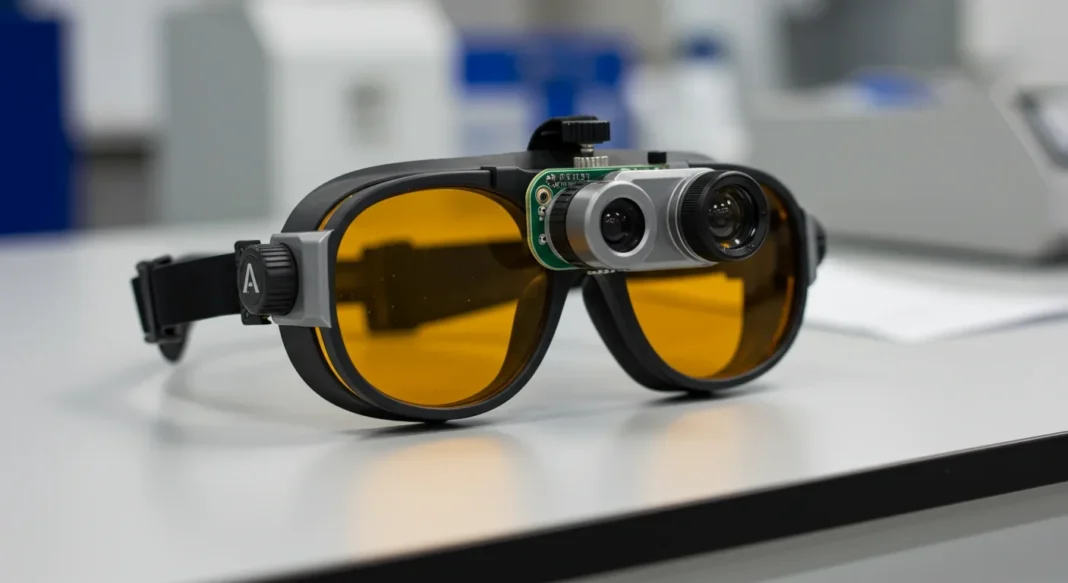


An experimental treatment known as optogenetic vision therapy has partly restored sight in some blind patients with advanced retinitis pigmentosa, according to results from a small clinical trial published in the New England Journal of Medicine (NEJM). The international PIONEER study enrolled 10 people with profound vision loss in both eyes and found that six participants gained clinically meaningful improvements in light sensitivity after receiving the treatment.
The optogenetic vision therapy results, published Oct. 7, arrived just two days after the science behind the treatment — optogenetics, a technique that uses light to switch nerve cells on and off — won the 2026 Nobel Prize in Physiology or Medicine. The researchers say the findings validate a new approach to inherited blindness, though the restored vision remains partial and the therapy is still experimental.
How Optogenetic Vision Therapy Works
In optogenetic vision therapy, treatment pairs a one-time gene injection with special light-stimulating goggles. Each participant received a single injection into their worse-seeing eye. A modified virus delivered genetic instructions for producing a light-sensitive protein called ChrimsonR into retinal ganglion cells, the nerve cells that carry visual signals from the retina toward the brain.
“The gene therapy delivers a light sensor to the blind retina, making it light-sensitive again,” co-authors José-Alain Sahel of the University of Pittsburgh and Botond Roska of the Institute of Molecular and Clinical Ophthalmology Basel in Switzerland told ScienceAlert, describing the central idea of optogenetic vision therapy.
A camera in the goggles captures changes in brightness. A processor converts those changes into patterns of amber light, which a projector directs onto the retina to activate the ChrimsonR protein. The setup gives surviving nerve cells a new way to respond to light, letting wearers perceive a monochrome image of their surroundings.
Trial Results in Blind Patients
All 10 participants had advanced retinitis pigmentosa, a group of inherited disorders in which genetic changes damage the retina’s photoreceptors, the cells that normally detect light. Symptoms can begin in childhood or later in life, and the progressive loss can eventually lead to blindness. Researchers treated only each participant’s poorer-seeing eye and tracked outcomes for up to five years.
While wearing the device, some participants became better able to detect objects, locate them and reach toward them. The optogenetic vision therapy results build on an earlier milestone: the approach had previously been shown to partly restore vision in a single blind patient in 2021, and the new report extends the finding to that original patient and nine additional participants. Six of the 10 had clinically meaningful improvements in light sensitivity.
Notably, the treatment does not depend on the specific genetic cause of a patient’s sight loss. Variants in more than 100 genes can cause retinitis pigmentosa, complicating efforts to develop treatments for each genetic cause. The disorders are thought to affect more than 1.5 million people worldwide.
Why Optogenetic Vision Therapy Targets Ganglion Cells
The approach rests on a biological quirk of the disease. Although it destroys photoreceptors, the ganglion cells that send visual information to the brain deteriorate less rapidly. “These cells are not the primary cells targeted by the disease, so that’s why they are good candidates for the therapy,” Sahel said.
By making those surviving cells light-sensitive, optogenetic vision therapy effectively rewires the retina. The goggles then supply the patterned light stimulation the modified cells need to pass a usable signal to the brain — a signal the patient experiences as limited but real vision.
Safety Findings
Safety was the trial’s primary endpoint, and the NEJM report described a reassuring profile. The team recorded one severe eye-related side effect, which was resolved within minutes, and said most other eye-related adverse events were mild or moderate. No side effects related to the therapy were reported elsewhere in the body.
Because the study was small and had no control group, the authors say larger trials will be needed to confirm both safety and benefit before the approach can move toward clinical use.
The Future of Optogenetic Vision Therapy
“What we can say for sure is that the concept of optogenetics is valid for vision restoration,” said Roska. He said the team now aims to work toward restoring high-resolution vision, hoping to reach that goal within five to 10 years. For now, vision restoration through this route remains partial, but researchers say each step brings the field closer to practical treatment.
The trial’s publication capped a landmark week for the field: the Nobel medicine prize honored the pioneers whose work on light-gated ion channels made optogenetic vision therapy conceivable. The NEJM authors say the convergence of basic science and clinical results offers a rare reason for hope — even as they stress how far the field still has to go.