
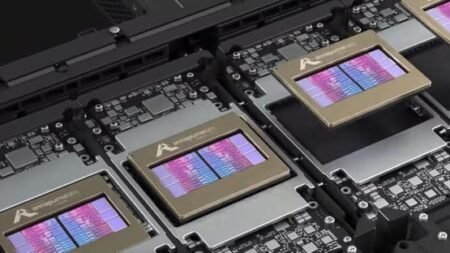


Anthropic is offering Blackstone a yield of more than 10% to finance its latest chip deal, the Financial Times reported Friday. Under the proposal, funds managed by Blackstone would invest $9 billion in junior debt backed by Anthropic’s five-year lease payments on AI chips. Reuters, which carried the FT report, said it could not immediately verify the details. The talks underline the staggering sums AI laboratories are now raising to buy computing power — and the Anthropic Blackstone negotiations show just how lucrative lenders find the sector.
The financing sits inside a far larger effort. According to the reports, the $9 billion junior tranche is part of a roughly $60 billion debt financing package that would pay for about 1.5 gigawatts of tensor processing units — the custom AI chips developed by Google. That is an enormous hardware order by any historical standard, and it reflects how quickly the AI industry’s capital needs have escalated from venture rounds to infrastructure-scale debt.
Neither Anthropic nor Blackstone has publicly commented on the report. But the structure described in the FT account is consistent with how private credit has increasingly funded the AI buildout: layered debt, hardware collateral, and yields far above what investment-grade borrowers pay.
Inside the Anthropic Blackstone Debt Structure
The proposed deal is built in layers, with risk and return priced accordingly. Senior debt sits at the top of the stack and gets repaid first if anything goes wrong, so it earns roughly 7%, according to the reporting. Junior debt absorbs losses before the senior lenders do — which is why the Anthropic Blackstone slice, sitting underneath, is priced at more than 10%.
The senior lenders also get an extra cushion: residual-value support from Broadcom tied to the value of the underlying hardware, acting as a backstop if the chips are worth less than expected at the end of the term. For Blackstone, the double-digit yield compensates for taking the riskier position in a financing arranged around a borrower whose credit profile sits a notch below investment grade.
What the Anthropic Blackstone Money Buys
The proceeds have a specific shopping list: roughly 1.5 gigawatts of TPUs acquired through a special-purpose vehicle, a separate corporate entity that owns the hardware and carries the debt. That structure lets the Anthropic Blackstone arrangement fund the compute without piling the full obligation onto Anthropic’s own balance sheet.
The scale is part of a stated ambition. Anthropic’s expected compute capacity target exceeds 20 gigawatts by 2028, according to the reports — a figure that would put its infrastructure on par with the power demands of a mid-sized city. TPUs, developed by Google, have become one of the key alternatives to Nvidia GPUs for training large AI models, and securing supply has become a strategic priority for every major lab.
Anthropic Blackstone Follows June’s $35 Billion Deal
This is not Anthropic’s first trip to the private credit market. In June 2026, the company struck a $35 billion arrangement with Apollo and Blackstone to fund about one gigawatt of compute — a deal that already ranked among the largest AI infrastructure financings ever completed. The new Anthropic Blackstone talks would be nearly twice as large, signaling that the first deal barely dented the company’s appetite.
The episode also captures a broader shift in how AI gets funded. As model training costs climb into the tens of billions, labs are borrowing like utilities and telecoms rather than software startups, with private credit firms happy to supply the capital at yields that reflect the risk. Whether this particular deal closes on the reported terms remains to be seen — Reuters cautioned it could not verify the FT’s account — but the direction of travel is unmistakable: the AI chip race is now a debt race, and Wall Street is pricing it accordingly. Until the deal closes, the Anthropic Blackstone talks stand as the clearest evidence yet that AI infrastructure is being financed at a scale the industry has never seen — and that lenders like Blackstone view the Anthropic Blackstone trade as worth the risk.