
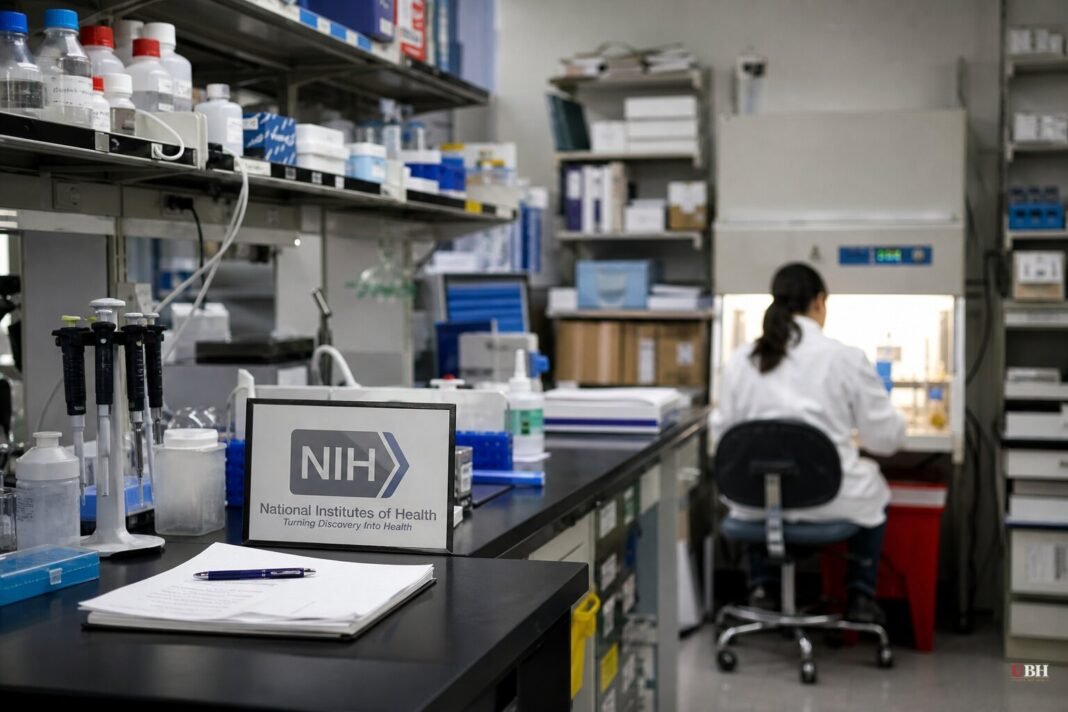


The National Institutes of Health awarded nearly 12 percent fewer grants in fiscal year 2026 than in the year before President Trump took office, according to an analysis released Thursday — a drop of about 7,400 NIH grants that researchers say shows the damage to the federally funded research system runs deeper than topline budget numbers suggest.
The data from the Association of American Medical Colleges (AAMC) shows that the NIH obligated all of its funds for fiscal years 2025 and 2026. But the AAMC argues that “the health of the federally funded research system cannot be judged by whether all funding is obligated by the final deadline alone.” The agency is funding more grants up front — a practice that gets money out the door faster but supports fewer projects overall — and has yet to reinstate hundreds of grants frozen or terminated early in the second Trump administration.
What the NIH Grants Analysis Found
The AAMC has been tracking NIH funding for the past two years, and the latest brief offers a look at funding trends that have reshaped the research environment since Trump returned to the White House. The 7,400-grant shortfall reflects a steady slide: fiscal year 2025, the first year spanning the change in administration, ended with 63,303 awards versus a typical total above 69,000.
Independent tracking by Grant Witness found the NIH had issued 60,924 NIH grants through Sept. 24 — about 11 percent, or roughly 7,600 awards, below the 68,561 average at the same point across fiscal years 2021 through 2025. It was the lowest total of any of the past six fiscal years at the same point in the calendar.
Multiyear Funding and the Award Count
The main driver, analysts say, is the NIH’s shift toward multiyear funding. Under multiyear funding, the agency commits entire multiyear budgets upfront instead of funding one year of a grant’s budget at a time. Each multiyear award ties up more appropriated funding in the current fiscal year than a traditional Year 1 commitment — meaning the NIH can fund fewer new NIH grants in a single year even as total obligations hold steady.
Total NIH obligations for the year reached about $35.2 billion, roughly one percent above the five-year average, according to Grant Witness. The money is being spent; it is simply reaching fewer principal investigators. The funding rate for early-stage investigators — those who earned graduate degrees within the past 10 years — dropped from 26 percent in 2024 to 19 percent in 2025.
NIH Grants and Frozen Awards
The count also reflects grants that disappeared outright. The agency has yet to reinstate hundreds of NIH grants frozen or terminated early in the administration, and research funding advocates say the uncertainty has reshaped how institutions plan. The association’s tracking shows the disruption began with last year’s review freeze that left scientists confused and frustrated.
Congress noticed the mechanism behind the NIH grants decline. The Consolidated Appropriations Act of 2026, enacted in February, capped the amount the NIH may obligate for multiyear awards at the FY2025 level, with report language expressing “strong concern about the impact of this policy on application success rates.” But the cap locks in the FY2025 problem rather than unwinding it — FY2026 still closed roughly 3,000 projects below FY2025.
The Budget Picture
The topline budget for NIH grants told a different story. The White House had proposed cutting NIH funding by roughly 40 percent and consolidating its 27 institutes and centers into eight. Congress rejected both proposals, and the final FY2026 spending legislation kept the NIH’s structure intact with about $47.5 billion in funding — roughly one percent more than the previous year.
On paper, that looks like business as usual. But the association’s analysis argues the reality is different: fewer NIH grants, fewer funded labs and a research funding pipeline being quietly reshaped by how the money is distributed rather than how much is appropriated.