
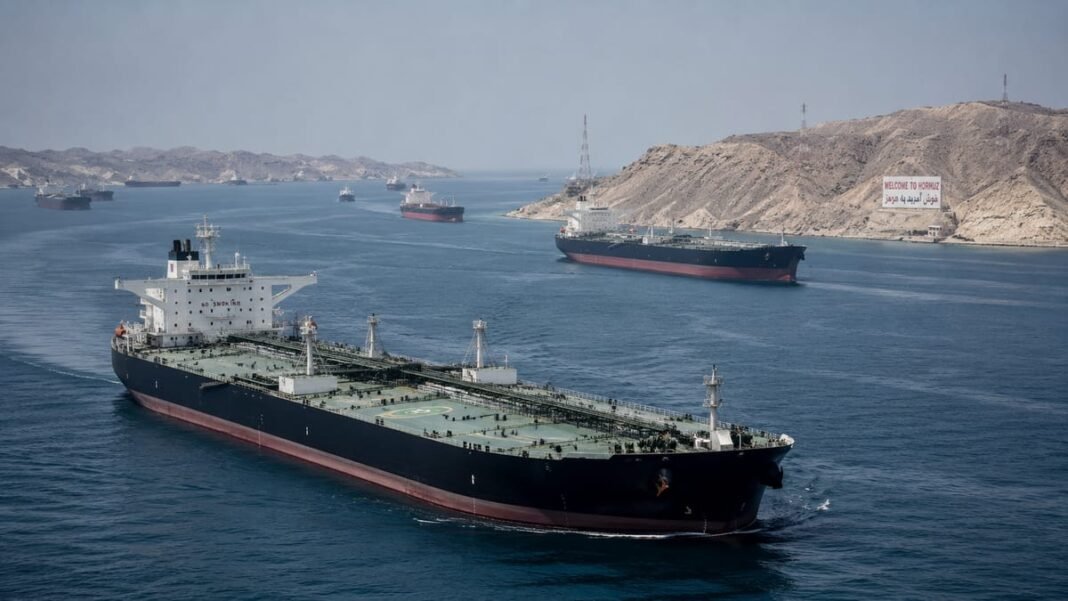


The Iran Hormuz threat sharpened on Friday, October 16, when Iranian Army spokesman Mohammad Akraminia warned that American forces must leave the Middle East or be expelled, tying the reopening of the Strait of Hormuz to a United States military withdrawal. In a post on X, Akraminia said the waterway would reopen if Washington withdrew — and added a blunt ultimatum: “If it doesn’t leave, we’ll expel it.”
What the Iran Hormuz threat means
The Iran Hormuz threat arrived as a two-part message. First came the offer: “If America leaves the region, the Strait of Hormuz will reopen and collective security will be established with the participation of the region’s countries, and the global economy will improve,” Akraminia wrote in Persian on X. Then came the warning. The spokesman also pushed back against claims by US President Donald Trump that American military action had severely weakened Iranian forces, telling the Mehr News Agency that Iran’s air defence capabilities now far surpass their pre-war and wartime levels.
The statement does not establish that a new military operation has begun, nor does it amount to a confirmed agreement to reopen the strait. It does, however, underline how closely the Iran Hormuz threat links the region’s most important shipping lane to a demand for a US military exit. The declaration also left a critical ambiguity: whether Tehran is demanding the withdrawal of forces tied to the current conflict, or the complete removal of the longstanding American military presence across the Middle East.
Oil markets react to the Iran Hormuz threat
The Iran Hormuz threat landed in energy markets already on edge. Brent crude briefly touched $110 per barrel on Friday — its highest level since May — before closing 3.7 percent higher at $109.86. West Texas Intermediate gained 3.5 percent to finish at $101.41 per barrel. For the week, WTI climbed more than 10 percent while Brent gained almost 5 percent, as fighting around the Strait of Hormuz continued to shake global energy markets and traders priced in the risk of a prolonged disruption to one of the world’s most critical energy transit corridors.
Why the Iran Hormuz threat matters for Washington
For Washington, the Iran Hormuz threat collides with two realities: the United States maintains a longstanding military presence across several Middle Eastern countries, making the scope of Tehran’s demand potentially far broader than a single waterway — and Iran claims substantial control over shipping movements, while the US says vessels continue to transit the strait. Maritime monitoring organisations continue to warn that commercial ships face serious risks, whatever the official positions.
The wider confrontation is intensifying on multiple fronts. The Saudi military said it intercepted missiles fired over the Red Sea on Friday, one of them heading toward the Yanbu oil export terminal, while three drones were reportedly destroyed near Riyadh and the country’s southern parts. Iran-aligned Houthi militants continued attacks on the kingdom this week; on Tuesday, the Saudi energy ministry reported an attack on an administrative building of oil company Saudi Aramco in Dhahran.
Against that backdrop, the Iran Hormuz threat reads as Tehran’s attempt to connect freedom of navigation with a far-reaching political demand. Trump has continued to portray Tehran’s military as severely weakened and has ruled out using nuclear weapons in the conflict. There is no indication that Washington has accepted Tehran’s condition — and no sign that the standoff over the strait is close to resolution.
The Strait of Hormuz remains one of the most critical energy transit corridors in the global economy, and any disruption to the maritime passage affects international petroleum shipments, supply chains and economic stability across continents. Tehran has previously insisted that restoring navigation cannot be achieved through military pressure alone, and has linked freedom of navigation to what it describes as recognition of Iranian rights and compliance with agreements reached between Tehran and Washington. Friday’s statement folds that longstanding position into the current crisis over American deployments.
Diplomatic analysts and international observers are monitoring the situation closely as military postures remain elevated. What the Iran Hormuz threat establishes is the price Tehran has publicly put on reopening the waterway: an American exit from the region. Whether that price is a negotiating position or a genuine red line will shape the next phase of a confrontation with global economic consequences.