
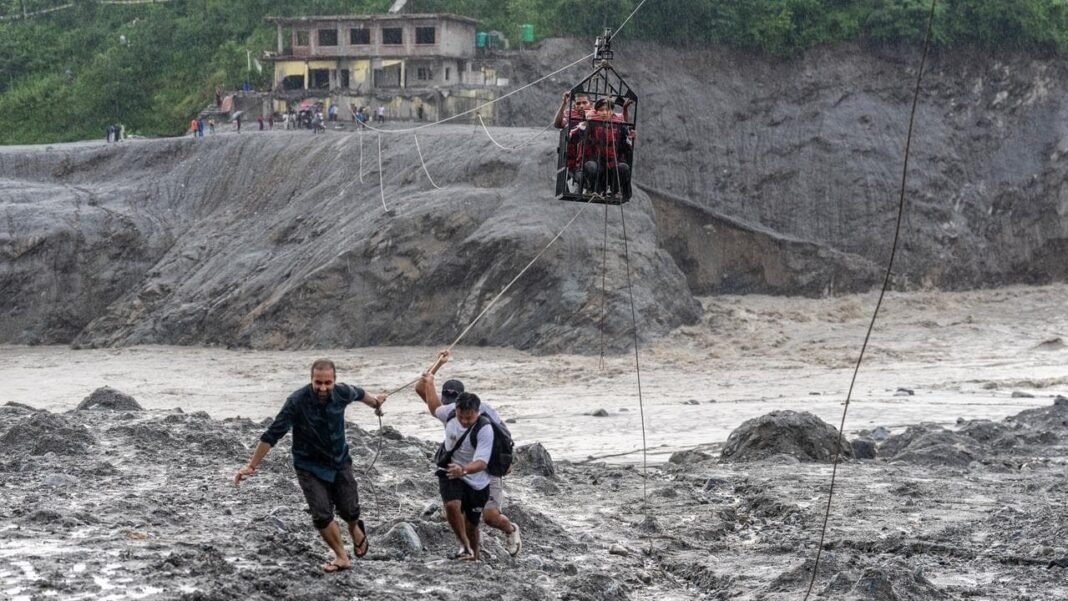


More than 100 foreign trekkers are stranded at different locations in Nepal after flooding of a river in the central part of the country swept away hiking trails and bridges, an official said. The trekkers cannot return because part of the trail has been swept away, Bhuwan Raj Ojha, an official of the Manaslu Conservation Area Project that includes a popular trekking route, told Reuters from Gorkha. “Those hikers who want to return because of the flood need to be rescued. Those who want to continue their trekking can do so from locations that are safe,” Ojha said.
Authorities rescued 321 people, including 12 foreigners, on Monday after a pre-dawn landslide at the weekend in Gorkha district, about 100 km west of Kathmandu, blocked the Budhi Gandaki River and led to downstream flooding. The army said the rescue operation would continue on Tuesday, even as the water level in the river had receded. There were no reports of fatalities in the flood, but five villagers were out of contact after black muddy sludge and debris washed away homes and damaged infrastructure, including three hydroelectric plants, national disaster authorities said.
The flooding struck a region that draws trekkers to the Manaslu circuit, one of Nepal’s well known high mountain routes. Ojha said restaurants and tea houses along the route are safe, which gives stranded visitors shelter while rescue teams work through the affected areas.
How the group became stranded in Gorkha
The landslide struck before dawn at the weekend and blocked the Budhi Gandaki River, forming a barrier that pushed water downstream into settlements and across the trekking trail. Trails and bridges were swept away, cutting the route that trekkers use to move between villages in the Manaslu region. Hikers were already on the trail found themselves unable to move forward or turn back along sections where the path had gone.
Rescue teams reached the area on Monday and brought out 321 people, among them 12 foreigners. The army continued the operation into Tuesday, with the water level in the river receding but the trail still broken in places. Officials have not given a full breakdown of the nationalities of the stranded trekkers, and the count of those still waiting for rescue may change as teams reach more locations along the route.
The five villagers who remain out of contact are a separate concern for disaster authorities. Their homes were in the path of sludge and debris carried by the flooded river. Search teams are working to re-establish contact, while damage assessments continue for the homes and the three hydroelectric plants hit by the flood.
Why trekkers face repeated risk in Nepal mountains
The Gorkha flooding comes weeks after a far larger disaster on Nepal’s border with China. On August 26, a glacier collapse and landslide blocked a river on the Himalayan border, and the wall of mud and rock that followed washed away towns and villages. At least 1,380 people were killed by that mudslide and more than 5,500 were missing, according to reports from early September, when Nepal marked a national mourning day for the victims.
That disaster also buried roads and highways under mud and debris and left rescue teams searching hydropower stations for survivors. Chinese officials later said workers had recovered more bodies as the search continued for hundreds still missing in Tibet. The scale of the August flood has kept Nepal’s disaster agencies on alert through the autumn trekking season, when thousands of foreign visitors walk high mountain routes.
Nepal’s mountain regions face a mix of landslide, flood and avalanche risk, and a single blocked river can cut off a whole valley. The Gorkha incident shows how fast a trail can become impassable: a landslide before dawn, a blocked river, and by morning a route used by trekkers from many countries was gone in places.
What happens next for the stranded trekkers
The army’s rescue operation was set to continue on Tuesday, with teams moving along the damaged trail to reach trekkers who want to leave. Trekkers who choose to stay on the route can do so from locations that are safe, Ojha said, since tea houses and restaurants along the route remain open.
Until then, movement through the affected stretch of the Manaslu region stays limited, and new arrivals heading into the area face the same broken trail. The water level in the Budhi Gandaki River has receded, but officials have not said when the full route will be passable again.