
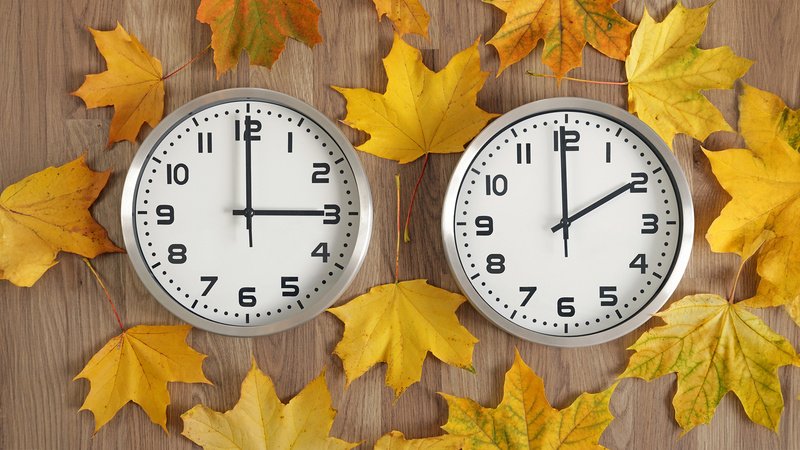


Daylight saving time ends at 2 a.m. local time on Sunday, 1 November 2026, in most of the United States. Clocks move back one hour to 1 a.m., so the hour from 1 a.m. to 2 a.m. happens twice and Sunday runs for 25 hours by the clock. People who still set clocks by hand can turn them back before bed on Saturday, 31 October, while phones, computers and many other devices change on their own.
The change returns observing areas to standard time. Sunrise and sunset then arrive about an hour earlier by the clock, which means brighter mornings and darker evenings. The shift does not add or remove daylight from the day. It moves one hour of daylight from the evening to the morning, as the National Institute of Standards and Technology explains the change.
When Daylight saving time ends
Federal law sets the dates for Daylight saving time. Under the Uniform Time Act, as amended by the Energy Policy Act of 2005, the period starts at 2 a.m. on the second Sunday in March and ends at 2 a.m. on the first Sunday in November. In 2026, the period began on 8 March and runs for 238 days, about 65 percent of the year. The next change is scheduled for Sunday, 14 March 2027, when clocks spring forward one hour.
Hawaii and most of Arizona do not observe the change, and the Navajo Nation inside Arizona is an exception to that exception. Puerto Rico, Guam, American Samoa, the United States Virgin Islands and the Northern Mariana Islands also stay on standard time all year. States may exempt themselves under federal law, but a state that observes the change must follow the federal dates. Each time zone switches at 2 a.m. local time, so the change does not happen at a single moment across the country.
Why Daylight saving time is still debated
Congress has debated ending the twice-yearly switch for years, but no change has become law in time for this weekend. The Sunshine Protection Act, House bill H.R. 139, would make daylight time permanent across the country. The House passed it on 14 July 2026 by 308 votes to 117, and it has sat with the Senate Commerce Committee since 15 July. A separate proposal, H.R. 9638, would set permanent standard time instead. Until either becomes law, Daylight saving time still ends in November.
Sleep researchers have weighed in on both options. The American Academy of Sleep Medicine supports permanent standard time, saying it lines up more closely with the body’s natural daily rhythm. Supporters of permanent daylight time argue for lighter evenings through winter. The debate has continued through several sessions of Congress without a final vote in the Senate, and the 1 November change goes ahead under the rules now in force.
How to adjust after Daylight saving time ends
Health guidance for the fall change is mostly about small, steady steps. The American Academy of Sleep Medicine advises at least seven hours of sleep a night for adults, with bedtimes and wake times kept as regular as possible, including at weekends. Its tips include shifting bedtime and mealtimes slightly later in the days before the change, setting clocks on Saturday evening, and going to bed at the usual bedtime by the new time. Morning light in the days after the change helps reset internal timing, and extra caffeine late in the day can make adjustment harder.
Raghu Upender, medical director of the Vanderbilt Sleep Disorders Center, said the fall change is usually easier than the spring change, because most people welcome the extra hour of sleep and tend to sleep later at weekends. He advised plenty of outdoor light during the day and a regular sleep schedule to cope with darker evenings. Opening curtains, turning on bright lights at home, or taking a walk outside can all help, he said, because light through the retina controls melatonin, the hormone that regulates the sleep-wake cycle.
Martin Young, a cardiovascular researcher at the University of Alabama at Birmingham, warned that organs can adjust at different speeds after a time change, creating a brief period when internal timing is out of step. A university report in October cited research linking the November gain of an hour with about 10 percent fewer heart attacks on the following Monday, compared with about 10 percent more after the spring loss of an hour. Young advised shifting bedtime and wake time by 15 to 20 minutes later over two or three days before the change, eating breakfast at the new time, and getting sunlight in the morning. Most people settle within a few days, and sleep trouble that lasts well beyond that week is worth raising with a doctor.