


Pennsylvania has recorded over 1,350 measles cases this year, more than a third of them in Lancaster County alone, according to state figures reported by the Associated Press on 30 October 2026. Lancaster County is home to the largest Amish population in the United States, and it is the epicentre of the worst outbreak in the country in 35 years. The state has recorded three associated deaths in Lancaster County and two in other counties.
Measles was officially considered eliminated from the United States since 2000, but vaccination rates have fallen, and rates have long been low among the Amish. Amish and Mennonite shoppers mix daily with the wider public at markets, shops and auctions, in a county of about half a million people where subdivisions sit beside Amish farms. Dr Diego Hijano of St Jude Children’s Research Hospital said: “We are all interconnected.”
How measles spread in Lancaster County
The outbreak has especially hit the Plain communities of Amish and conservative Mennonites, named for their modest dress and limited use of technology. Vaccination rates, and attitudes about vaccines, range widely in those communities. Overall, they are less likely to be vaccinated than the general population, due more to culture and habit than to doctrine. Many are now showing a new openness to vaccines, while members of the general public are also taking extra precautions.
Pennsylvania rates have declined from their September peak, but some doctors expect them to rise as winter brings more indoor gatherings. While most cases are mild, the illness can cause serious and even fatal complications, such as pneumonia and encephalitis. The virus spreads easily when people who have it breathe, cough or sneeze, or through contaminated surfaces.
The wider vaccination picture explains why the virus found room to spread. According to the Centers for Disease Control and Prevention, 92.4 percent of United States kindergartners in 2025 to 2026 received the required measles, mumps and rubella shots, down from 95.2 percent in 2019 to 2020. Pennsylvania kindergarten rate fell to 93.2 percent last year, and Lancaster County rate is 88 percent, below the 95 percent level at which an outbreak is considered unlikely.
Measles vaccination views among Plain people
Attitudes toward vaccines in Plain communities have warmed and cooled over time, most recently cooling in reaction to strict COVID-19 public health measures, according to community leaders and scholars. The outbreak is prompting many to accept the shots while reinforcing vaccine scepticism in others. One Amish farmer, Ephraim Zook, still opposes vaccines even after he and his wife nursed their young twins through the illness. He said: “We just felt that measles is a natural thing.”
Other Plain people have changed their minds after seeing the illness at close range. One Plain farmer said he got vaccinated after his adult siblings began getting ill. With vegetables to harvest and tobacco leaves to pick, he said that if he caught the illness, his work would stop. A Mennonite market vendor said his largely vaccinated community has had no infections.
Those who avoid vaccines usually are not driven by ideology, community leaders and experts say. Allen Hoover, an Old Order Mennonite and former administrator of the Parochial Medical Center in New Holland, said: “The overwhelming reason had nothing to do with being against vaccinations. It was simply, ‘Well, we never did before, and we came through all right.'” Hoover said medical workers should encourage vaccination, not push it aggressively, and that building trust takes time.
Measles clinics and the response in Pennsylvania
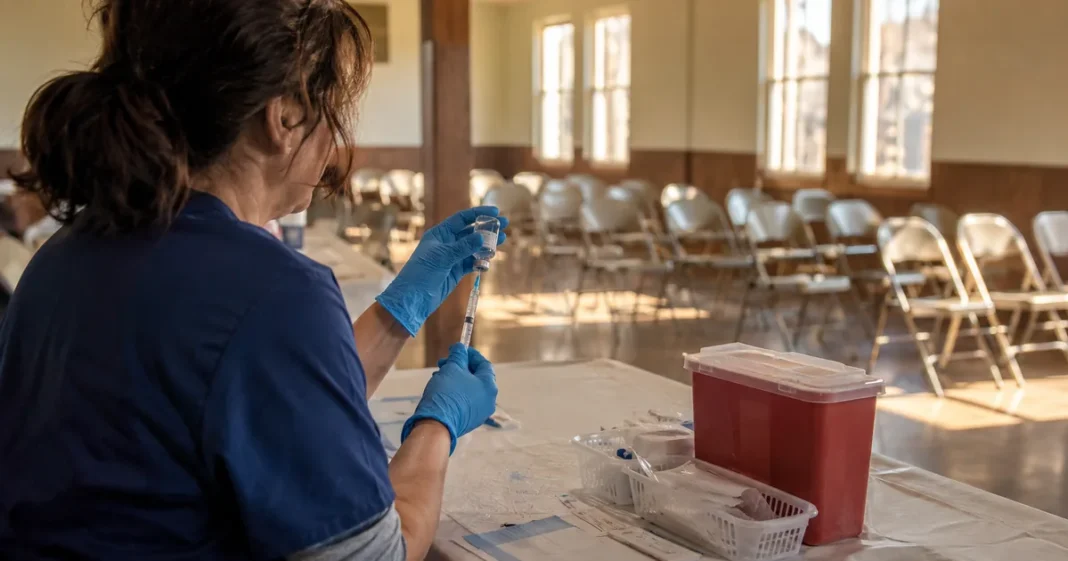
Union Community Care, a nonprofit with clinics in Lancaster and outlying towns, has held small scale vaccine clinics to reach Plain populations, resulting in about 450 measles shots. Dr Anne-Marie Derrico, chief medical officer at Union Community Care, said Plain patients come to the city, and city patients who do not vaccinate go to school and other programmes with other children. Union clinics are also offering vaccinations for infants earlier than normally scheduled.
Lauren and Mason Spence brought their 10 month old son, Bowen, to a clinic recently to get his first dose of the measles, mumps and rubella vaccine. The family, described as English in the Associated Press report, frequently goes to public places, including farmers markets. Lauren Spence said: “It’s scary. It’s spreading quick.” Lancaster County Commissioner Alice Yoder said officials should unite behind the message that the vaccine is safe and effective.