
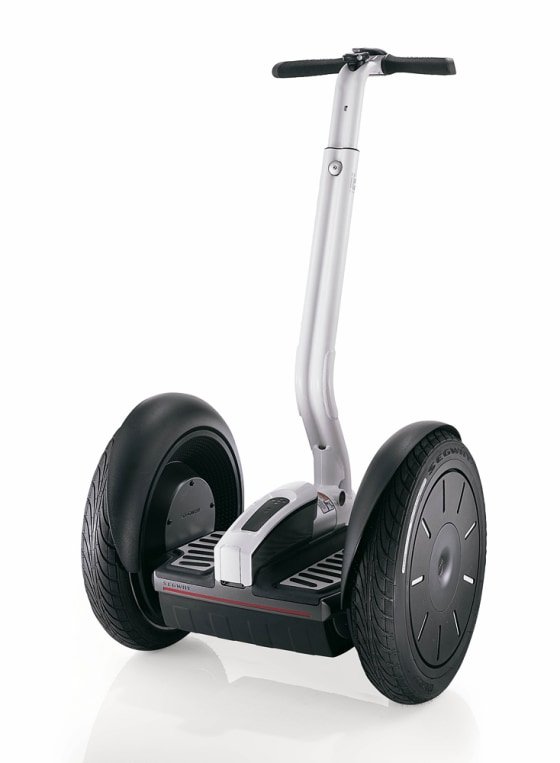


Twenty-five years after it was unveiled as the future of transport, the Segway is remembered more as a punchline than as the machine that would change cities. The two-wheeled, self-balancing device was supposed to replace the car for short trips. It ended up as a prop in a mall-cop comedy, and its owner died riding one off a cliff.
The machine was the work of Dean Kamen, an inventor from New Hampshire. Before the reveal, it was known only by the codename “IT,” and a book proposal said it would change the way people lived. When it was shown on Good Morning America in December 2001, the coverage treated it as a once-in-a-generation invention.
Segway promised to replace the car
The Segway Personal Transporter went on sale for $5,000, about the price of a used car at the time. Its makers said it would replace short car trips and reshape city streets. Six years after it went on sale, it had reached only about 1 percent of its sales target, and over its whole life it sold about 140,000 units.
Price was one problem. The other was how the machine looked and felt to ride. Standing upright on a platform, leaning to steer, riders drew stares on sidewalks, and the device picked up a reputation as a toy for tourists and security guards rather than a serious way to get around.
The falls that made the news
A run of public mishaps did the rest. In 2003, President George W. Bush was photographed falling off one while on holiday in Maine. In 2015, a cameraman riding one knocked sprinter Usain Bolt over during a victory lap at the World Championships in Beijing. And in 2009, the comedy Paul Blart: Mall Cop put Kevin James on one as an out-of-shape security guard, a joke that stuck to the machine for years.
Television host Piers Morgan broke three ribs in a Segway fall in 2007. Each mishap added to the same image: a clever piece of engineering that people found hard to take seriously.
The death of the Segway owner
The strangest turn came in 2010. Jimi Heselden, a British businessman who had bought the Segway company in December 2009, died on September 26, 2010, at the age of 62, after riding one of the machines off a cliff on his estate in West Yorkshire.
Heselden was walking his dog along a footpath above the River Wharfe when he met another dog walker on the narrow path. He tried to reverse to give the man room, wobbled, and went over the edge at Jackdaw Crag, a drop of about 30 to 40 feet. His body was found in the river below, and the machine was found with him. There was no mechanical failure. Heselden, a former coal miner who had made his fortune from Hesco bastions, the wire cages filled with earth that protect soldiers, had given more than 23 million pounds to charity in his life.
Many people assumed the man who died was Dean Kamen, the inventor. Kamen is alive, and he has spent the years since working on medical technology. Heselden had owned the company for less than a year.
What the Segway left behind
The company was sold again, and in 2015 it was bought by Ninebot, a Chinese rival. In June 2020, Ninebot stopped making the original Segway PT. The brand did not disappear: Ninebot still sells electric scooters under the Segway name, and the self-balancing technology from the original machine sits inside the millions of shared e-scooters now used in cities around the world.
The US Department of Transportation estimated last year that more than 199 e-scooter systems were operating in 133 American cities. Riders on those scooters lean, brake and balance on hardware that traces back to Kamen’s machine, even if few of them know its name.
The Segway never replaced the car, and it never remade a city. Its afterlife is quieter: the balance sensors and motors it proved out now move millions of people a day, on machines that cost a fraction of the price and draw far fewer stares.