
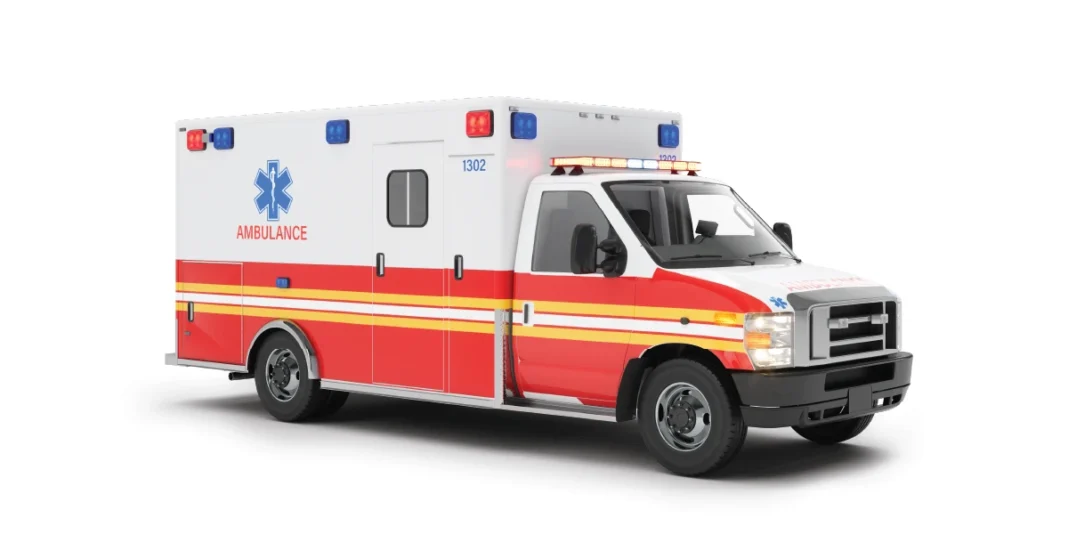


India will supply 100 new Sri Lanka ambulances for the free 1990 Suwa Seriya emergency service, under an agreement signed in Colombo on Wednesday. The vehicles will be fully equipped, and India will pay for them through grant assistance of SLR 1,725.73 million, about USD 5.28 million. Union Health Minister Jagat Prakash Nadda and Sri Lanka’s health minister, Dr Nalinda Jayatissa, were present when the memorandum was exchanged.
The new Sri Lanka ambulances will take the service’s fleet from 322 to 422. The Indian High Commission in Colombo said the service answers about 1,000 to 1,200 patient transfer calls a day and carries patients to hospital free of charge, in every district of the island. The High Commission described the ambulance programme as an example of India-Sri Lanka development cooperation that brings direct benefits to people.
What the Sri Lanka ambulances deal covers
The memorandum covering the Sri Lanka ambulances was exchanged on the sidelines of the first BIMSTEC Health Ministers’ Meeting in Colombo, where Nadda led the Indian delegation. Sri Lanka’s cabinet had cleared the agreement a day earlier, on 10 November, on a proposal from Jayatissa. The Department of Government Information said breakdowns had become more frequent in the existing fleet, and the new vehicles will add capacity.
The service, known by its emergency number 1990, runs around the clock. The new Sri Lanka ambulances are expected to cut waiting times for patients who need urgent transport, above all in rural areas and smaller towns where the nearest hospital can be far away. The High Commission said the expansion would improve operational efficiency and help patients reach emergency care sooner.
How the Sri Lanka ambulances service began
The service began after a request from the Sri Lankan government during Prime Minister Narendra Modi’s visit to the island in March 2015. India gave USD 7.5 million in grant assistance, and the service started in July 2016 in the Western and Southern Provinces with 88 ambulances, running costs for a year and an emergency response centre.
The Sri Lanka ambulances service was extended across the whole island in July 2018, when Modi and then Sri Lankan Prime Minister Ranil Wickremesinghe launched the second phase. That phase brought USD 15.02 million more in Indian grant assistance, covering 209 ambulances, running costs and training. The two phases together put 297 ambulances on the road, and the service has since worked through the Covid-19 pandemic and natural disasters.
Health kiosks and primary care
Nadda also announced Indian support for 50 Medical Kiosks, known as Health ATMs, to strengthen primary healthcare in Sri Lanka. The kiosks will be placed at Arogya Primary Health Centres and will offer point-of-care diagnostic services linked to telemedicine. India will give grant assistance of up to SLR 225 million for the kiosks.
The kiosks form part of India’s USD 450 million rehabilitation package for Sri Lanka, announced after Cyclone Ditwah struck the island in November and December 2025. The health kiosks are meant to bring basic tests and medical advice closer to people who live far from a hospital. The Sri Lanka ambulances agreement and the kiosk plan were both agreed during Nadda’s visit to Colombo for the BIMSTEC meeting.
Regional health talks in Colombo
The Sri Lanka ambulances agreement came during the first meeting of health ministers from BIMSTEC, the Bay of Bengal Initiative for Multi-Sectoral Technical and Economic Cooperation. The seven members are Bangladesh, Bhutan, India, Myanmar, Nepal, Sri Lanka and Thailand. The ministers adopted a joint statement and a revised plan of action on public health for 2026 to 2030, covering disease surveillance, pandemic preparedness, digital health, traditional medicine and workforce development.
Nadda offered to share India’s experience in primary healthcare, digital health systems and public health infrastructure. He told the meeting India had set up more than 1.85 lakh Ayushman Arogya Mandirs. The Ayushman Bharat health assurance scheme gives cashless hospital cover of up to Rs 5 lakh a year per eligible family and covers more than 60 crore people. India’s national telemedicine service, eSanjeevani, has passed 50 crore consultations.
India also said it would host a BIMSTEC Centre of Excellence in Traditional Medicine at the Institute of Teaching and Research in Ayurveda in Jamnagar, Gujarat. The meeting agreed that health ministers and senior officials would meet every two years, and Thailand offered to host the second meeting in 2028. Nadda said “No country should be left behind in its pursuit of better health outcomes.”
Sri Lankan health authorities will work with Indian officials on delivery and deployment of the Sri Lanka ambulances. Once the new vehicles arrive, the fleet will stand at 422, up from 322 today.