
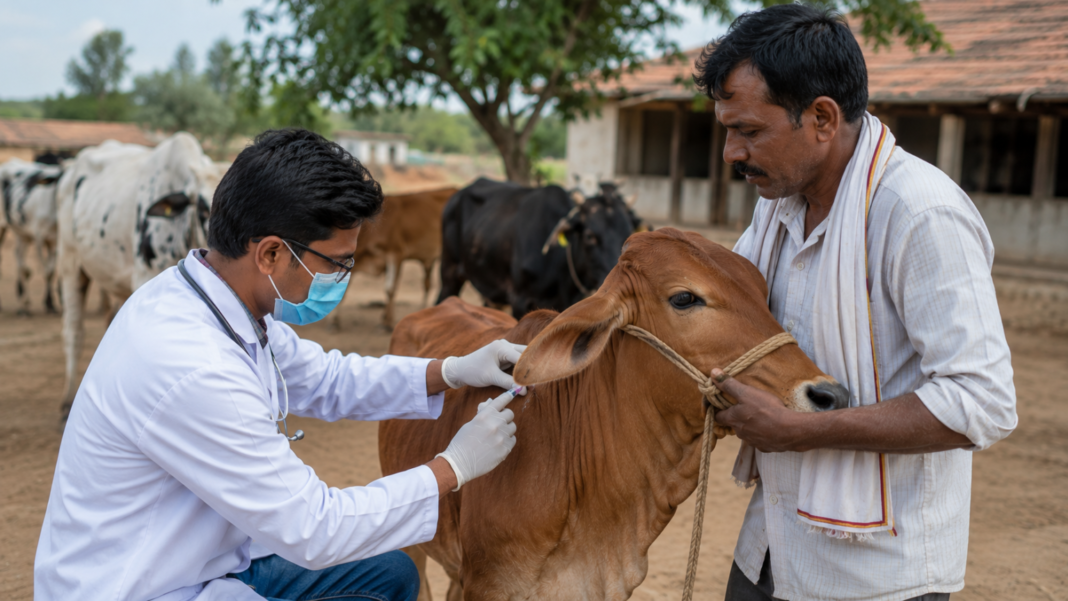


India is the top milk-producing country in the world, but each animal here gives less milk than animals in many other countries. The next big step for the dairy sector is to keep animals healthy, get more milk from each animal, and cut losses that farmers now absorb. That shift in thinking about animal health was the subject of an article in The Hindu BusinessLine on 22 November.
For many smallholders keeping dairy cattle, money is spent on animal health care only after symptoms of sickness appear. The losses, however, usually start much earlier and continue much longer. Mastitis, metabolic problems and infertility cut milk production, lengthen the gap between calvings and raise the number of animals culled. Farmers pay for treatment and lose production while the animal is sick.
Animal health and the productivity gap
Preventive care is usually much cheaper than treatment, but it is not given enough weight in decisions about livestock care. The gains from prevention are not as immediate as the gains from treating a sick animal, so farmers often put it off. Yet the cost of a missed vaccination, a mineral gap in feed or a dirty milking shed shows up later as lower yield, longer dry periods and animals removed from the herd.
Feed and minerals are often seen as input costs rather than protection for the animal. Proper feeding supports the immune system, reproduction and lactation, and a lack of minerals can hurt both fertility and milk output. Poor nutrition or poor hygiene can undo the gains from vaccination and other care, because all the parts of prevention work together.
India’s livestock numbers are large, and the stakes are high for the households that keep them. Ruminants support the livelihoods of around 20.5 million people and contribute about 16 per cent to the income of small farm households, according to industry data, and they sustain two-thirds of the rural population. A small rise in yield per animal therefore reaches a large number of families, which is why the case for animal health spending goes beyond the farm gate.
What preventive animal health care involves
Prevention is a combination of practices rather than a single product, and animal health depends on all of them. Balanced nutrition, mineral supplementation, proper vaccinations, timely deworming, healthy housing, milking hygiene, regular monitoring of the animals, early detection of problems and proper care for young animals and transition cows all play a part. Each of these steps matters on its own, and each depends on the others.
The market for animal health products in India reflects that shift. The India animal health market was valued at INR 92.62 billion in 2025 and is projected to reach INR 171.91 billion by 2034, according to Research and Markets. Government programmes add to the push: the National Animal Disease Control Programme aims to end foot-and-mouth disease by 2030, and the revised Livestock Health and Disease Control Programme carries an outlay of INR 3,880 crore for 2024 to 2026, including the Pashu Aushadhi component for veterinary medicines.
Getting animal health advice to villages
Information and access remain the weak points for animal health in rural India. Farmers in villages need reliable, practical advice on what to do, when and why. Local community workers trained in preventive care can turn that advice into daily practice, retailers can act as advisers, and peer demonstrations can build confidence among farmers who have not tried the methods before.
Businesses, non-governmental organisations and government programmes can support that network together, so that preventive care of animals becomes part of routine practice. The article argues that the change has to be coordinated: advice alone will not work without access to vaccines, minerals and veterinary care, and supplies alone will not work without farmers who know how to use them. That work, in that sense, is a shared job between farmers, advisers and the companies and programmes that serve them.
The BusinessLine article was published on 22 November, as the dairy sector weighs how to raise output per animal without adding to herd numbers. For smallholders, the argument is a practical one: healthy animals give more milk, stay in the herd longer and cost less to keep.