
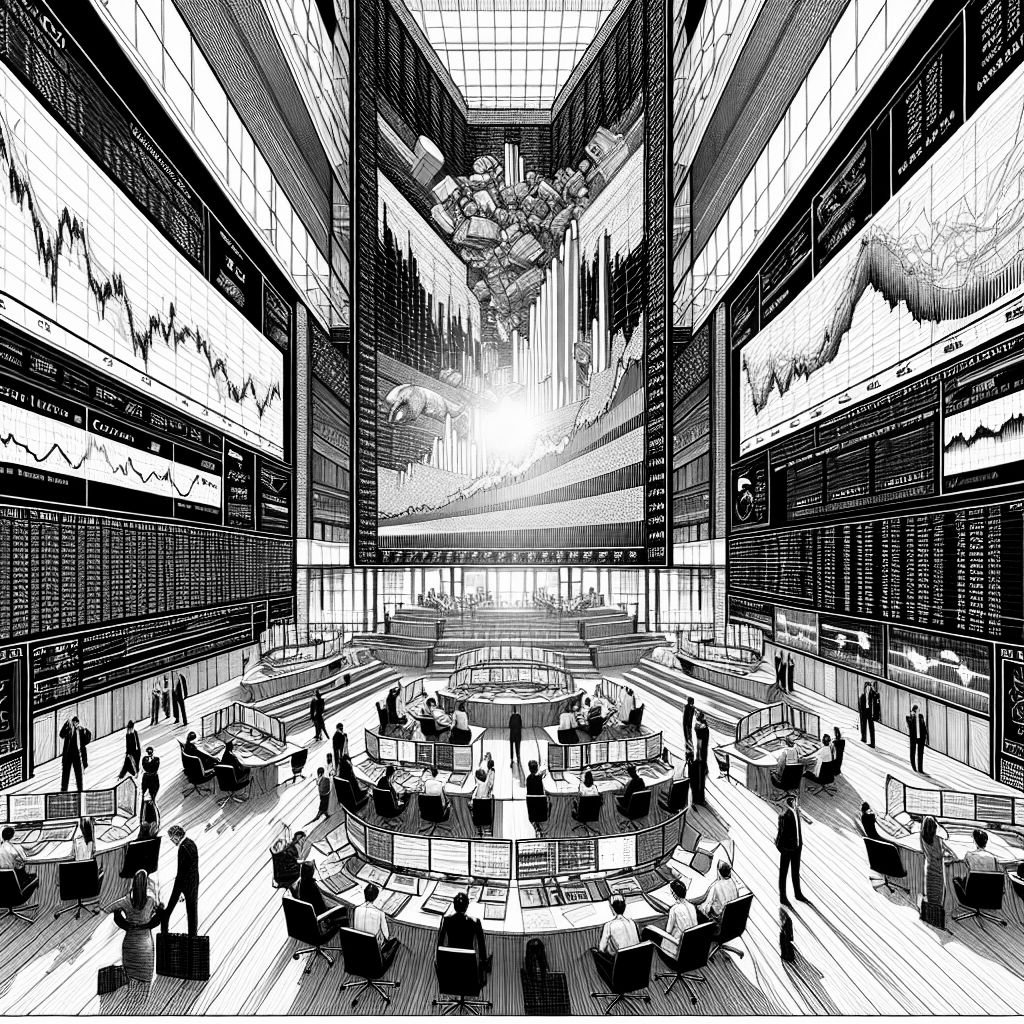


The stock market is in correction after its worst week since the pandemic, and futures bounced on Sunday night as traders asked whether the selling had gone too far. The S&P 500 fell 3.7 percent to 6,910 on Friday, the Nasdaq Composite lost 5.3 percent, and the Dow dropped 1.9 percent, leaving all three major United States indices in correction territory, at least 10 percent below their recent peaks.
The Nasdaq is now negative for 2026, and the wider stock market has given back its gains for the year, according to CNBC it was the worst week for the Nasdaq and the Dow in more than six years. Reuters reported that the Nasdaq fell about 10 percent over five sessions, its biggest weekly drop since March 2020, and the Philadelphia semiconductor index lost 10 percent on Friday alone. The VIX, Wall Street’s fear gauge, closed near 36.
Nvidia fell 14 percent on Friday after Reuters reported that the securities regulator’s investigation into the company is looking at possible accounting issues. The drop added to the damage from Jensen Huang’s departure as chief executive earlier in November. Anthropic, which only listed on Thursday, closed 8.5 percent lower on its first full day of trading and is now not far above its $83 offer price.
Stock market futures bounce on Sunday night
The bounce in stock market futures started as soon as trading opened on Sunday evening in New York. S&P 500 futures were up about 2 percent early on Monday and Nasdaq 100 futures close to 3 percent, with Dow futures up around 1.5 percent. Some of that is simple arithmetic: after a fall that steep, short-term sellers are quick to take profits. Some of it is reassurance, as Oracle said on Friday that it has secured all the funding it needs for its huge infrastructure contract with OpenAI, and called reports to the contrary wrong.
Asia had no such luck, and the stock market rout spread through the region. Tokyo was shut for a public holiday, but Seoul took the full force. The Kospi slid as much as 5.8 percent in the morning, with Samsung Electronics and SK Hynix both sharply lower, before trimming the losses to around 3 to 4 percent in the afternoon. South Korea’s finance ministry said on Sunday that market stabilisation funds are ready to be used immediately. Taiwan’s regulator tightened short-selling rules on Saturday after the island’s market had its worst week since 1990, and Chinese exchanges eased rules on margin financing.
Stock market questions shift to who pays for AI
Underneath the headlines, the question investors are asking has changed. For two years, the debate was about how much AI could do. Now it is about who is paying for the data centers, how much of that money is borrowed, and whether the returns arrive fast enough to keep lenders happy. When Oracle feels the need to put out a statement saying its funding is in place, that tells you how nervous the market had become about the financing chain.
The reaction in the stock market so far splits neatly by time zone. In the United States, futures are behaving as if the selling went too far, too fast. In Asia, where the chip supply chain lives, markets are still catching up with Friday’s damage. Europe sits in between, and the FTSE 100, which fell about 1 percent on Friday, has less tech exposure than most, so London could look relatively calm if the bounce holds.
What the stock market faces this week
The week ahead is short for the stock market, with United States markets closed on Thursday for Thanksgiving and closing early on Friday. The Federal Reserve’s preferred inflation gauge, the PCE data, arrives on Wednesday, and it is the last big reading before the Fed’s December 9 meeting. Futures markets put the odds of a December rate rise at around 93 percent, according to the CME FedWatch tool, and the 10-year Treasury yield sits near 4.95 percent.
Gold has bounced back towards $3,600 an ounce after hitting its lowest level in about 14 months on Friday, following a fall of roughly 9 percent last week. Bitcoin is holding just above $61,000 after slipping below $60,000 on Friday for the first time since July. The bounce needs a reason to stick, and thin holiday trading can exaggerate moves in both directions.