
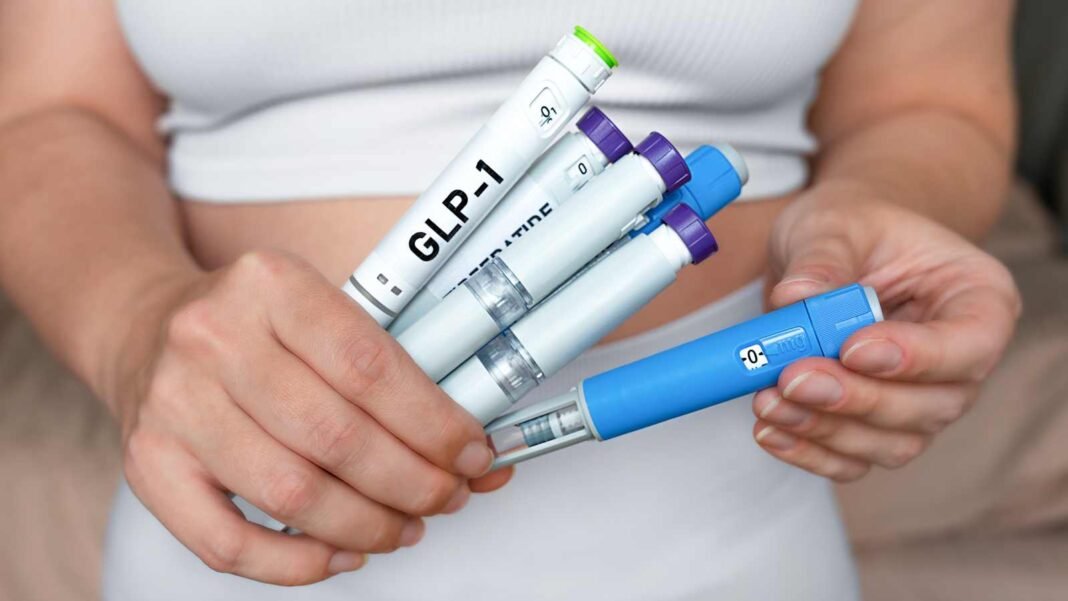


The benefits of widely used GLP-1 medications beyond weight loss continue to pile up, as shown by a series of studies presented at the Obesity Week 2026 medical meeting in Washington. Use of GLP-1 drugs by patients with obesity and heart failure was associated with significant heart muscle improvements, according to a study by Mayo Clinic researchers presented at the meeting.
Everyone in the study had heart failure with reduced ejection fraction, meaning the heart’s left ventricle was only weakly pushing blood out toward the body. After one year, those taking GLP-1 medications showed significantly greater improvements in left ventricular size, shape, structure, and function than a closely matched control group of patients with obesity, researchers reported.
Those on GLP-1 therapy were taking either semaglutide, sold by Novo Nordisk as Wegovy and Ozempic, or tirzepatide, sold by Eli Lilly as Zepbound and Mounjaro. The 146 patients in the GLP-1 group had significantly greater total body-weight loss than the 237 who were not taking the medicines, but most of the heart improvements remained significant even after accounting for weight changes, suggesting that some of the positive effects were due to the drugs themselves rather than weight reduction.
GLP-1 drugs and the weak heart
The study was only designed to analyze changes at one year, but exploratory two-year analyses showed continued improvements in left ventricular ejection fraction and heart size, the researchers said. Those analyses were intended to generate new hypotheses for future studies rather than firm findings, and the results have so far been presented at a meeting rather than published in a journal.
The result matters because doctors have been unsure about using these drugs in patients whose hearts are weak. Weight-loss drugs such as Ozempic, Wegovy, and Mounjaro are already known to help one type of heart failure, the stiff type where the heart does not relax properly. The new study suggests they may also help the other type, where the heart muscle itself has become weak, but it comes from patient records rather than a randomized trial, and earlier trials of a similar drug in weak hearts gave reasons for caution.
Only a randomized trial can rule out the possibility that the patients who received the drugs differed from the others in ways the researchers could not measure. The researchers said the improvements held up after they matched the groups closely, but the design still leaves room for doubt, and doctors want proof before using these drugs for weak hearts.
GLP-1 drugs and the stiff heart
For the stiff type of heart failure, the evidence now includes several randomized trials. A week earlier at the American Heart Association’s Scientific Sessions in Chicago, a separate team of Mayo Clinic researchers reported on 81 adults with obesity and heart failure with preserved ejection fraction who received semaglutide or a placebo for 52 weeks.
Treatment with semaglutide improved pressures inside the heart during exercise and at rest and was associated with remission of heart failure in more than half of treated patients, the researchers reported in Nature Medicine. In the SUMMIT trial, which enrolled 731 people with obesity and the stiff type, tirzepatide cut the risk of dying from heart disease or having heart failure get worse by 38 percent over about two years compared with a placebo.
GLP-1 drugs and the cost question
Eli Lilly’s obesity drug Zepbound is ultimately cost-saving over time, according to data presented by the Indianapolis-based drugmaker. Researchers compared trends in healthcare costs and use among more than 171,000 adults treated for at least a year with Zepbound for weight management, and the same number of similar but untreated people. In one analysis, healthcare costs per month in patients not receiving Zepbound grew by an estimated $29 at three to six months and $82 at six to twelve months.
The GLP-1 drugs started as diabetes treatments, then became weight-loss drugs, and now the evidence is building that they help the heart as well. The Mayo Clinic studies add to that picture, but the researchers and the doctors who treat these patients agree on what comes next: a randomized trial in people with weak hearts, to find out whether the drugs really do what the records suggest.