


In November 2026, a series of technology outages in the United States affected a wide range of services, impacting millions of people in the United States and worldwide. The technology outages included a Microsoft outage, a nationwide ground stop by the Federal Aviation Administration, banking disruptions, and an outage at the National Security Agency. The incidents happened within days of each other, and the timing led to widespread speculation about whether they were connected.
The technology outages began on November 12, when Microsoft’s services went down. A latent software defect in Microsoft’s networking gateway servers, compounded by network traffic changes and reduced server capacity, kept users out of email and other tools for two days. Microsoft said the incident was not caused by a cyberattack. The outage was resolved on November 14.
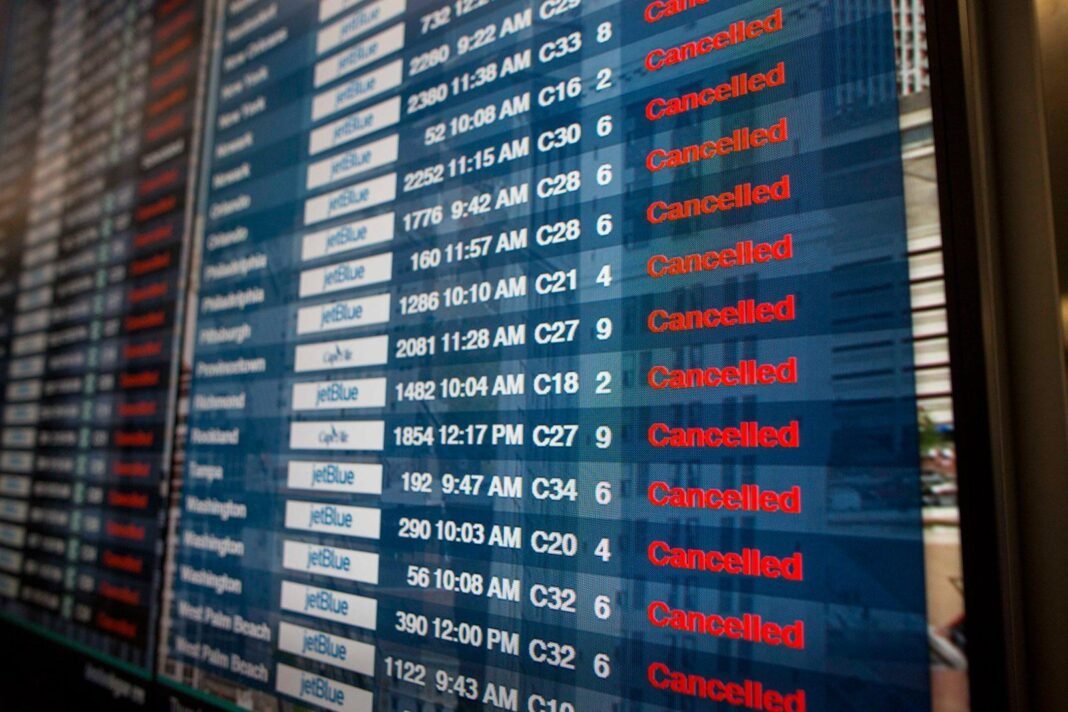
On November 13, the FAA ordered a nationwide ground stop after telecommunications network instability caused by excessive data traffic hit its legacy equipment. Investigators identified possible contributing issues at facilities in Texas and Arkansas, and the precise root cause remains under investigation. The ground stop was lifted the same day, but it stranded passengers at airports across the country.
Technology outages spread to banks and airlines
On November 16, the technology outages reached the banks. Several major United States national banks and financial services companies, including JPMorgan Chase, Bank of America, and US Bank, experienced service disruptions. Most of the banks’ issues stemmed from disruptions to JPMorgan Chase systems, where a software bug affecting an on-premises hardware system caused transaction processing delays. JPMorgan Chase said the problem was not cyber-related and confirmed that transactions were processing normally by Monday evening.
United Airlines also suffered an outage on November 16, when a software issue affected crew-facing apps, flight planning software, weather, and other systems needed for safe takeoff. Workday, the human resources software company, had a service disruption affecting two data centers on November 13 and 14, hitting thousands of companies that use it to pay staff and manage leave.
Technology outages reach the NSA and Apple
On November 17, the National Security Agency’s internal communications network went down. The outage, which lasted until November 20, was attributed to the agency’s handling of software updates for vulnerabilities in PHP, the software used to run websites. The updates caused the agency’s internal messaging system, known as NSANet, to crash. The agency’s headquarters at Fort Meade, Maryland, limited staff entry for three days to keep the system from crashing again. There was no evidence of a cyberattack.
Apple also had problems on November 17, when customers reported issues accessing iCloud, Apple Pay, the App Store, Apple Music, and AppleCare. Apple attributed the outage to an internal update rather than a cyberattack. The same day, a cyberattack on the platform Optimizely compromised the websites of 178 organizations, including Zoom, HSBC, Equifax, CNN, Salesforce, and IKEA. On November 19, a cyberattack on JPMorgan Chase, Visa, and Mastercard was reported, in which some customer data, including names and emails, was accessed after an attack on a third-party provider.
Officials say the technology outages were not connected
Secretary of State Marco Rubio said on November 18 that there is no indication the incidents are related. Top United States national security officials told Congress in a hearing that there is no evidence the technology outages are the result of any coordinated cyber attack. The director of national intelligence, Jay Clayton, told the hearing that the outages were separate incidents associated with maintenance and technical changes, rather than a coordinated or state-sponsored attack.
President Trump declared: “It’s life, it’s life. When you’re big and powerful, and you have all the money, things like that happen. It’s fine.” Lawmakers from both parties demanded investigations, and more than twenty House members announced a bipartisan AI Safety and Innovation Caucus to create safeguards for AI systems and a rapid response to AI incidents.
The technology outages also fed a surge in panic buying, driven by online rumors and misinformation, with suspected bot accounts responsible for 30 percent of posts promoting conspiracy theories about the events. An Emergency Alert System test scheduled for November 17 added to the confusion, leading to claims that a global blackout would start that day. The outages ended by November 20, but the questions they raised about the reliability of the systems Americans rely on have not gone away.