
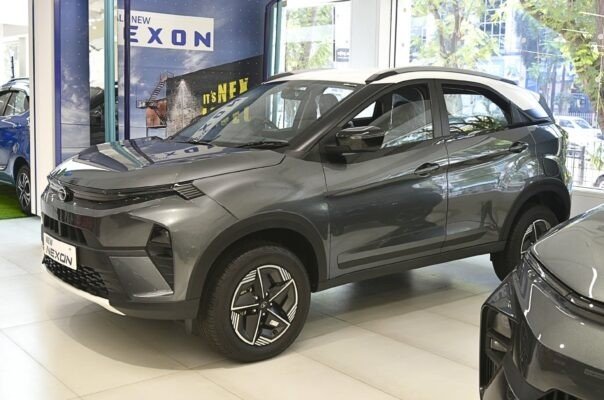


Tata Motors’ standalone passenger vehicle business has completed its first full year since the demerger with a record run, as Tata passenger vehicles grew 35 per cent to 7.44 lakh units between October 2025 and September 2026, well ahead of the industry’s roughly 22 per cent growth. The performance made Tata passenger vehicles India’s second-largest carmaker over the period with a market share of 14.1 per cent, up 120 basis points, vindicating the decision to separate the passenger vehicle business from commercial vehicles with effect from October 1, 2025.
Tata passenger vehicles: the numbers behind the 35% jump
Domestic sales of Tata passenger vehicles reached 7.44 lakh units in the twelve months ended September 2026, and managing director Shailesh Chandra admitted the scale of the outperformance had surprised even the company. “We had not expected 35 percent,” he said. Monthly bookings topped one lakh more often than not, with more than seven in ten bookings typically converting into retail sales. The company crossed the 70,000-unit mark in a single month twice, while two quarters went past two lakh units, underlining the breadth of the demand recovery.
Two nameplates did much of the heavy lifting for Tata passenger vehicles: the Nexon and Punch sold 2.38 lakh and 2.33 lakh units respectively, accounting for around 63 per cent of domestic volumes. The Sierra, meanwhile, crossed 60,000 units between January and September 2026 despite supply being constrained even as production was scaled up. Revised GST rates, which took effect on September 22, 2025, made cars more affordable across segments, while Tata’s electric vehicle and CNG offerings together made up nearly half of volumes, reflecting the brand’s powertrain diversification.
Tata passenger vehicles one year after the demerger
The demerger, effective October 1, 2025, separated commercial vehicles from the passenger vehicle entity, which includes domestic passenger vehicles, electric vehicles and Jaguar Land Rover; this review concerns the domestic business. Shares of Tata Motors Passenger Vehicles began trading independently on October 14, 2025, at an adjusted valuation of around Rs 400, while Tata Motors Commercial Vehicles listed separately this month. The company says the larger sales base of the standalone Tata passenger vehicles business offers better purchasing leverage and the ability to spread costs across more vehicles, benefits that should support profitability as it funds its next round of expansion. Commercial vehicles had historically provided an important earnings base within the combined company while the domestic passenger vehicle business worked through periods of weaker sales and profitability, and the separation reflected confidence that each business could pursue its own growth and investment plans independently.
Tata passenger vehicles eyes 20% share by FY31
Looking ahead, Tata passenger vehicles has set an ambitious target of securing a fifth of India’s passenger vehicle market and exceeding 12 lakh annual sales by FY31, which would require compound annual growth of around 10 per cent from the current base. Chandra said the company expects to reach the 15 per cent market share milestone “very soon”. The plan rests on six new nameplates, entry into new segments such as MPVs, accelerated product refreshes and broader powertrain options spanning petrol, diesel, CNG and electric. According to the company, the ambition of reaching 12 lakh annual sales and a fifth of the market by FY31 will also require sharper execution on quality and after-sales service, areas where customer feedback has been mixed in recent years. The outperformance was all the more notable given that the broader industry also benefited from the same GST relief, suggesting brand-specific factors such as refreshed models and a wider CNG and EV line-up played a decisive role.
Customer support is the other pillar of the Tata passenger vehicles expansion: the brand plans to triple its service network, with workshops growing faster than showrooms, alongside a sharper focus on quality. One year on from the demerger, the standalone business has laid a stronger foundation, and the coming product offensive will test whether the record run can be converted into a durable two-way fight for market leadership. With the GST cut continuing to support affordability and a packed product calendar ahead, the next twelve months will show whether the demerger dividend was a one-year wonder or the start of a sustained climb.