
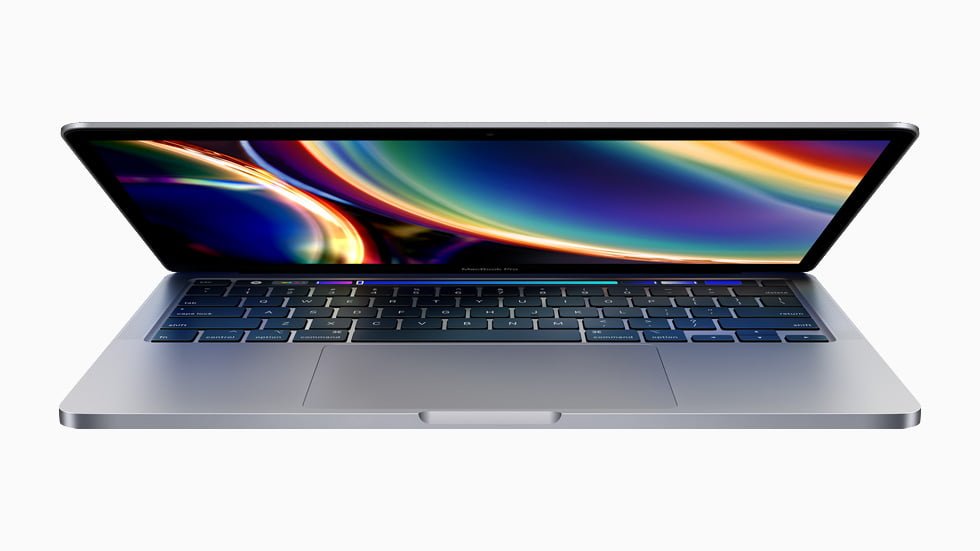


Apple has launched its first Mac with a touchscreen. The Touchscreen MacBook Pro, announced on October 28, 2026, starts at $2,899 for the 14-inch model in the United States. The 16-inch model starts at $3,399. Apple said the machines reach customers, Apple Store locations and Apple Authorized Resellers on Friday, November 6, 2026, and preorders are open in 30 countries and regions, including the United States.
The Touchscreen MacBook Pro ends years of resistance inside Apple to touch on the Mac. Steve Jobs once called the idea ergonomically terrible, and later Apple executives repeated that view in public. Apple first tried touch on a laptop with the Touch Bar, which it later removed. The new machine takes a different approach. Touch is built into the display itself, and Apple said macOS translates touches into clicks, so many existing applications should work at once.
The Touchscreen MacBook Pro screen is the main reason for the price. Apple calls it the PROLED XDR Display, a tandem OLED panel with two layers of organic light emitting diodes. Apple lists up to 2,000 nits of peak HDR and SDR brightness, a 10,000,000:1 contrast ratio, and support for the P3 and Adobe RGB color gamuts. The panel replaces the notch found on most current MacBooks with a Dynamic Island style cutout.
Touchscreen MacBook Pro chips and specs
The Touchscreen MacBook Pro runs on M5 Pro or M5 Max chips. Apple lists up to 128GB of unified memory and up to 16TB of storage across the range. The 14-inch model weighs 3.0 pounds (1.38 kg), and the 16-inch model weighs 4.0 pounds (1.82 kg), lighter than their non-touch predecessors.
Ports include three Thunderbolt 5 ports, an HDMI port, an SDXC card slot, MagSafe charging and a headphone jack. The M5 Pro variant supports three external displays, and the M5 Max variant supports up to four. Apple said it designed a hinge that stabilizes the screen when a user touches it, and steadies the camera during video calls.
Apple built the touch sensor directly into the display panel instead of layering it on top. The company said that design cuts the delay between a finger touching the screen and the machine responding. Apple named Notion, Canva, Zoom, Microsoft Office, Lightroom, DaVinci Resolve and Blender among applications with touch support.
Touchscreen MacBook Pro prices compared
The Touchscreen MacBook Pro has four starting configurations in the United States. The 14-inch model with M5 Pro starts at $2,899, or $2,749 with education pricing. The 16-inch model with M5 Pro starts at $3,399, or $3,199 with education pricing. The 14-inch model with M5 Max starts at $4,499, or $4,199 with education pricing. The 16-inch model with M5 Max starts at $4,799, or $4,499 with education pricing.
Each touchscreen price is $400 above the matching non-touch MacBook Pro with the same M5 Pro or M5 Max chip and a Liquid Retina XDR display. The 14-inch non-touch model with M5 Pro remains available for $2,499, and the 16-inch non-touch model costs $2,999. The non-touch line remains on sale. The choice is about the screen, not about speed, because the chips, memory and storage options are the same.
Apple also announced a separate 14-inch MacBook Pro on October 27, 2026, with a new M6 chip, starting at $1,999. That model keeps a Liquid Retina XDR display with up to 1,600 nits peak HDR brightness, and it has no touch. It also reaches customers on November 6. It is the lower priced option; the PROLED XDR models are for buyers who want touch and OLED.
Touchscreen MacBook Pro battery and buyers
Apple advertises up to 24 hours of battery life for the Touchscreen MacBook Pro. The battery figure is unchanged from the non-touch models. That detail will matter to buyers who work away from a charger all day, because the OLED panel is brighter and touch adds a new way to interact, but neither changes the headline battery claim.
The $400 premium and the $2,899 starting price put the machine in specialized territory. Photo and video editors working in P3 or Adobe RGB color, and presenters who annotate on screen, may find touch useful at once. Other buyers may see little gain from tapping a laptop screen. Apple lists macOS 27, which it calls Golden Gate, as the operating system for the new models.
It is the second major launch for chief executive John Ternus, after the iPhone Duo foldable in September 2026.