
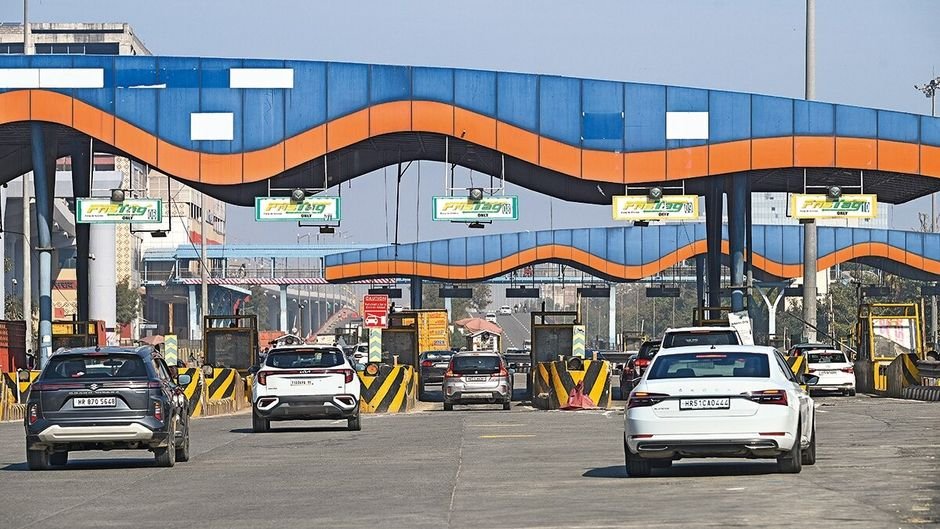


A concessional FASTag local pass for residents who live near a National Highway toll plaza starts on 1 November 2026, giving eligible drivers a cheaper annual option for the one plaza they use most. The Ministry of Road Transport and Highways notified the scheme on 26 October 2026 under the National Highways Fee (Determination of Rates and Collection) (Fifth Amendment) Rules, 2026.
The FASTag local pass is aimed at people who cross the same plaza again and again for work, study or local trips, and who now pay the toll each time they pass. For those drivers, a single annual payment replaces repeated per-crossing charges at that plaza, though it buys nothing anywhere else. The pass will be available at eligible toll plazas from 1 November 2026, and through the Rajmargyatra app from 1 December 2026.
Who can buy a FASTag local pass
Three conditions decide eligibility for the FASTag local pass. The vehicle owner must live within 20 kilometres of the relevant National Highway fee plaza. The vehicle must be non-commercial, and it must carry a valid, functional FASTag registered for non-commercial use. Commercial vehicles fall outside the scheme entirely.
Owners who meet those conditions can choose between the existing monthly pass and the new concessional local pass for commuting through a specific fee plaza. The choice matters because the two products suit different patterns of use: a driver who crosses the plaza only a few times a year may still pay less by paying per crossing, while a daily commuter is the driver the annual pass is built for.
A driver who crosses the plaza twice a day for work will pass it more than 500 times in a year, so the annual fee can work out far below the per-crossing total. A driver who passes only on occasional weekends may find the monthly pass or per-crossing payment cheaper, since the annual pass pays for itself only through frequent use. The scheme therefore rewards routine travel through a single plaza, not occasional trips.
FASTag local pass prices
The FASTag local pass costs Rs 1,500 a year at fee plazas outside municipal or local town limits, and Rs 3,000 a year at fee plazas within those limits. The price therefore depends on where the plaza sits, not on how often the driver crosses it. A driver who pays Rs 3,000 and crosses at Rs 50 a time would need 60 crossings to match the annual fee, while the same driver at Rs 100 a crossing would need 30.
The Central Government may revise the fees every year, with any change taking effect from 1 April. Drivers should therefore treat Rs 1,500 and Rs 3,000 as the announced rates for now, not as a permanent price. The standard FASTag annual pass, which costs Rs 3,075 in 2026-27 and covers eligible crossings across highways, remains a separate product with wider coverage.
How the FASTag local pass differs
The FASTag local pass is valid only at the designated fee plaza for which it is issued. It cannot be transferred to another plaza, even one close by on the same route, and it cannot be used to claim the same benefit elsewhere. That single-plaza limit is the point most likely to catch buyers out, since the name suggests a general toll pass and the product is nothing of that kind.
The scheme also excludes National Highways and expressways that use a closed user-fee collection system, where tolls are calculated on entry and exit rather than at a single plaza. Drivers on those roads will not be able to buy the local pass for their route, whatever their distance from a plaza.
Sales begin in stages. Eligible toll plazas will sell the FASTag local pass from 1 November 2026, and the Rajmargyatra app route follows on 1 December 2026, giving drivers a digital way to buy it without visiting a plaza counter. For residents within 20 kilometres of an eligible plaza with a non-commercial vehicle and a working FASTag, the pass is now the cheapest annual route through that one plaza.