
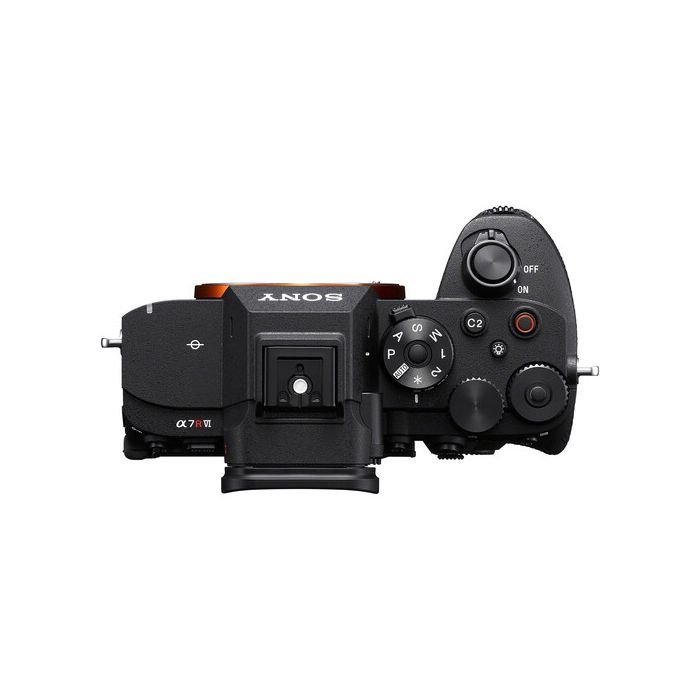


The Sony A7R VI has won overall camera of the year for 2026 at the TechRadar Product of the Year Awards, along with the best professional camera award. The result caps a year in which component shortages and price rises left camera makers with a quieter release schedule, and it puts a high-resolution mirrorless camera at the top of the year’s list.
TechRadar’s cameras editor, Tim Coleman, described the camera as the perfect mirrorless camera in his review, and gave it five stars. The praise rests on a combination that the R series had not offered before: resolution at the top of the full-frame market with speed close to Sony’s much pricier sports and flagship bodies.
Sony A7R VI sensor and speed
The Sony A7R VI pairs a 66.8 megapixel stacked full-frame sensor with the Bionz XR 2 processor, which packs two chips, including one tasked with Sony’s latest subject-detection autofocus. The stacked design reads the sensor faster than a conventional design, which cuts rolling shutter distortion and supports fast burst shooting and autofocus tracking.
That sensor gives the camera the highest resolution in a full-frame body, ahead of the 61 megapixel sensor in its predecessor, the A7R V. Sony’s 50 megapixel A1 II remains slightly faster, according to TechRadar, but it costs far more and resolves less detail. In Super 35 mode, which applies a 1.5 times crop, the camera still yields 28 megapixels, so cropped shooting keeps enough detail for large prints.
Video recording reaches 8K at 30 frames per second and 4K at 120 frames per second. One omission remains for the Sony A7R VI: it does not offer open-gate recording, a feature that records the full sensor area for flexible cropping in editing. TechRadar lists that absence as the most obvious drawback for video shooters.
Sony A7R VI battery and handling
The Sony A7R VI introduces a new battery, the NP-SA100, which is physically larger than the NP-FZ100 used in Sony’s full-frame mirrorless cameras for the last nine years. TechRadar calls it the company’s first new mirrorless battery in a decade, and the larger capacity gives longer shooting per charge. Coleman also notes the camera narrows the audience for the pricier A1 II, since most photographers will get nearly the same speed with more pixels for less money. The trade-off is plain: older Sony batteries do not fit in the new body, so existing owners who upgrade will need new batteries and chargers.
Handling also changes with a flip-all-over rear screen, which reviewers have said makes a clear difference for shooting at odd angles. The body keeps the R series focus on stills quality, with controls and build aimed at photographers who shoot scenery, wildlife and portraits rather than video-first users.
Sony A7R VI price and trade-offs
The Sony A7R VI was announced on 13 May 2026 with a body-only price of 4,500 pounds in Britain and 6,999 Australian dollars. That launch price sits above the A7R V, which cost 4,000 pounds and 5,499 Australian dollars when it was announced late in 2022 and can now be found for around 3,000 pounds and 4,799 Australian dollars.
Buyers also need to weigh card costs. The camera uses CFexpress Type A cards for optimum performance, and those cards remain pricey compared with SD cards. Some reviewers have also noted limits in autofocus, with Digital Camera World finding that branches or leaves crossing a subject could still trip the system, and Amateur Photographer noticing that bright white subjects were harder to hold in a sequence than darker ones.
TechRadar named the Sony A7R VI its camera of the year for 2026 and its best professional camera, and Sony also took the brand of the year award while holding second place in the market behind Canon. For photographers who want the highest full-frame resolution with speed close to a flagship body, the award leaves little doubt about which camera TechRadar rates first. For buyers who care only about resolution, the older A7R V at its lower street price remains the cheaper route to 61 megapixels.