
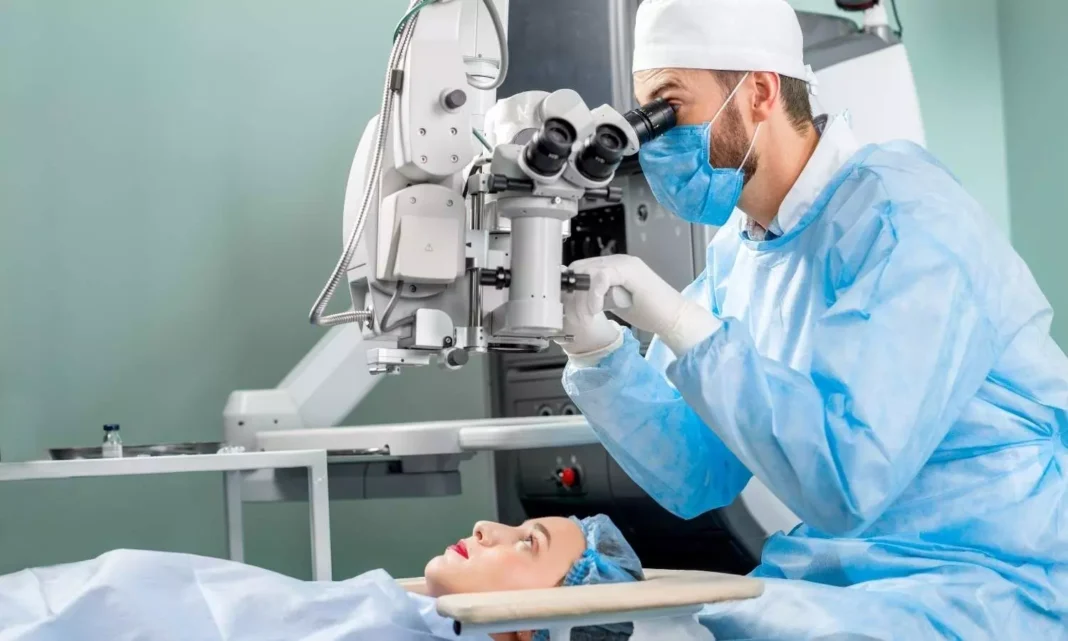


An uninsured American traveller who went with a friend to Dr Agarwal’s Eye Hospital in Bengaluru ended up having Bengaluru eye surgery herself within a week, according to accounts published by The Times of India on 31 October 2026. The traveller, who posts online as Stonefish, had gone along to support her friend. A free eye scan during that visit showed she was a candidate for vision-correction surgery, and the operation followed within a week. She has said she can now see almost 20/20 in both eyes.
Stonefish, aged 26, had prescriptions of about minus 6.75 dioptres in one eye and minus 6.50 in the other. She had assumed her prescription was too strong for corrective surgery. In a video shared on Instagram, she said she had aged out of her parents’ insurance and was not working full time with health benefits. She also said follow-up appointments over the following month were included in the original surgery fee. The exact surgical technique used in her case has not been disclosed in public reports.
How Bengaluru eye surgery entered the story
The visit was unplanned. Stonefish accompanied her friend to the hospital while the friend had eye surgery, and curiosity led her to accept a free scan. The scan result changed her plans, and she booked her own Bengaluru eye surgery for a week later. Her account spread widely on social media, with viewers comparing her experience in India with problems she described in the United States.
The case touches on a common misunderstanding about who qualifies for Bengaluru eye surgery. A high spectacle prescription alone does not settle whether a person can have refractive surgery, and American Academy of Ophthalmology guidance says suitability for Bengaluru eye surgery depends on several structural measures. Corneal thickness matters because laser procedures reshape the cornea by removing tissue, and a thin cornea may not safely allow enough removal. Irregular steepening, seen in the condition keratoconus, rules a person out, and prescription stability over at least 12 months matters because ongoing change can undo the correction. Dry eye disease also matters because laser incisions disturb corneal nerves for a time and can worsen surface dryness.
What decides candidacy for Bengaluru eye surgery
When LASIK, PRK or SMILE do not suit a patient because of extreme myopia or thin corneas, other options may be assessed. One Bengaluru eye surgery option described in the coverage is a phakic intraocular lens, also called an implantable collamer lens, placed inside the eye in front of the natural lens without removing corneal tissue. Clinicians quoted in the coverage warn against treating one viral account as a guide for other people.
Bengaluru eye surgery, like refractive surgery elsewhere, is irreversible, and the United States Food and Drug Administration warns that no refractive surgery guarantees permanent 20/20 vision without future spectacles or reading glasses. The American Academy of Ophthalmology and the FDA list dry eye among the common after-effects, along with glare, haloes and starbursts around lights at night. Healing varies, so an eye can heal slightly off target and need a second procedure or residual corrective lenses. Infection and corneal ectasia, a bulging of a thinned cornea, are rare, with microbial keratitis put at fewer than 1 in 1,000 cases in modern surgical settings.
Follow-up care after Bengaluru eye surgery
The Bengaluru eye surgery package in this case included 30 days of postoperative consultations. Health policy analysts quoted in the coverage note that international travellers often leave within days or weeks. If late inflammation, flap problems or progressive ectasia appear after a patient returns home, finding an ophthalmologist willing to take over another surgeon’s operation can prove difficult and costly without domestic cover. Records matter in that situation. The coverage lists pre-operative scans, operative logs covering laser settings and flap depth, and postoperative charts as documents a patient needs later.
India’s medical travel sector has grown fast in recent years. Ministry of Tourism figures presented in Parliament in July 2024 put foreign tourist arrivals for medical purposes at 183,000 in 2020 and 635,000 provisionally in 2023. The government has set up medical travel portals and an e-medical visa regime for 167 nations. Stonefish’s account praised the accessibility of the Bengaluru eye surgery clinic and the speed of her treatment. Clinicians quoted in the coverage agree that a single successful outcome does not replace a full clinical evaluation, a personal risk assessment and long-term follow-up.