
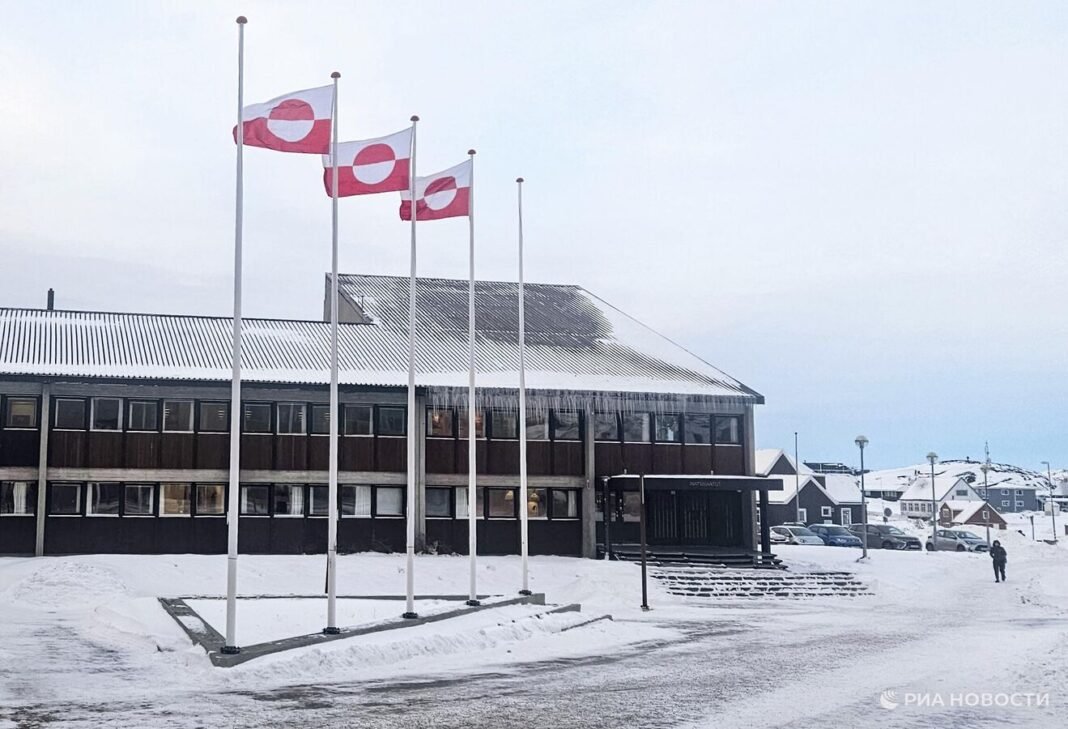


The Greenland security deal was approved by Greenland’s parliament on Tuesday 3 November, with 16 members voting in favour, none voting against and seven abstaining. The vote in the Inatsisartut cleared the Greenland side of a trilateral agreement with the United States and Denmark on security in the Arctic and the North Atlantic. Lawmakers in Nuuk backed the text after a sitting that Danish broadcaster DR reported was disrupted for a time by a dispute. The Greenland security deal now waits for action in Copenhagen before it can take effect.
What the Greenland security deal changes
The agreement updates a defence framework that dates to 1951. It allows the United States to modernise and expand Pituffik Space Base in northwest Greenland, a site described in reporting as the northernmost United States installation and an early warning post for incoming missiles. Reporting on the text also points to new defence areas at Narsarsuaq and Mestersvig, with technical arrangements still to be agreed between the parties. The deal was signed in New York on 22 September, on the sidelines of the United Nations General Assembly, by United States President Donald Trump, Danish Prime Minister Mette Frederiksen and Greenland Premier Jens-Frederik Nielsen.
Under the terms reported by the Associated Press, the Greenland security deal keeps the self governing island under Danish control. It would still apply if Greenland eventually chooses independence. That provision matters in Nuuk, where self determination remains a live question and where voters have debated the future relationship with Denmark for years. The agreement is intended to strengthen security in the Arctic and the North Atlantic, a region where shipping routes, surveillance and military activity have drawn more attention from several governments.
Greenland security deal and the next vote
The Greenland security deal will enter into force only after the necessary parliamentary processes in the Kingdom of Denmark, in conjunction with Greenland, have been completed. Denmark’s parliament, the Folketing, is scheduled to hold its final vote on 19 November. No approval is required from the United States Senate. Once both parliaments have acted, Washington must be formally notified before the pact takes effect. That sequence means the vote in Nuuk was a step toward implementation, rather than the final step.
The timing in Copenhagen will be watched in Nuuk and in Washington. Danish lawmakers must weigh the same text that Greenland’s parliament has now approved, and any change in Copenhagen would raise a fresh question about how the two approvals fit together. For now, the text that passed in Nuuk is the text that goes forward. The vote count itself left little doubt about the mood in the chamber on the day, with no member voting against the agreement and seven choosing to abstain rather than to support or oppose it.
Reaction in Nuuk
The Greenland security deal followed months of pressure from Trump, who had repeatedly called for the vast island to become part of the United States. The Associated Press reported that the trilateral deal eases tensions over those calls, while opening the way for more United States bases on Greenland. Some opposition members questioned the economic value of the agreement, according to reporting on the vote, even as they did not vote against it. Their abstentions point to a debate that is likely to continue as the technical arrangements for new defence areas are worked out.
The Greenland security deal also leaves open the detail of how new defence areas will operate in practice. Technical arrangements for Narsarsuaq and Mestersvig still have to be agreed, and those talks will follow the parliamentary votes rather than precede them. That order means lawmakers in both Nuuk and Copenhagen voted on the framework, while officials will work out the practical terms after the framework is in force. The Greenland security deal therefore sets the direction for United States activity on the island, without settling every operational question in the text itself. Members who abstained in Nuuk may return to those questions when the arrangements come back for discussion.
Greenland is a semi autonomous territory of Denmark and a member of the NATO alliance through Denmark. Its position between North America and Europe gives it a place in Arctic surveillance and in routes across the North Atlantic. The agreement signed in September was presented by its signatories as a way to settle the security question without changing sovereignty. The next test is the vote in Copenhagen on 19 November, followed by formal notification to Washington.