
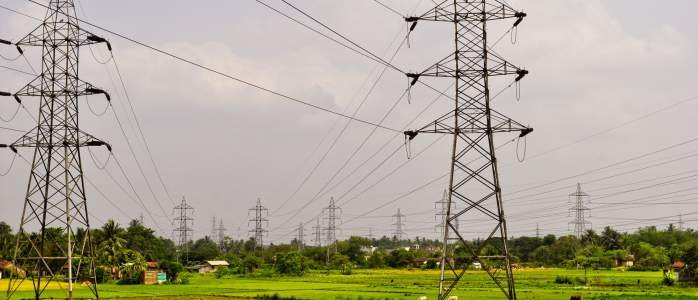


GE Vernova will build a 6,000 MW high-voltage direct current link to carry renewable power from Rajasthan to Maharashtra, after PowerGrid Corporation of India chose the company for the project. GE Vernova announced the award on Friday, 6 November, and said the project was booked in the fourth quarter of 2026. The corridor will move 6 GW of clean power from the renewable energy zone at Barmer to the load centre at South Kalamb.
What the GE Vernova order covers
GE Vernova will deliver the complete design for a ±800 kV, 6,000 MW bipolar HVDC link between Barmer II and South Kalamb, built as two 3,000 MW units. The work covers the design, supply and execution of the line-commutated converter terminal stations at each end. PowerGrid gave the formal letter of award, dated 3 November 2026, to GE Vernova T&D India, the company’s listed Indian arm, which told the stock exchanges about the award on 4 November.
The award follows the company’s qualification as the lowest bidder, announced on 7 September 2026. The two sides will sign a definitive agreement in due course, and the work will run over several years. The company has not disclosed the contract value. The project was approved by the National Committee on Transmission in May 2025.
The link will run from the desert districts of western Rajasthan to the industrial demand of Maharashtra. Barmer sits in a zone the government has marked for renewable energy development, and the power evacuated from the zone will feed into the national grid rather than serving one state alone. The two converter stations, one at each end of the link, will change the direct current to alternating current so the power can enter the grid at the far end.
Why the GE Vernova link matters for renewables
Rajasthan holds some of India’s largest solar and wind capacity, but the power has to travel long distances to reach demand centres. High-voltage direct current lines lose less power over long distances than alternating current lines, which is why they are used for bulk transfers between regions. The Barmer II to South Kalamb corridor will let renewable power from the Barmer zone feed into the national grid and reach consumers in Maharashtra.
High-voltage direct current lines are used where power must travel hundreds of kilometres with as little loss as possible. The Barmer to South Kalamb route crosses state boundaries, and the power will pass through the national grid on its way to consumers. The link also helps balance supply and demand across regions, since solar power from Rajasthan can reach Maharashtra when local generation falls short.
The project fits the government’s Green Energy Corridor plan, which is building transmission lines to connect renewable energy zones with load centres. PowerGrid, the central transmission utility, is the nodal agency for the corridor. GE Vernova T&D India won a separate 2,500 MW HVDC order from AESL Projects in December 2025, which added to its order book in the same technology.
The order adds to a run of HVDC work for the company. The AESL Projects order in December 2025 covered a 2,500 MW, ±500 kV HVDC voltage-source converter terminal station, a different technology from the line-commutated converter stations in the PowerGrid job. The two orders together give the company work across both main types of HVDC converter.
GE Vernova results ahead of the award
GE Vernova T&D India reported revenue of Rs 2,027 crore for the second quarter ended 30 September 2026, up 31.8 per cent from a year earlier, and net profit of Rs 431 crore, up 44.3 per cent. The operating margin was 27.1 per cent. The company, formerly GE T&D India, makes products, projects and systems for electricity transmission, and the PowerGrid award adds a large HVDC job to its pipeline.
Execution is the test from here. HVDC terminal stations take years to build, and the value of the order will only show in the company’s accounts as the work is completed. GE Vernova will also need to manage supply chains for converter equipment and coordinate with PowerGrid on the wider corridor. For now, the award gives the company a firm place in the build-out of India’s renewable transmission network. The definitive agreement is the next step before the work begins in earnest.