
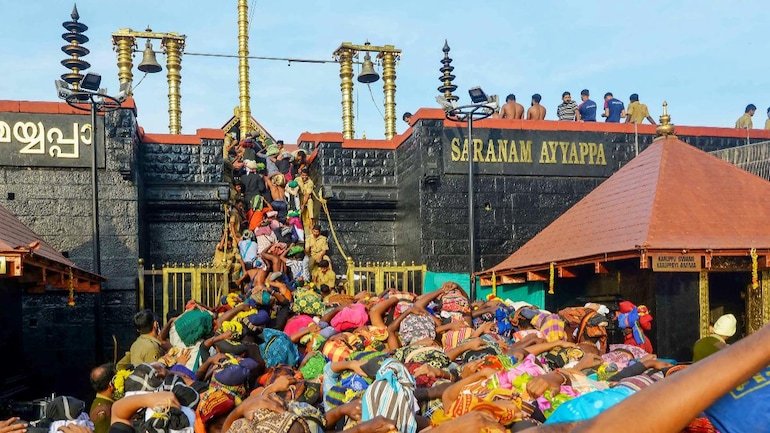


Thiruvananthapuram: Kerala’s health department has issued cardiac safety guidelines for Sabarimala pilgrims, urging devotees to get a medical check-up before the climb and to avoid pushing themselves on the steep trek to the hill shrine. The advice comes as the annual Mandala-Makaravilakku season draws lakhs of devotees to the temple.
Devotees with a history of heart disease should undergo a medical check-up and obtain fitness clearance from a doctor before beginning the pilgrimage, the department said in a statement reported by news agency PTI. People who have recently suffered a heart attack, undergone heart surgery or angioplasty, or experienced heart failure should not undertake the trek without consulting a specialist.
Sabarimala pilgrims told to get checked first
Pilgrims should make sure lifestyle-related conditions such as diabetes and high blood pressure are under control, and keep taking prescribed medicines on schedule. They should also carry enough medicines for the journey along with their prescriptions, the department said. Stopping blood pressure tablets or other regular medicines during the 41-day vratham, or fast, is a pattern doctors on the route have repeatedly linked to cardiac emergencies.
The trek from Pamba to Sannidhanam is only about 4 to 5 km, but much of it is steep, especially the stretch through Neelimala and Appachimedu. The Kerala High Court has noted around 150 cardiac arrests on the pilgrimage each season, with roughly 40 to 42 deaths, and has observed that most cardiac events are triggered when devotees climb briskly or forcefully.
The department advised Sabarimala pilgrims to undertake the trek only according to their physical capacity and to avoid excessive speed and strenuous exertion. They should take frequent breaks, drink sufficient water and not climb the hill on an empty stomach. Those advised to restrict water intake because of heart failure should follow their doctor’s instructions, the statement said.
Preparation before the journey matters as much as care on the climb. Sabarimala pilgrims in a risk group, including those above 40, diabetics, people with high blood pressure, smokers, those with a family history of early heart attack, and anyone who has had a stent or bypass, are advised to see a doctor before the season. A simple ECG, sugar and cholesterol check, and sometimes an echo or treadmill test, can reveal problems the climb would expose.
Sabarimala pilgrims and the warning signs
Pilgrims were also advised not to push through crowds or run during the trek. Anyone experiencing chest pain or breathlessness should stop immediately and seek medical assistance. The department told Sabarimala pilgrims that chest pain, heaviness or tightness, discomfort, breathlessness, excessive sweating, dizziness, fainting, an abnormal heartbeat, sudden extreme fatigue, or pain spreading to the arms, jaw or back could indicate a cardiac emergency.
Those who develop such symptoms should stop walking at once, rest in a safe place and seek help at the nearest emergency medical centre. Ambulance services should be used to reach a hospital if required. Pilgrims can call the Sabarimala health service line on 04735 203232 for emergency assistance, and 108 also connects to ambulance services.
Rest before the climb also helps. Sabarimala pilgrims often arrive after long overnight bus journeys with little sleep, and heavy or skipped meals add to the strain. Health officials advise arriving rested, drinking water through the day, and keeping medicines and the prescription in a small pouch on the body rather than in a bag someone else is carrying.
Medical cover on the route
Health facilities along the route used by Sabarimala pilgrims have already been busy. Within the first five days of the season, 13,029 pilgrims sought treatment at health department facilities, and early intervention saved 11 of the 16 people who suffered heart attacks, along with 13 patients who had epileptic seizures. The department has set up coordinated measures so that pilgrims, especially those needing emergency care, get treatment quickly.
The Mandala pilgrimage season, which brings Sabarimala pilgrims from across South India, began on 17 November, and Mandala Pooja will continue until 27 December. The temple will reopen on 30 December for the Makaravilakku season, with the festival scheduled for 14 January. Devotees can have darshan until 19 January, and the temple will close on 20 January.
The health department has repeated its advice to Sabarimala pilgrims: follow the safety guidelines, carry medicines and prescriptions, climb at a pace the body can manage, and seek help at once if symptoms appear. Ignoring chest pain or breathlessness and continuing the climb can have dangerous consequences, the department warned, and the medical posts along the route are there to be used.