
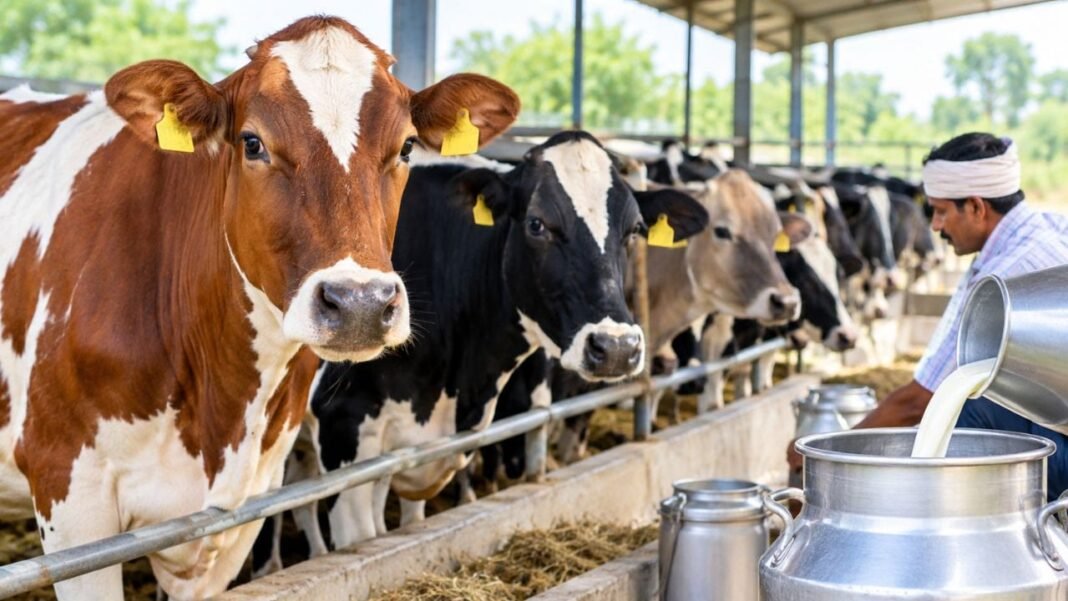


Antibiotic use in dairy farming can be cut by keeping animals healthy in the first place, according to a piece published in Down To Earth during World Antimicrobial Resistance Awareness Week. The author, veterinary professional Dr Keshav Kumar, argues that prevention-led farming and support for indigenous cattle give India a practical way to reduce the drugs used on dairy farms.
World Antimicrobial Resistance Awareness Week runs from 18 to 24 November, and this year’s theme puts prevention at the centre of the fight against drug resistance. The World Health Organization’s One Health approach treats human, animal and environmental health as linked, and the week is used to press for action that cuts antibiotic use across human health, animal health and the environment.
Antibiotics are often used on dairy farms as a substitute for good animal husbandry, the piece says. When housing is poor, hygiene is weak and disease is spotted late, drugs become the default response. A prevention-led approach tries to reverse that order, so that antibiotics are used only when they are needed and only under veterinary supervision.
Prevention can cut antibiotic use on farms
A prevention-led approach seeks to reduce dependence on antibiotics by keeping animals healthy, detecting disease early, strengthening governance and making responsible medicine use economically viable. Clean bedding, hygienic milking, teat disinfection, adequate nutrition, vaccination and early diagnosis can all reduce preventable infections, and with them the need for drugs.
India’s National Action Plan on AMR emphasises surveillance, infection prevention, optimised antimicrobial use and research and innovation, all aimed at cutting antibiotic use where it is not needed. The updated plan recognises that effective infection prevention can reduce or eliminate antimicrobial use where drugs have become a substitute for deficient animal husbandry practices. The message is that prevention is not a soft option, but the measure that makes the rest of the plan work.
India has strengthened AMR surveillance through the Indian Council of Agricultural Research’s All India Network Programme on AMR, which involves 31 centres across states. Surveillance shows where resistance is rising and which drugs are losing their effect, and that information is needed before policy can be targeted at the right farms and the right practices.
Indigenous cattle and antibiotic use
Indigenous cattle breeds are part of the argument for cutting antibiotic use. The piece says milk from indigenous breeds, milk tested for antibiotic residues, or welfare certified milk can command a price premium, and that gives farmers a stronger financial incentive to invest in better animal health and responsible medicine use. When prevention pays, farmers have a reason to do it.
Uttar Pradesh’s Nand Baba Dugdh Mission offers a starting point. Its schemes support indigenous cattle rearing and milk production, and they cover breeds including Sahiwal, Tharparkar, Hariana, Gir and Gangatiri. The Nandini Krishak Samriddhi Yojana provides a 50 per cent subsidy for setting up a unit of 25 indigenous cattle, while the Mini Nandini Krishak Samriddhi Yojana supports a 10 cattle unit with a similar subsidy. The Mukhyamantri Swadeshi Gau Sanvardhan Yojana provides a 40 per cent subsidy for buying two indigenous cattle.
Those schemes could be redesigned as AMR smart incentives, the piece argues, by linking subsidies to vaccination, animal identification, farm biosecurity plans, veterinary consultations and documented antibiotic use records. Such conditions would make disease prevention a part of dairy sector support, rather than an afterthought left to individual farmers.
Rules and advice around antibiotic use
The first priority is to tighten controls on the over-the-counter sale of critically important veterinary antibiotics, the piece says, which is one of the fastest ways to cut antibiotic use. When powerful drugs can be bought without a prescription, they are used too often and in the wrong doses, and resistance builds faster. Controls on sale are one of the few measures that can slow that process at once.
Veterinarians must select treatments according to clinical need and the principles of responsible antimicrobial use, the piece says, so that antibiotic use stays tied to a diagnosis. They must also explain withdrawal periods clearly, so that farmers understand when milk from treated animals can safely re-enter the food chain. Safe disposal of farm waste also deserves more attention, since waste carrying drug residues can spread resistance into soil and water.
Scientifically validated ethnoveterinary practices deserve consideration for appropriate conditions and under veterinary supervision, the piece says. But traditional remedies must not substitute for necessary medical treatment, and homeopathy, which lacks reliable evidence of effectiveness for conditions such as bovine mastitis, should not be promoted as a proven alternative to antibiotics. The updated Global Action Plan on AMR makes the same point in broader terms, with infection prevention, biosecurity, vaccination, good animal husbandry, alternatives to antimicrobials, surveillance, stewardship and sustainable financing at its centre.