
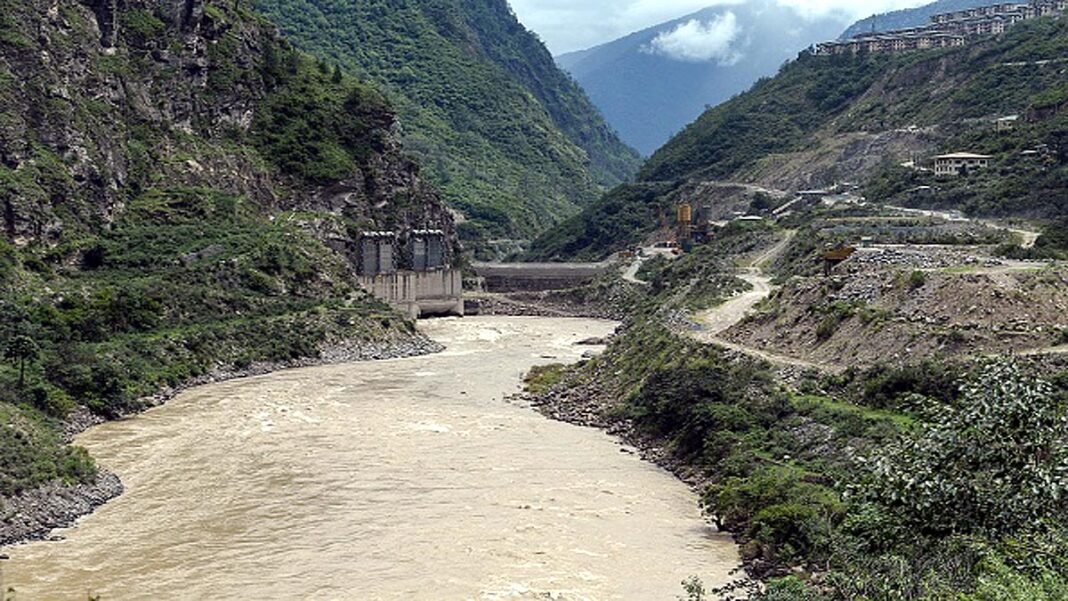


A Bhutan glacial lake outburst at Shintaphu Lake in northern Bhutan on the evening of 29 October sent floodwaters downstream and put districts in Assam and West Bengal on alert along the Sankosh river. The outburst swept away the Gasa Tshachu hot spring complex and damaged a section of the Punakha to Gasa highway. As of Friday morning, no deaths or injuries had been reported in Bhutan, while authorities in India moved thousands of people from vulnerable riverbanks.
The Bhutan glacial lake sits below Wakila Mountain in Lungo, in Gasa district, at the headwaters of the Mo Chhu river. Floodwaters reached Taktsemakhang around 8:15 pm on Thursday, damaging a section of the road to Laya and forcing its closure. A section of the Punakha to Gasa Secondary National Highway near the 31.85 kilometre point was washed away, closing the road until further notice. The lake appears on Bhutan’s official list of 17 potentially dangerous glacial lakes, and reports spell its name as Shintaphu and Sintaphu.
Water from the Bhutan glacial lake flows into the Mo Chhu, which runs south through Gasa and Punakha. At Punakha, the Mo Chhu meets the Pho Chhu to form the Punatsangchhu, which enters India as the Sankosh river. The cause of the release, the volume of water and the full extent of the damage were not yet confirmed on Friday morning.
What the Bhutan glacial lake outburst damaged
In Bhutan, the damage centred on the hot spring complex and the road network around Gasa. The Gasa Tshachu hot spring had been evacuated before the floodwaters arrived, with no casualties recorded there. An artificial lake formed at Taktsemakhang, according to the Bhutan Times. People along the Mo Chhu and Punatsangchhu valleys were advised to avoid riverbanks and flood-prone areas while officials assessed the damage.
Authorities tracking the Bhutan glacial lake were still working out the full extent of the damage on Friday, according to Daily Bhutan. The flood cut a highway link to a remote community, but with no casualties reported, officials could focus on road access and downstream water levels. The lake’s place on the list of potentially dangerous glacial lakes meant its behaviour was already known to Bhutanese authorities, though the trigger for this release had not been confirmed.
Bhutan glacial lake alerts downstream in India
India’s Central Water Commission issued a special flood advisory for West Bengal and Assam on Thursday. The advisory said the Bhutan glacial lake outburst had been reported by the Indian Embassy in Bhutan, warning of a flash flood in the upper Punatsangchhu that could raise water levels downstream. The water was expected to reach the border within six to eight hours, threatening a sudden rise in Alipurduar district in West Bengal and Dhubri district in Assam.
Assam Chief Minister Himanta Biswa Sarma said on Friday that the state was closely monitoring vulnerable revenue circles of Dhubri and Kokrajhar districts, with disaster response teams on standby. The Assam State Disaster Management Authority said no evacuation had started in Dhubri or other Lower Assam districts as of Friday, but district administrations and State Disaster Response Force teams were prepared for any emergency. Water levels in Assam’s rivers had not risen so far, and the situation remained under watch.
In West Bengal, the larger evacuation took place in Alipurduar district. Superintendent of Police Amit Kumar Shaw said about 4,000 to 5,000 people had been moved into shelters, mostly school buildings, and more than 6,000 others had been shifted to safer places. Forest Minister Manoj Oraon warned residents of the Kumargram area to remain alert to rising water levels in the Sankosh. Response teams were deployed at Tufanganj and Boxirhat in Cooch Behar district, with alerts also issued for the Darjeeling hills, Jalpaiguri and Cooch Behar. By Friday morning, officials said the greatest flash-flood risk period had passed in the Indian areas, though preparedness was being maintained.
How a glacial lake outburst happens
A Bhutan glacial lake outburst flood happens when water stored in a glacial lake is suddenly released after its natural barrier fails. That barrier is commonly made of ice or loose rock and sediment, and it can give way without warning, sending a surge of water down the valley below. The surge can damage roads, bridges and buildings, and it can raise river levels far downstream within hours, which is why the Sankosh warning named districts in two states.
The Himalayan region holds many glacial lakes like the Bhutan glacial lake, and the Bhutan glacial lake incident has renewed attention to the risk they carry for downstream communities in India. For the Sankosh, the chain from Gasa through the Mo Chhu and Punatsangchhu to the Indian river shows how quickly a local event can become a cross-border alert. Monitoring, shelters and standby teams therefore stayed in place on Friday.