
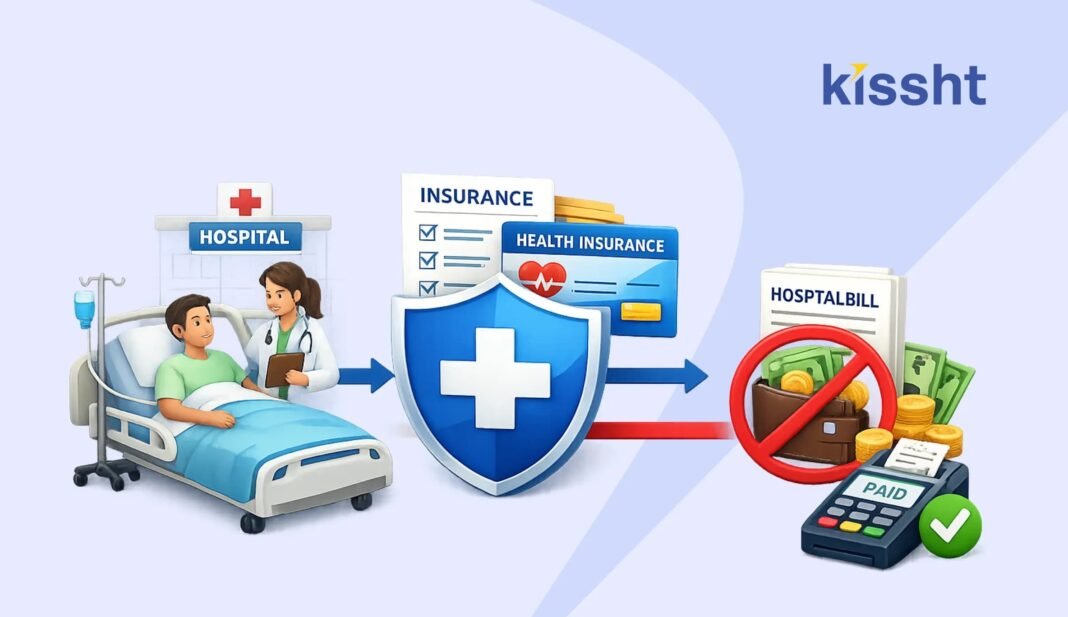


Holding dual health insurance is perfectly legal in India, but using two policies for a single hospital bill can still go badly wrong. Experts warn that five common claim rejection traps can leave policyholders paying out of pocket even when they hold two covers, according to a Mint report.
The question matters because many salaried Indians hold both a corporate group policy from their employer and a personal health plan. In a high-value hospitalisation, combining the two seems like an obvious way to maximise coverage, and it can be — provided the claim is sequenced correctly and both insurers are kept in the loop.
The basic rule is simple: settle the claim with one insurer first, obtain a claims settlement letter, and then approach the second insurer for the balance with attested copies of the settled bills and originals of the unsettled ones, along with hospital receipts and KYC documents.
Dual health insurance: how the two-policy claim works
According to Bhaskar Nerurkar, head of the health administration team at Bajaj Allianz General Insurance, dual health insurance claims follow a set order. If both policies are available for cashless treatment, the first policy covers the bill up to its sum insured. Any amount beyond that can be paid out of pocket and later claimed as reimbursement from the second insurer.
If cashless claims are denied by both insurers, reimbursement remains an option, but the second insurer will only process its part after the first one settles. “You may be asked to submit attested copies of bills settled by the first insurer. You can request your first insurer to directly send them to the second insurer,” Nerurkar told Mint.
Siddharth Singhal, head of health insurance at Policybazaar, explains that if the claim exceeds the sum insured under one policy, the balance can be claimed from the other — but both insurers must be informed about the other policy from the start. Vineet Gupta of ManipalCigna Health Insurance adds that total reimbursement can never exceed actual hospitalisation costs, and the same expense cannot be claimed twice. He advises exhausting the corporate cover first, since it is employer-funded and ends when employment ends, while individual policies retain renewal benefits such as no-claim bonuses.
Dual health insurance traps: disclosure, duplicacy and documents
The first trap is non-disclosure. Failing to inform the second insurer about the first policy and the earlier claim is one of the most common reasons dual health insurance claims get rejected, according to Singhal. Insurers share risk through a “contribution clause,” and they will only honour their portion if all facts are on record.
The second trap is duplicacy — attempting to claim the same expense from both insurers. The regulator IRDAI strictly prohibits double compensation; insurers split proportionate liability instead, and trying to be paid twice is grounds for outright rejection.
The third trap is missing documentation. The second insurer reviews the contribution clause and approves the claim only if every document checks out: insufficient documents, a missing settlement certificate from the first insurer, or the absence of attested original bills can sink the claim. Bengaluru-based policyholder Sharad Tulsyan told Mint his second insurer demanded “too many documents,” including internal case papers running to 1,000 pages, which the hospital released only after the treating doctor intervened. His first insurer, by contrast, took 30 days to issue the settlement letter after discharge.
Dual health insurance traps: timing, exclusions and a consumer win
The fourth trap is late intimation. Not informing either insurer in time at the point of hospitalisation can weaken or invalidate the second dual health insurance claim, since insurers need timely notice to verify cashless or reimbursement requests.
The fifth trap is policy exclusions. Before relying on dual health insurance, buyers should compare both policies, because the second policy may have different exclusions or sub-limits — such as room rent caps — that result in partial or full rejection of the balance claim. Policyholders should compare both policies’ fine print before assuming the second will pick up whatever the first leaves behind.
There is also recourse when insurers overreach. In a recent case reported by LiveLaw, the Delhi District Consumer Commission held Niva Bupa liable for deficiency in service after it repeatedly demanded documents and ultimately rejected the reimbursement claim of a 76-year-old woman who had disclosed her conditions and undergone a pre-policy medical examination. The insurer was directed to pay the claim along with compensation.
Dual health insurance, used correctly, is a prudent way to manage rising medical inflation, experts say — but it rewards the organised. Disclose both policies, sequence the claims, keep every bill and settlement letter, and read the sub-limits before you need them.