
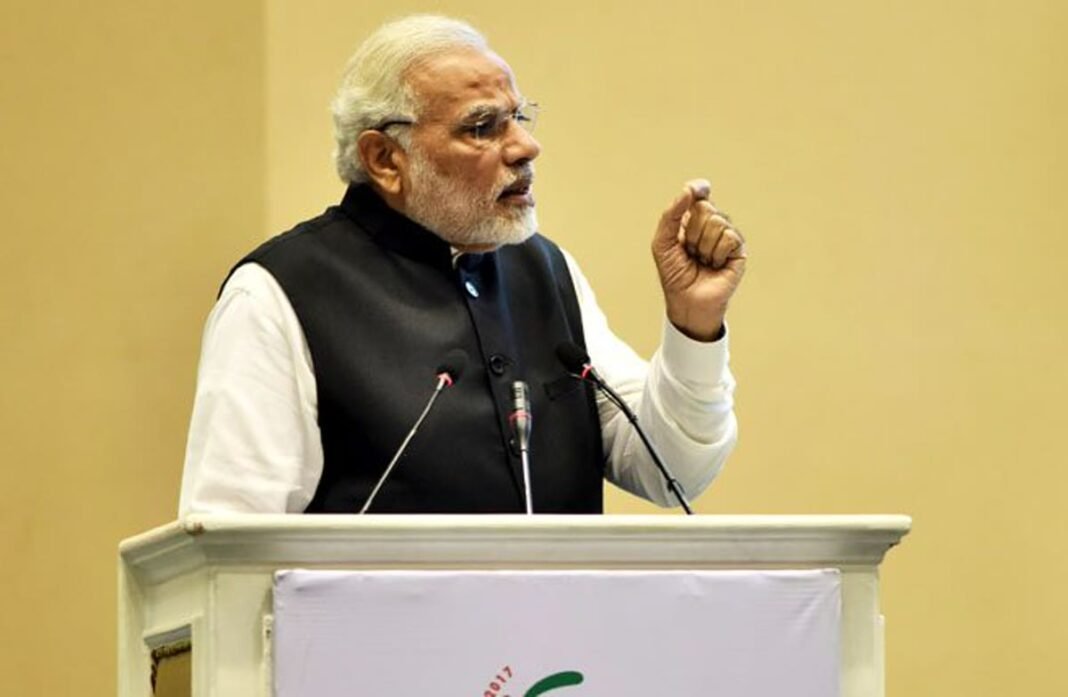


Prime Minister Narendra Modi on Thursday asked India Inc to suggest, without hesitation or reluctance, more reforms that are needed for the growth of the country. The PM Modi India Inc reforms message was given at the annual general meeting and annual convention of the Federation of Indian Chambers of Commerce and Industry in New Delhi, where Modi also asked firms to focus on making India self-reliant and to invest heavily in agriculture and allied sectors. He told business leaders to write to him directly about what still needs to be improved.
PM Modi India Inc reforms: write to me openly
“This is not the old government. This is a government of friends. It knows how to honour friendship, and you are my true friends. So, without hesitation or reservation, please write to me openly about what still needs to be improved,” Modi said. He said the industry’s past experience with earlier governments had been bitter, and that he was bearing the consequences of that history in his dealings with business. The prime minister said the government was open to feedback from firms and was willing to consider their suggestions for further reforms.
The PM Modi India Inc reforms speech also asked the industry to make ‘India First’ the foundation of every long-term investment decision over the next 20 years, and he said that approach would help make the country self-reliant. He also urged firms to invest more in agriculture and allied sectors, which he said need private investment to grow. The FICCI meeting was held at Bharat Mandapam in New Delhi, and the prime minister’s address covered tax changes, trade and the role of industry in jobs and wages.
PM Modi India Inc reforms and the jobs question
The PM Modi India Inc reforms address also pressed industry leaders on whether tax cuts and other government measures had led to more jobs and higher pay. He noted that the basic corporate tax rate has been cut from 30 per cent in 2014 to 22 per cent, and that tax returns and refunds have been simplified, while goods and services tax rates have been cut on several products. He asked whether firms had raised employee salaries or expanded their workforce in return, and he said in Hindi that no matter how much is given, the appetite of industry is never satisfied.
The PM Modi India Inc reforms speech cited the latest World Bank report and said that in just 12 to 13 years, 50 crore people have overcome poverty. He also said that individual income of up to Rs 12 lakh a year is now tax-free, and he pointed to the government’s record on reforms since 2014. He asked the pharmaceutical industry in particular to reduce its dependence on imported active pharmaceutical ingredients, bulk drugs and drug intermediates, and he urged firms to make use of trade agreements that India has signed.
PM Modi India Inc reforms: what industry was asked to do
The FICCI meeting was the annual general meeting and annual convention of the Federation of Indian Chambers of Commerce and Industry, held at Bharat Mandapam in New Delhi. Modi told the gathering that the basic corporate tax rate has been cut from 30 per cent in 2014 to 22 per cent, and that individual income of up to Rs 12 lakh a year is now tax-free. He also asked the pharmaceutical industry to cut its dependence on imported active pharmaceutical ingredients, bulk drugs and drug intermediates. The PM Modi India Inc reforms message was that the government wants direct suggestions from business, and that firms should judge their own record on jobs and wages. The PM Modi India Inc reforms call now leaves industry with a direct invitation to write to the prime minister, and the government with a set of demands to answer.
Modi’s message to the FICCI meeting was that the government wants direct suggestions from business, and that firms should judge their own record on jobs and wages against the tax relief they have received. He said the government will consider what industry puts to it, and he asked business leaders to send their requirements to him without reservation. The PM Modi India Inc reforms call now leaves firms with a direct invitation to set out the changes they want, and the government with a list of demands it will need to answer in the months ahead.