
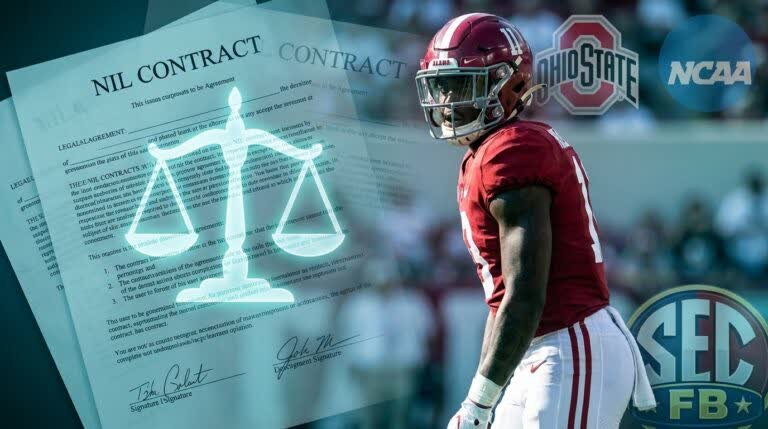


The SEC NIL contract is at the centre of a dispute between college sports agents and schools in the Southeastern Conference, after agents objected to terms that limit how players can talk to other schools and set large payments for leaving a deal early. CBS Sports reported on 19 November that the standard deal, adopted by the conference in October, has already put several contract extensions on hold. Agents say some players should not sign long deals that schools may not renegotiate, while league officials say the strictest terms may never be used. The disagreement has raised doubts about whether multi-year deals can be agreed at all while the wording stays as it is.
What the SEC NIL contract contains
Under the SEC NIL contract, one example in the CBS Sports report shows the scale of the sums involved. A player on a deal worth 10 million dollars over three years would receive 2 million dollars in the first year. If that player left after the first year, the contract could require liquidated damages of 4 million dollars, twice the amount earned in that year. Athletes would have 10 days to answer conduct concerns or to reach a new deal after a change to a spending cap. Schools cannot revise the template without league approval, and approved changes can take up to two weeks to come through.
The SEC NIL contract follows a vote by conference presidents on 12 October to adopt uniform NIL and revenue share contracts across the league, effective at once. The move made the SEC the second power conference to standardise athlete deals, after the Big Ten. Schools can share up to 21.6 million dollars in revenue directly with athletes in this academic year, the second year of a 10-year window under the House v NCAA settlement. The template includes sections that each school can adapt, although CBS Sports was not given details of those sections when the vote was reported. An earlier version of the contract, circulated in 2025, barred athletes and their representatives from trying to start, seek, entertain, negotiate, accept or discuss offers from other schools while under contract, and required them to tell their school about any outside interest.
Why agents object to the SEC NIL contract
Agents object to limits on contact between athletes and other schools in the SEC NIL contract, to restrictions on entering the transfer portal, to steep repayment penalties and to broad rights for schools to end a deal. Their concern is that players who sign long deals lose the chance to test the market, while schools keep the right to walk away. Several notable extensions are on hold, and some agents say they will not sign the current template at all. The dispute has already changed how talks are handled, with agents asking whether a player should accept a deal that runs for years when the school may not agree to revisit its terms.
The Big Ten offers the closest comparison, because its standard deals have already been seen in public records. Documents obtained in January 2026 showed that Washington added a liquidated damages clause for a player who enters the portal, making the player or the new school liable for the rest of the contract value. Other Big Ten deals gave schools the right to end an agreement if the head coach changed, if a player was medically disqualified or if a morals clause was broken. Schools could also claw back a prorated share of money already paid, according to a January 2025 report by Sportico, and the deals included a No Employment clause in which players accept that they are not employees. The SEC NIL contract follows the same pattern of shifting risk from schools to players, which is why agents have pushed back so hard.
Whether the terms will hold up
SEC front office officials say the terms in the SEC NIL contract favour the teams, and some believe the strictest provisions would never be enforced. Agents reject that assurance, and legal specialists have raised questions about whether the portal restrictions would stand up if challenged. The SEC did not respond to a request for comment. The gap between the two sides is wide, because agents want terms they can trust in writing, while schools want a standard form that holds across the conference.
Contract talks over the SEC NIL contract will now run alongside recruiting, roster planning and preparation for the transfer portal, which opens in January. If the disputed terms stay in the SEC NIL contract, multi-year deals could become harder to agree, and players may prefer shorter deals that leave them free to move. The uncertainty alone may be enough to stall agreements, even before any clause is tested in a dispute.