
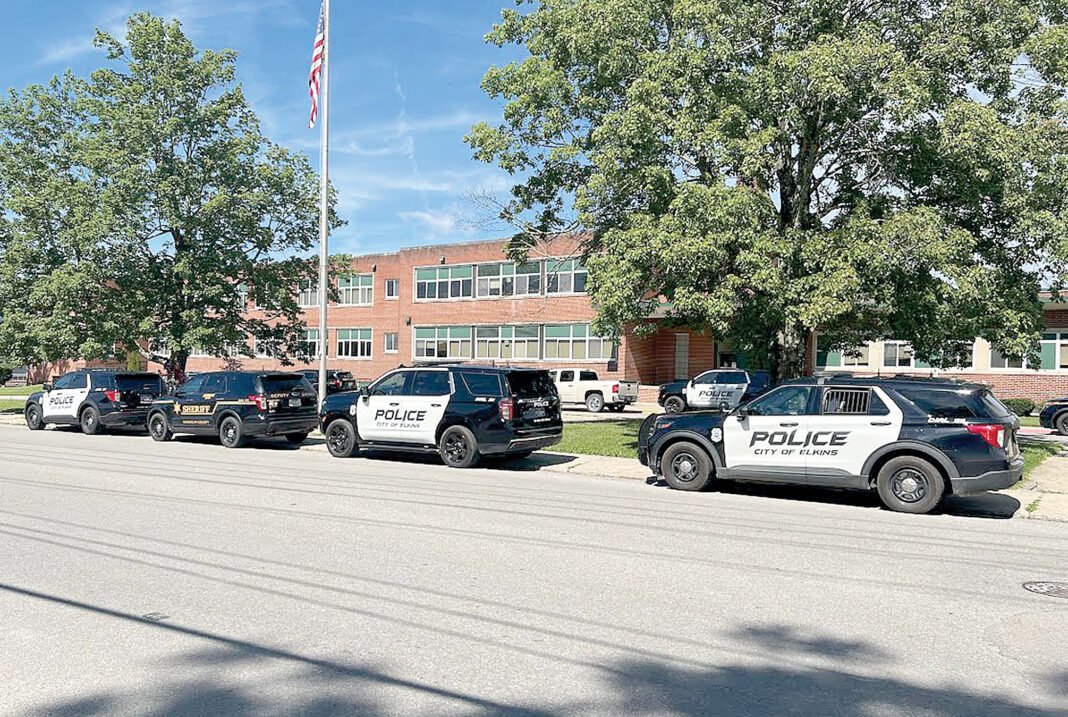


A 16-year-old gunman opened fire inside an elementary school in Bend, Oregon, on Thursday, killing four people including three children, before an armed member of the community pursued him into the building and shot him dead, police said. The Oregon school shooting, one of the deadliest attacks on an American school in recent years, began at about 1 pm local time when the teenager forced his way into Silver Rail Elementary School by firing through its locked doors.
The dead were children aged five, eight and eleven, and one teacher, Bend Police Chief Mike Krantz told a press conference. Two more people — a seven-year-old pupil and a 54-year-old teacher — were taken to hospital with critical injuries. Krantz said police had offered no further details about the suspect beyond his age, and the motive remained under investigation. The Oregon school shooting has left the small central Oregon city reeling, with flags lowered and vigils planned for the victims.
How the Oregon school shooting unfolded
Police first received a report at 12.59 pm that an unknown man had shot into a car. Within a minute, emergency dispatchers were receiving multiple 911 calls reporting that a person had entered the school and begun shooting. Officers arrived at 1.02 pm. Seconds later, the suspect was shot and killed inside the building by a bystander who was legally carrying a concealed weapon and had followed the gunman into the school.
Chief Krantz said the community member had seen the suspect enter the school and pursued him. Oregon Governor Tina Kotek, appearing at the same briefing, praised the bystander, saying he “heroically intervened to stop further loss of life”. Krantz revealed that every Bend police officer had completed a full day of active shooter training in August, and said officers responded within minutes of the first call. Investigators are now working to establish how the teenager obtained the long gun used in the Oregon school shooting.
Oregon school shooting: the armed bystander who intervened
The intervention of an armed civilian is likely to feature prominently in the debate that typically follows such attacks. Gun rights advocates in the United States have long argued that armed private citizens are a means of defence against school attackers, while gun control campaigners argue that easy access to firearms is itself the cause of repeated mass shootings. The Oregon school shooting is expected to revive those arguments at both state and national level in the coming weeks.
“No parent should have to have this kind of day, and no community should have to live through this kind of day,” Kotek said. She added that the state would grieve together with the families of the dead and injured as more was learned about the victims and their loved ones.
Reaction to the Oregon school shooting
For Bend, the Oregon school shooting carries a particularly painful resonance: the city was the scene of another mass shooting four years ago, and residents are now confronting a second such tragedy. The attack has once again placed a relatively small community at the centre of a national conversation about school safety and gun violence, one that has followed every major American school shooting for more than two decades.
School shootings have become a recurring feature of American life, from Columbine High School in 1999 to Sandy Hook Elementary School in 2012, Marjory Stoneman Douglas High School in 2018 and Robb Elementary School in Uvalde, Texas, in 2022. Each attack revives the national debate over gun laws in a country where the right to bear arms is protected under the Second Amendment.
The investigation continues, with police expected to release further details about the suspect and the timeline in the coming days. The school district has not said when classes will resume, and counsellors are being made available to pupils and staff. After the Oregon school shooting, attention will turn to what warning signs, if any, preceded the attack.