
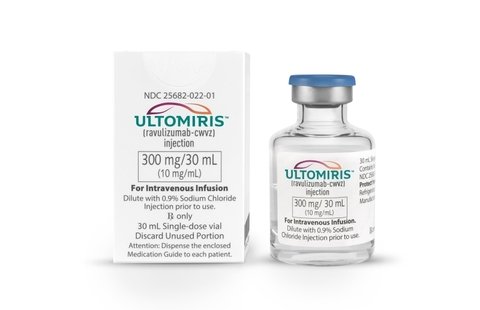


The US Food and Drug Administration has granted accelerated approval to Ultomiris to reduce proteinuria in adults with primary immunoglobulin A nephropathy who are at risk of disease progression. AstraZeneca announced the decision on 21 October 2026. Ultomiris, known by the generic name ravulizumab, is a long acting C5 complement inhibitor, and the company said it is the first and only C5 inhibitor approved for this use. The approval followed a priority review granted in June 2026 and rests on a prespecified interim analysis of the global Phase 3 I CAN trial.
IgA nephropathy, often shortened to IgAN, is a kidney disease in which immunoglobulin A builds up in the kidneys and causes inflammation and damage over time. Proteinuria, or protein in the urine, signals ongoing kidney injury and a higher risk that the disease will progress. Richard Lafayette, a professor of medicine in nephrology at Stanford University Medical Center and external scientific committee co-chair of the I CAN trial, said persistent proteinuria remains a challenge despite available treatments and signals ongoing kidney injury.
How Ultomiris performed in the I CAN trial
I CAN is a global, randomised, double blind, placebo controlled Phase 3 trial designed to enrol about 510 adults with IgA nephropathy at risk of progression across 28 countries. Participants had been on stable standard of care therapy for at least three months and were randomised one to one to intravenous Ultomiris or placebo for 106 weeks. The drug is given as a weight based loading dose on day one, followed by maintenance dosing on day 15 and every eight weeks after that.
At week 34, Ultomiris reduced the 24 hour urine protein to creatinine ratio by 46.6 percent from baseline, compared with 5.6 percent for placebo. That gave a placebo adjusted treatment effect of 43.4 percent, with a 95 percent confidence interval of 33.5 percent to 51.8 percent and a P value below 0.0001. Results were consistent across demographic, baseline clinical and disease severity subgroups, according to AstraZeneca. Reductions appeared as early as week 10, when the ratio had fallen 36.7 percent from baseline with Ultomiris compared with 8.5 percent with placebo, and the reductions were sustained through week 34.
The interim results were presented at ASN Kidney Week 2026 in Denver and published in the New England Journal of Medicine. The trial enrolled adults with biopsy confirmed disease and a 24 hour ratio of at least 0.75 or protein excretion of at least 1.0 gram per day despite standard therapy.
What Ultomiris approval does and does not show
The approval is based on reduction of proteinuria, a laboratory measure linked to kidney damage. Under the FDA accelerated approval program, a drug for a serious condition can be approved on a marker expected to predict benefit, with confirmatory evidence still to come. AstraZeneca said it has not been established whether Ultomiris slows kidney function decline in patients with IgA nephropathy. Continued approval may be contingent on verification of clinical benefit in the ongoing I CAN trial, which will assess change in estimated glomerular filtration rate at week 106 as its final primary end point, with data intended to support traditional FDA approval.
AstraZeneca reported a safety profile consistent with the known profile of the drug, with no new safety concerns identified. The most common adverse events with the drug were upper respiratory tract infection in 11.3 percent of patients, nasopharyngitis in 9.2 percent, and infusion related reactions in 8.4 percent, compared with upper respiratory tract infection in 10.2 percent, nasopharyngitis in 9.0 percent, and hypertension in 6.6 percent with placebo. As in its other indications, the drug carries a boxed warning for serious meningococcal infections and is available only through a Risk Evaluation and Mitigation Strategy program. Patients must be vaccinated before starting treatment, as the prescribing information requires.
Estimated glomerular filtration rate outcomes were not reported in the interim analysis and will be available at the end of the 106 week treatment period. A trial of Ultomiris in children and adolescents is also ongoing, and regulatory submissions are under review in Japan and other countries, according to AstraZeneca.
Where Ultomiris fits among kidney treatments
IgA nephropathy is the fifth indication for the drug. The drug is also approved for paroxysmal nocturnal hemoglobinuria, atypical hemolytic uremic syndrome, generalised myasthenia gravis, and neuromyelitis optica spectrum disorder. Lafayette said physicians now have a C5 inhibitor that targets a central driver of kidney inflammation to reduce proteinuria.
For patients and clinicians, the approval adds a new option aimed at lowering urine protein, while long term kidney function remains unproven until the trial finishes. The FDA can move to withdraw an accelerated approval if confirmatory results fall short.