
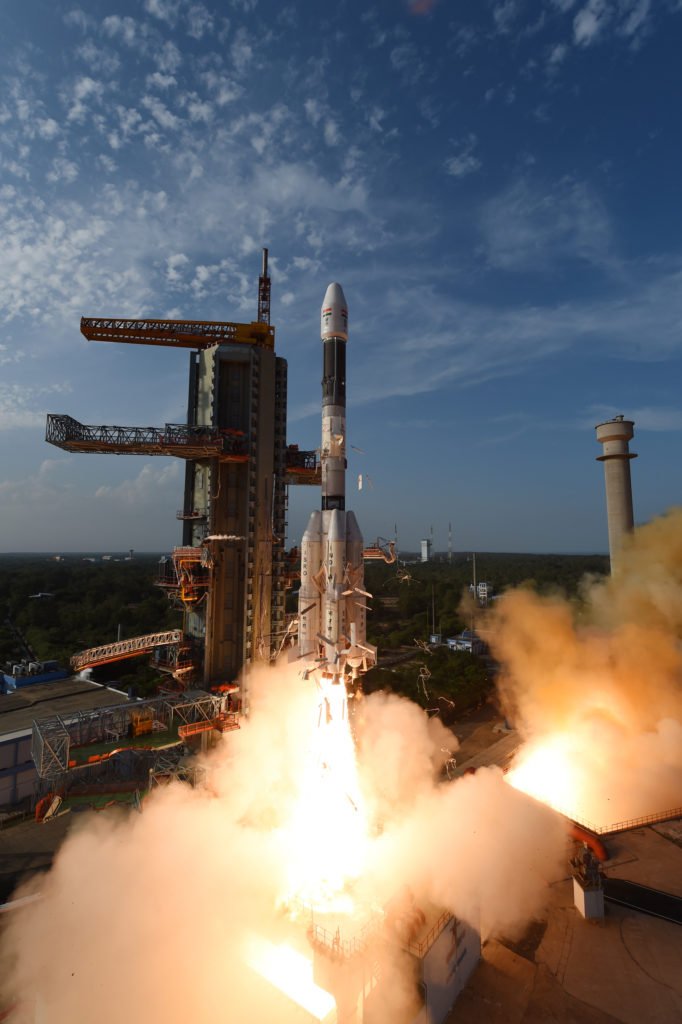


NVS-03 lifted off from Sriharikota at 11:51 pm IST on 30 October 2026 aboard the GSLV-F18 rocket, and the Indian Space Research Organisation confirmed the mission a success in the early hours of 31 October. “Mission Success! GSLV-F18 has successfully placed NVS-03 in the intended orbit,” ISRO said on X at 12:23 am IST on 31 October. It is a navigation satellite for NavIC, the Navigation with Indian Constellation, which is India’s own regional satellite navigation system.
The launch took place from the Second Launch Pad at the Satish Dhawan Space Centre, known as SDSC SHAR, in Sriharikota, Andhra Pradesh. ISRO streamed the launch live, and its webcast was due to start at 11:20 pm. GSLV-F18 is the 20th flight of the Geosynchronous Satellite Launch Vehicle, a roughly 50 metre, three stage rocket. The satellite weighs about 2,250 kg. The rocket did not place it straight into its working orbit. It placed the satellite into a geosynchronous transfer orbit, an elongated loop that the mission brochure puts at 170 km at its lowest point and 37,023 km at its highest, tilted 20.75 degrees to the equator.
What NVS-03 adds to the NavIC system
NVS-03 is the third satellite in the second generation NVS series of NavIC satellites. ISRO says the series exists to keep NavIC service going as older satellites from the first generation Indian Regional Navigation Satellite System age. It carries an atomic clock developed in India alongside clocks procured from abroad. It also adds the L1 signal to the L5 and S band signals that NavIC already uses. The L1 signal sits on 1575.42 MHz, the same frequency used by the main civilian signal of the United States GPS system, which can help compatible receivers use both systems.
NavIC supplies positioning, navigation and timing across India and about 1,500 km beyond its borders. It is used for timing, marine navigation, disaster alerts and an encrypted service for authorised users. Before this launch, only three NavIC satellites were providing position, navigation and timing, according to a written answer given in the Lok Sabha on 29 July 2026. Those three were IRNSS-1B, IRNSS-1I and NVS-01. A minimum of four operational satellites is required in orbit to provide a basic positioning service. ISRO Chairman V. Narayanan said the success returned the constellation to the four satellite level needed for basic standalone positioning.
How NVS-03 reaches its final orbit slot
Reaching the transfer orbit is only the first step for the satellite. It must now use its own propulsion system to raise its orbit from the elongated transfer loop to its final geosynchronous slot. Its planned final slot is 32.5 degrees East. That climb takes time, and ISRO will check the satellite systems as the orbit is raised and the payload is tested. Only after those steps will the satellite join routine navigation service with the other satellites in the constellation.
The mission follows NVS-02, which was launched on 29 January 2025 aboard GSLV-F15 and whose mission failed. That history explains part of the attention on NVS-03. NavIC had been left short of the four satellites needed for basic positioning, and a successful replacement mattered for continuity of service. The launch date for NVS-03 had also moved before. A report in the Indian Express on 22 October said the launch had been pencilled in for 15 to 20 October before it moved to 30 October. In the end, the rocket lifted off at the target time of 11:51 pm.
Why NVS-03 matters for users in India
For most users, NavIC works in the background. A phone, a vehicle system or a timing device that can use NavIC signals can fix its position without relying only on foreign systems. That matters for services that need a position in India even when other signals are weak or unavailable, and for applications that need precise timing, such as telecom networks and power systems. A full constellation also gives receiver makers a reason to include NavIC support, because the service is present and stable.
ISRO has not yet published a stage by stage account of the flight or the exact orbit achieved, according to reports published after the launch. Its post gave no figures for the orbit achieved beyond the statement that NVS-03 was placed in the intended orbit. The next public updates are likely to cover orbit raising, payload checks and the point at which NVS-03 enters service. For now, the confirmed facts are the lift off time, the launch site, the rocket, the satellite mass and the intended transfer orbit set out in the mission brochure, together with the planned final slot at 32.5 degrees East.