
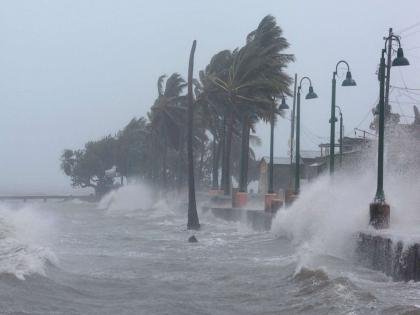


Cyclone Arnab weakened after making landfall along the Andhra Pradesh to Yanam coast on 28 October, but heavy rain, flooding and landslide risks continued across southern Odisha. At least seven deaths were reported in Andhra Pradesh in rain and cyclone related incidents, while more than one lakh people were evacuated across Andhra Pradesh and Odisha. Authorities in Odisha kept relief teams on standby as the system moved inland and lost strength.
Cyclone Arnab crossed the coast between about 2 am and 8 am on 28 October. During landfall, sustained wind speeds reached 125 to 135 kilometres per hour, with gusts of up to 150 kilometres per hour. The India Meteorological Department said Cyclone Arnab weakened from a severe cyclonic storm into a cyclonic storm, then into a deep depression on 29 October. The deep depression was very likely to weaken further into a depression by Thursday morning and then into a well-marked low-pressure area by the evening.
In Odisha, Chief Minister Mohan Charan Majhi said at least 17 districts had been affected by heavy rainfall linked to Cyclone Arnab. He said advance preparations and the evacuation of vulnerable residents had helped the state work towards its zero-casualty objective. The Odisha Disaster Rapid Action Force, the National Disaster Response Force and Fire Services were placed on high alert, and Odisha kept 302 rescue teams ready for emergency operations.
How Cyclone Arnab weakened after landfall
The weakening followed the usual pattern for a storm that moves over land, where Cyclone Arnab lost the warm sea water that feeds it. As Cyclone Arnab moved inland, wind speeds fell and the system broke down in stages, from a severe cyclonic storm to a deep depression. The India Meteorological Department tracked each stage in its bulletins and warned that rainfall would remain the main danger even after the winds eased, since a weakening storm can still drop large amounts of rain over a wide area.
That warning shaped the response in both states. In Andhra Pradesh, the deaths reported after landfall were linked to rain and cyclone related incidents, and the state government had initially confirmed five fatalities before later reports put the figure at seven. Train services were disrupted as a precaution, with at least 22 express and passenger services cancelled or suspended between 27 October and 5 November. Bus services between Bhubaneswar and southern Odisha also faced precautionary restrictions while the system passed.
Cyclone Arnab rain and alerts in Odisha
The India Meteorological Department issued a red alert for six districts in southern Odisha: Ganjam, Gajapati, Rayagada, Koraput, Malkangiri and Nabarangpur. The warning covered extremely heavy rainfall and strong winds, with risks of waterlogging, uprooted trees, damaged houses and disrupted electricity supply. Several other districts were placed under orange and yellow alerts, and warnings for extremely heavy rainfall also named Nabarangpur, Rayagada, Koraput, Malkangiri, Gajapati and Ganjam in successive bulletins.
Rayagada district showed how the rain eased without the alert ending. District Collector Ashutosh Kulkarni said Rayagada recorded 40 mm of rainfall in the 24 hours ending at 8:30 am, followed by about 26 mm through the evening on Wednesday. Kulkarni told reporters that the rain had been quite less than expected, and that no major threat existed at that point. He added that the district remained on high alert, since some further rainfall could still be recorded in Rayagada, and local departments stayed mobilised and on standby.
Relief teams and the rain ahead
Schools, colleges and Anganwadi centres in Ganjam, Gajapati, Rayagada, Koraput and Malkangiri were scheduled to remain closed on 28 and 29 October. The closures were part of a wider precautionary step to keep children and staff away from flooded roads and weakened structures while Cyclone Arnab passed. Relief and rescue operations continued in the affected districts as administrations monitored river levels, road conditions and power restoration, with teams ready to move if flooding or landslides were reported.
The India Meteorological Department forecast further rain beyond Odisha as the remnant of Cyclone Arnab moved on. Heavy to very heavy rainfall was likely over Chhattisgarh, Jharkhand, Bihar, east Uttar Pradesh and east Madhya Pradesh on 29 October, with heavy rain at isolated places in coastal Andhra Pradesh, Odisha, Vidarbha and West Bengal. Heavy rain could continue over Bihar, east Uttar Pradesh, West Bengal and Sikkim during 30 to 31 October, leaving district administrations across the region watching river and rainfall gauges into the weekend.