
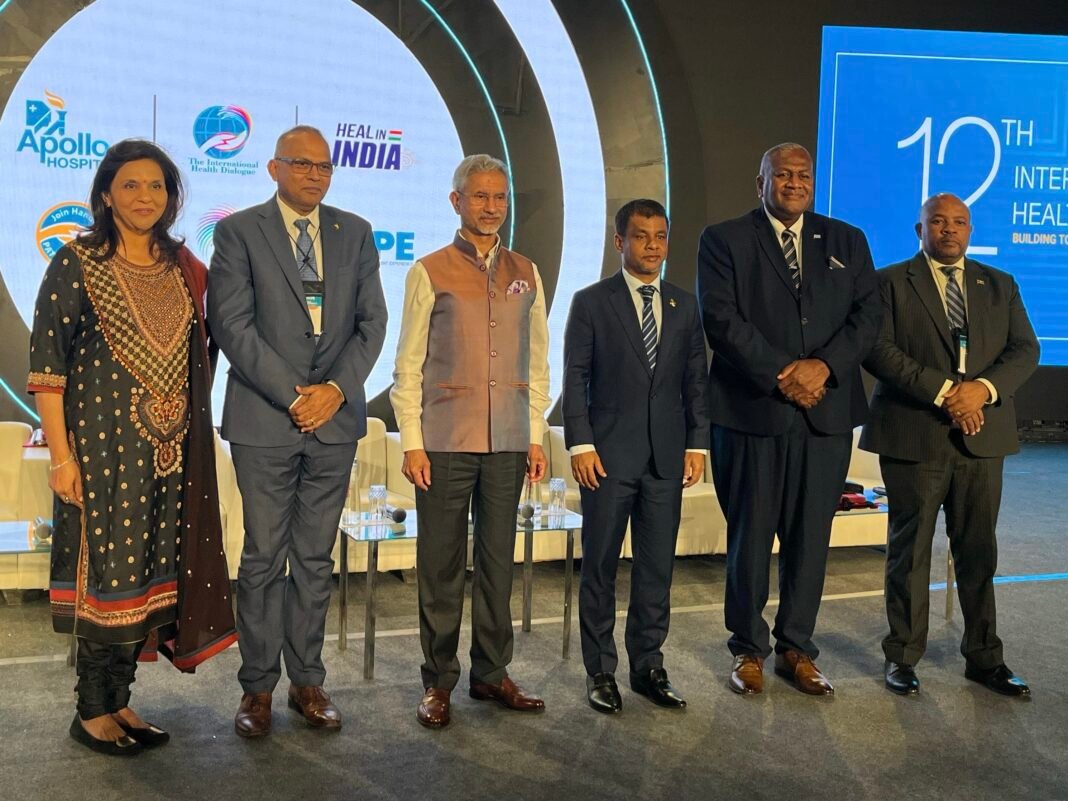


Union minister of state for health Anupriya Patel has set out India’s healthcare roadmap for 2047, promising wider insurance cover, lower out of pocket costs for patients and a bigger role for technology in how care is delivered. Speaking at the Health Summit, Patel said the government’s aim is a system in which no family is pushed into poverty by medical bills, and in which quality care is available close to home, not only in large cities. The roadmap, she said, builds on the expansion of Ayushman Bharat and on recent efforts to strengthen primary care, public hospitals and the domestic pharmaceutical and medical device industries.
The healthcare roadmap arrives at a moment when India is debating how to pay for care for a population that is ageing, urbanising and facing a rising burden of non communicable diseases. Public spending on health remains low by international standards, and many households still pay a large share of medical costs directly. Patel’s speech sought to reassure both patients and providers that the direction of travel is towards more cover, more public investment and more predictable costs, even if the details of funding and delivery will take years to work through.
What the healthcare roadmap promises on cover
At the heart of the healthcare roadmap is the promise of wider cover. Patel pointed to the expansion of Ayushman Bharat, the government’s flagship health insurance scheme, which now covers a larger share of the population, including senior citizens above a certain age. The scheme provides cashless treatment at empanelled hospitals for eligible families, and the government has argued that it has already prevented large numbers of families from falling into debt because of hospital bills. The roadmap for 2047 envisages that cover becoming broader still, with fewer gaps between who is eligible and who actually receives care.
Cover, however, is only part of the story. Patel also spoke about strengthening the public health system itself, from health and wellness centres in villages to district hospitals and medical colleges. The idea, she said, is that patients should not have to travel long distances or wait months for basic treatment. That requires investment in buildings, equipment and, crucially, staff. India faces shortages of doctors, nurses and specialists in many areas, and the roadmap will need to address training and retention if it is to deliver on its promises.
The minister also linked the roadmap to the government’s wider push for self reliance in health. India is already a major producer of generic medicines and vaccines, and Patel said the aim is to strengthen domestic manufacturing of medical devices and active pharmaceutical ingredients as well. That, she argued, would reduce dependence on imports, bring down costs and make the supply chain more resilient in a crisis.
How the healthcare roadmap treats cost and technology
On costs, Patel said the government is focused on reducing what patients pay out of pocket. That includes expanding insurance, but also controlling prices for essential medicines and devices, and promoting generic alternatives where they are safe and effective. The government has used price controls and bulk procurement to bring down the cost of certain drugs and stents in the past, and the roadmap suggests that approach will continue. For patients, the test will be whether those savings reach them at the pharmacy counter and in the hospital bill, not just in official announcements.
Technology is the second pillar of the cost argument. Patel spoke about digital health records, telemedicine and the use of artificial intelligence to support diagnosis and treatment planning. The Ayushman Bharat Digital Mission aims to give every citizen a digital health identity and to link records across providers, so that a patient does not have to repeat tests or carry paper files between hospitals. Telemedicine, meanwhile, is presented as a way to bring specialist advice to remote areas without building a new hospital in every village. Both ideas have potential, but both also raise questions about data privacy, connectivity and whether digital tools will reach the poorest patients.
The roadmap also touches on prevention. Patel noted that a large share of India’s disease burden now comes from conditions linked to lifestyle, diet and environment, such as diabetes, heart disease and respiratory illness. A system that only treats illness after it occurs, she said, will always be expensive. The roadmap therefore includes a greater emphasis on screening, early detection and public health campaigns, although the funding for those programmes will need to keep pace with the ambition.
What the healthcare roadmap still has to deliver
For all its ambition, the healthcare roadmap for 2047 leaves many questions unanswered. The speech did not set out a detailed timetable for when wider cover will be achieved, nor how much additional public spending will be required. Health is largely a state subject in India, and the central government will need cooperation from state governments, which run most public hospitals, to deliver the plan. Differences in capacity and funding between states mean that progress is likely to be uneven, at least in the short term.
Providers will also be watching how the roadmap affects them. Private hospitals, which deliver a large share of care in India, have long complained about low reimbursement rates under government insurance schemes. If cover expands without addressing those rates, some hospitals may be reluctant to participate. Public hospitals, meanwhile, need sustained investment in staff and equipment, not just new buildings. The roadmap’s success will depend on whether it can balance the interests of patients, providers and the public purse.
For patients, the roadmap is a statement of intent rather than an immediate change. The promises on cover, costs and technology will be judged over years, not weeks. What Patel’s speech does, however, is set a clear direction: a health system that aims to protect families from medical debt, to use technology to widen access, and to build domestic capacity so that India is less dependent on others for essential care. Whether that vision becomes reality by 2047 will depend on funding, implementation and political will in the years ahead.