
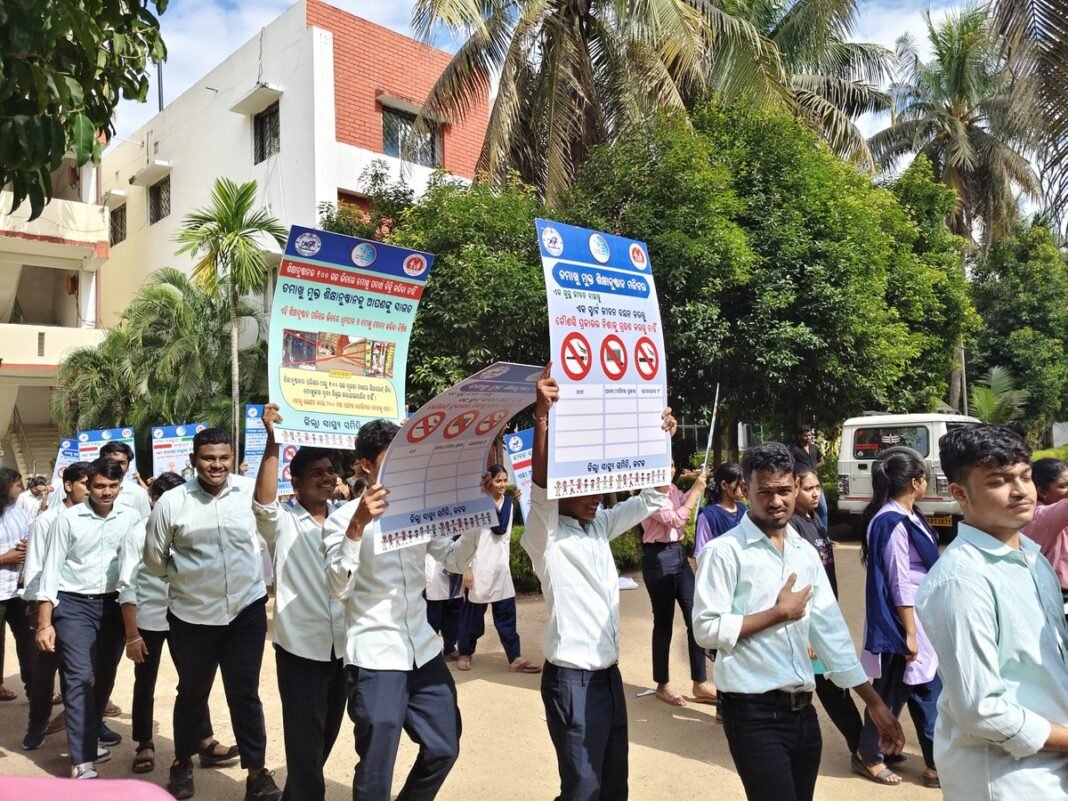


Union Minister of State for Health and Family Welfare Prataprao Jadhav has launched the tobacco-free youth campaign for 2026, the fourth edition of a nationwide drive to stop young people starting tobacco and to help users quit. Jadhav launched Tobacco-Free Youth Campaign 4.0 on 28 October 2026 at the Atal Bihari Vajpayee Institute of Medical Sciences and Dr Ram Manohar Lohia Hospital in New Delhi. The 60-day campaign runs across the country and calls on young people to lead a movement against tobacco use and nicotine addiction.
The campaign has four stated aims: preventing tobacco initiation among young people, encouraging cessation, strengthening enforcement of tobacco control laws, and promoting tobacco-free environments. Jadhav called for a nationwide people’s movement to protect young people from tobacco and nicotine addiction, and the campaign carries the message “Say No to Tobacco”. Health Secretary Punya Salila Srivastava spoke at the launch and said sustained commitment, coordinated institutional action and active community participation are essential to tobacco control.
Why the tobacco-free youth drive now targets colleges
The fourth edition marks a change in focus. Earlier editions concentrated mainly on primary and secondary schools, while Tobacco-Free Youth Campaign 4.0 moves directly into higher educational institutions, with universities and colleges as a major focus. Students in colleges are at an age when many first try tobacco, and they also influence younger students and peers. By recruiting university and college students as ambassadors, the campaign aims to reach young people through people their own age, rather than relying only on posters, lectures and official warnings.
The campaign uses a whole-of-government approach, coordinating action across health, education, youth development, local governance, law enforcement and communication. That structure reflects how tobacco reaches young people through many routes: shops near campuses, advertising and promotion, social pressure among friends, and easy availability in markets and hostels. A health ministry alone can run awareness sessions, but enforcement near schools and colleges, action by local bodies and support from education institutions all need other departments to act at the same time.
What the tobacco-free youth campaign has achieved so far
The first Tobacco-Free Youth Campaign was launched on 31 May 2023, and the campaign has run as an annual 60-day drive since then. Tobacco-Free Youth Campaign 3.0 was launched in October 2025. The health ministry said the previous three editions saw more than 5.8 lakh educational institutions and more than 73,000 villages declared tobacco-free. Those declarations are made by institutions and villages that commit to tobacco-free premises and to action against tobacco use, and they give the campaign a visible record in schools, colleges and local communities.
Local launches began alongside the national launch. In Kupwara, Deputy Commissioner Abhishek Sharma flagged off a student rally under Tobacco-Free Youth Campaign 4.0 on 28 October 2026, with students carrying the message through the town bus stand and markets to a school, spreading awareness about tobacco prevention. Rallies of that kind are a small part of a 60-day programme, but they show how the campaign is meant to work on the ground: students, teachers, local officials and health workers taking part together, rather than a single announcement in New Delhi.
How the tobacco-free youth campaign will be judged
The campaign will run for 60 days, ending in late December 2026, and its organisers will count institutions and villages declared tobacco-free, enforcement action taken and awareness activities held. Those counts show activity, but the harder test is whether fewer young people start using tobacco and whether more users seek help to quit. Tobacco harms health over years, so a single campaign cannot show a fall in disease rates, and the ministry will need follow-up surveys and treatment data to judge whether the drive changed behaviour.
For students, the message is direct: refuse tobacco, support friends who want to quit, and keep campuses free of tobacco. For colleges, the campaign asks for more than a poster on a noticeboard, since it asks institutions to enforce tobacco-free premises and to give students a role in the drive. Jadhav framed the campaign as part of the vision of a healthy and addiction-free developed India by 2047, and the 60-day drive that began on 28 October is the latest step in a programme that started in schools in 2023 and has now reached universities and colleges.