
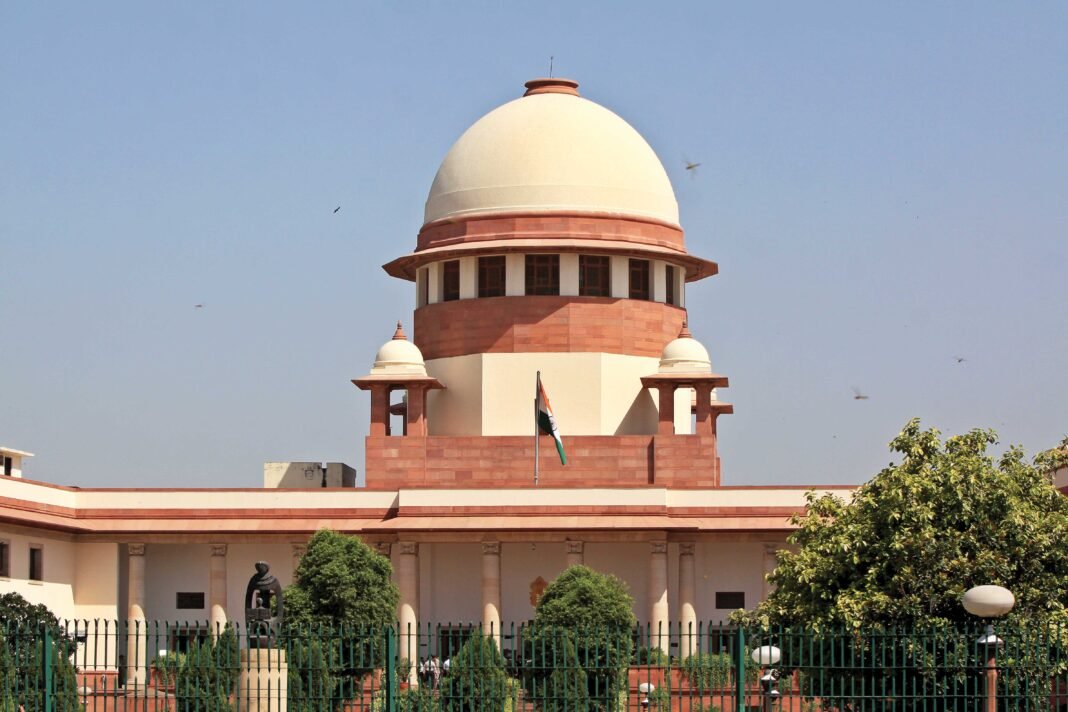


The Supreme Court on Thursday said the administration of the National Company Law Tribunal (NCLT) had been “completely hijacked” by the Ministry of Corporate Affairs, in remarks that put the tribunal’s independence at the centre of a hearing on its staffing and infrastructure. A bench of Chief Justice of India Surya Kant and Justices Joymalya Bagchi and V Mohana made the observation while hearing a suo motu case on inadequate infrastructure, staff vacancies and administrative difficulties at NCLT benches.
“We are compelled to observe this has been completely hijacked by Ministry of Corporate Affairs. That is the problem. And that is impinging with the autonomy of the institution,” the court said. “The Ministry wants to have complete grip over the institution. And that’s what’s most unfortunate,” it added.
The tribunal decides company law disputes and insolvency cases. The court took up the matter on its own after noting delays in the approval of resolution plans, and it had earlier asked the central government to report on basic amenities at the tribunal’s principal and regional benches. Thursday’s hearing turned to who controls the tribunal’s day to day administration, and the bench said that control now rests too heavily with the ministry.
NCLT staffing gaps at the centre of the case
The argument that drew the sharpest response concerned recruitment. A counsel appearing in a connected petition told the court that the ministry had outsourced NCLT staff recruitment to a private company, and that a contract awarded on October 6 went to a foreign company operating in India for deploying administrative personnel, including deputy registrars, assistant registrars and stenographers.
Senior Advocate Meenakshi Arora, appearing in the matter, submitted that the entire recruitment process had been outsourced, including the appointment of staff attached to judicial members. She told the court that employees who had worked at the tribunal for nearly eight years could be removed as early as November 1 or 2, and she expressed apprehension about their position under the new arrangement.
The bench responded. “We will not allow you people to continue, we will not allow these private contractors to continue. Let the reference come from the NCLT President. The entire power of appointment must be with the President only,” the court said. It added that recruitment itself could be outsourced, but the employer-employee relationship had to remain with the tribunal, and that the president should have complete autonomy in appointments.
Figures placed before the court showed the scale of the staffing problem. Of 320 regular administrative posts, only 67 had been filled, leaving 253 vacancies. The bench said the presidents of the NCLT and the National Company Law Appellate Tribunal (NCLAT) would be best placed to identify what the institutions need, and it asked them to submit comprehensive proposals covering infrastructure, staffing and other administrative requirements.
NCLT and NCLAT heads asked for proposals
The proposals may include requirements for land and buildings, supporting staff, and the appointment of officers of deputy or joint registrar rank at every bench for maintaining judicial records. According to one report of the hearing, the court gave the tribunal heads four weeks to submit the proposals. Attorney General R. Venkataramani, appearing for the Union of India, proposed that the government’s status report be shared with the tribunal president and that a joint meeting be held with the government and the Bar to collect views before proceeding further.
The court also suggested interim steps. It proposed bringing experienced government personnel on deputation while the tribunals undertake their own recruitment in phases, with assistance from the Union Public Service Commission or the Staff Selection Commission. “Complete autonomy must be with both Presidents of NCLT and NCLAT,” the Chief Justice said during the hearing.
NCLT delays and cases waiting their turn
Beyond staffing, the bench raised concern over delays in matters under the Companies Act, observing that insolvency proceedings were receiving priority over other categories of cases. Matters concerning personal guarantors, it was submitted, remained at the bottom of the cause list and were not being taken up. The court had taken suo motu cognisance of the issue on April 29, 2026, after noting delays in the approval of resolution plans pending before various NCLT benches, and it observed then that the Insolvency and Bankruptcy Code aims at time-bound resolution.
On September 21, the court had directed the Centre to file a status report on the basic amenities available at the principal and regional benches and to identify the amenities urgently required, in consultation with the NCLT president. During Thursday’s hearing, a submission was made that the deficiencies were serious and had not been adequately addressed despite the court’s earlier directions. The court issued notice in the connected matter concerning the outsourcing of recruitment, and it said the question of the tribunal’s autonomy required examination.