
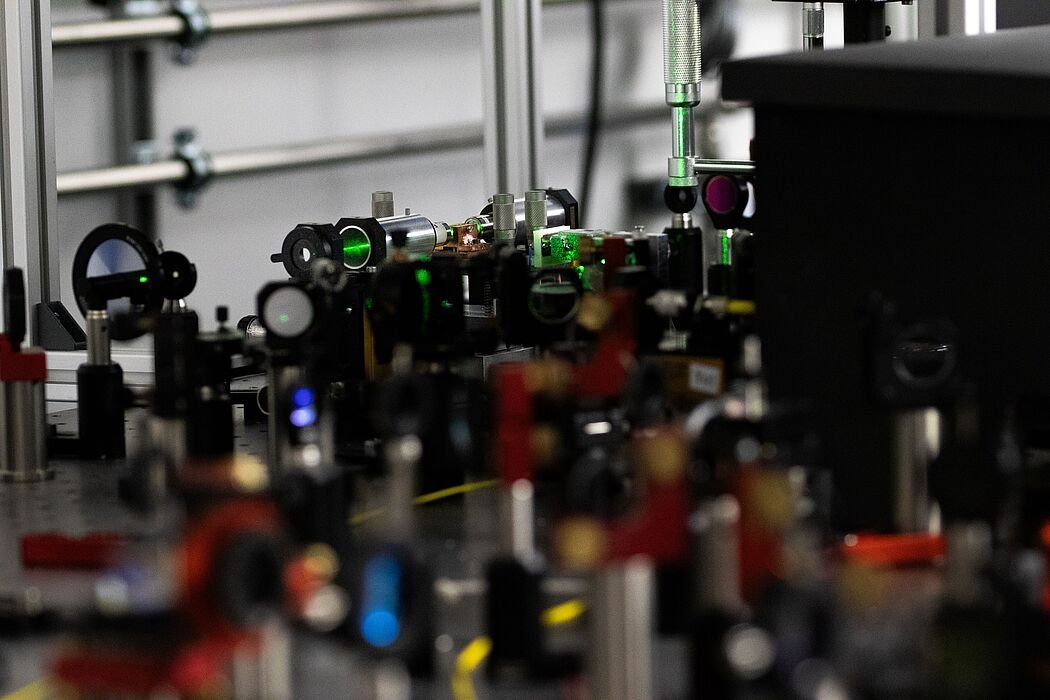


Quanfluence quantum computer maker Quanfluence has raised $10 million in a funding round led by Chiratae Ventures, with participation from Rainmatter by Zerodha and existing investor Pi Ventures. The Bengaluru based company builds photonic quantum computing technology for optimisation problems, designed to work alongside AI in decision making.
The fresh funds for the Quanfluence quantum computer will be used to build and launch a four qubit machine in the near term. The company is targeting a larger prototype with around 100 qubits by 2029. That step for the Quanfluence quantum computer, from four qubits to around 100, is the core technical task the new money must fund, and it will decide whether the firm’s approach can move from a lab prototype to a machine that outside users can test.
Quanfluence was founded in 2021. It had earlier raised $2 million in a seed round led by Pi Ventures, with participation from Golden Sparrow, Reena Dayal and others in December 2024, according to a report by Entrackr. The new $10 million round is therefore five times the size of that seed round, and it brings new backers in Chiratae Ventures and Rainmatter alongside Pi Ventures.
Quanfluence quantum computer and photonic technology
The Quanfluence quantum computer uses photons, or particles of light, rather than the superconducting circuits used by some better known quantum firms. Its technology combines optics and hardware to operate at room temperature, according to a report by Entrepreneur. Room temperature operation matters because it can cut the cost and bulk of cooling systems that other quantum machines need.
Photonic systems face their own problems. Light based qubits must be produced, guided and measured with great care, and losses in optical parts can spoil a calculation. A four qubit Quanfluence quantum computer is a test of whether the firm’s design can hold together at all. A machine with around 100 qubits would test whether that design can scale without errors rising faster than the gains from more qubits.
Optimisation problems are the stated target for the Quanfluence quantum computer. Those are problems where a system must pick the best option from a large set of choices, such as routing, scheduling or portfolio design. Quanfluence describes its technology as a complement to AI in decision making, rather than a replacement for it. In practice, that means a quantum machine could handle a hard optimisation step while conventional software handles the rest of the task.
What the funding will build first for the Quanfluence quantum computer
Sujoy Chakravarty, co-founder and chief executive of Quanfluence, told Moneycontrol: “We are building a quantum computer in a new technology which is photonic. This money is basically going towards building that prototype machine.” The statement keeps the focus on hardware. The money is for a machine, not for a sales push or a new product line.
That focus is common for deep tech firms at this stage. A Quanfluence quantum computer prototype that works can attract customers, partners and further funding. A prototype that does not work leaves the firm with little to sell. The four qubit target is therefore a milestone that investors and potential users can check, before judging whether the 100 qubit goal for 2029 is within reach.
The investor mix also says something about the round. Chiratae Ventures led the round, Rainmatter by Zerodha joined as a new backer, and Pi Ventures returned after leading the seed round. A returning seed investor can signal that early backers still back the plan. New backers can signal that the story has spread beyond the firm’s first circle.
India and the wider quantum race
Quantum computing is a crowded field, with large firms and well funded start-ups working on several different hardware paths. Photonic machines are one path among them, and they compete with superconducting, trapped ion and other designs. Each path has strengths and faults, and no single path has yet produced a machine that solves practical problems at scale.
For India, a Bengaluru firm building a Quanfluence quantum computer with photonic hardware adds a domestic name to that race. The country’s quantum work has so far been led by research labs and larger programmes, and a start-up raising $10 million for hardware shows private capital entering the same field. Whether that capital grows will depend on what the four qubit prototype does when it is built.
The next check is therefore simple. Quanfluence must build and launch the four qubit machine, show what it can compute, and lay out a credible path to around 100 qubits by 2029. The $10 million round gives it funds for that first step. The prototype will show whether the second step is worth funding.