
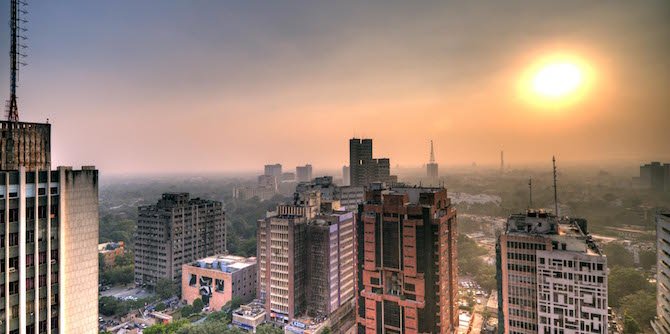


Air pollution was linked to more than two million deaths in India in 2023, according to a joint FICCI-EY knowledge paper that calls for a health-led plan to clean the air. The paper, titled “Clean air, healthy India”, was released in New Delhi on 5 November. It says India should stop treating bad air as a seasonal problem and set clear targets to cut PM2.5, the fine particles that do the most harm, inside the National Clean Air Programme.
The paper argues that air pollution should be judged by the harm it does to health, not by the number of measures announced. The National Clean Air Programme now judges progress mainly through PM10, a coarser measure, and the paper says that misses the particles that reach deepest into the lungs. Monitoring is thin in smaller towns and rural areas, and enforcement differs from state to state. The paper sets out ten practical steps to cut pollution from traffic, industry, building sites, waste burning and stubble burning, and it measures success by health outcomes and lower exposure rather than by counting interventions.
Air pollution deaths topped two million in 2023
Air pollution is now one of the largest causes of early death in India. The paper puts the 2023 toll at more than two million deaths, a figure that covers heart disease, stroke, lung disease and other conditions made worse by dirty air. Hospitals see the effect each winter, when admissions for breathing trouble rise as the air thickens. The paper says the response should be planned around those health effects, with hospitals and schools preparing before the winter peak rather than reacting once it arrives.
Delhi shows why air pollution crosses borders. The city’s own sources account for only 36 per cent of its PM2.5 in winter and 26 per cent in summer, so most of the fine particles drift in from outside the capital. The paper calls for states and cities that share the same air to plan together, with joint monitoring, shared targets and funding tied to results. Air does not stop at administrative borders, and the paper says clean-air plans should not either.
Air pollution: ten solutions in the report
The ten steps to cut air pollution cover the main sources. Large building sites should trap their own dust, with closed-loop management of construction and demolition waste. Cities should run monitoring networks that find hotspots from traffic, industry, building work and waste burning, and test which fixes work. Industrial pollution markets should run on live data from factory chimneys, brick kilns should switch to zig-zag firing, and diesel generators should give way to battery-hybrid systems. Crop residue should be turned into fuel and saleable products instead of being burned in the fields. That change would also cut the smoke that drifts over north India each winter.
Dr Arun Agarwal, Chair of the FICCI Working Group on Air Pollution and Medical Advisor at Apollo Hospitals Group, said: “We need to move beyond seasonal responses to air pollution and make exposure reduction a year-round public health priority. This requires linking air-quality monitoring with health surveillance, strengthening preventive action and tailoring interventions to local pollution sources.” Amit Goyal, Partner, Strategy and Transactions, at EY India, said: “India’s clean-air agenda should link pollution control to public-health outcomes. NCAP should include explicit PM2.5 reduction targets, supported by reliable monitoring, coordinated regional action and investment in affordable cleaner alternatives.”
Why Delhi cannot fix this alone
Dr Ashutosh Raghuvanshi, Chair of the FICCI Health Services Committee and Managing Director and Chief Executive of Fortis Healthcare, said the paper calls for closer work between government, industry and healthcare providers to turn clean-air promises into better health, and to measure the result in fewer deaths. The paper also calls for recovered plastic, industrial residue and building waste to be used in houses and roads. The next step is for the National Clean Air Programme to adopt the PM2.5 targets the paper proposes, and for states to fund the monitoring that would show whether air pollution is actually falling.