


The technology bringing India and the United States together in space runs through Pasadena, California — home to NASA’s Jet Propulsion Laboratory, where engineers helped build and test the radar payload now flying aboard the $1.5 billion NASA-ISRO Synthetic Aperture Radar (NISAR) satellite. A new inside look at NASA-JPL highlights how the laboratory has become a focal point of the growing India-US space partnership.
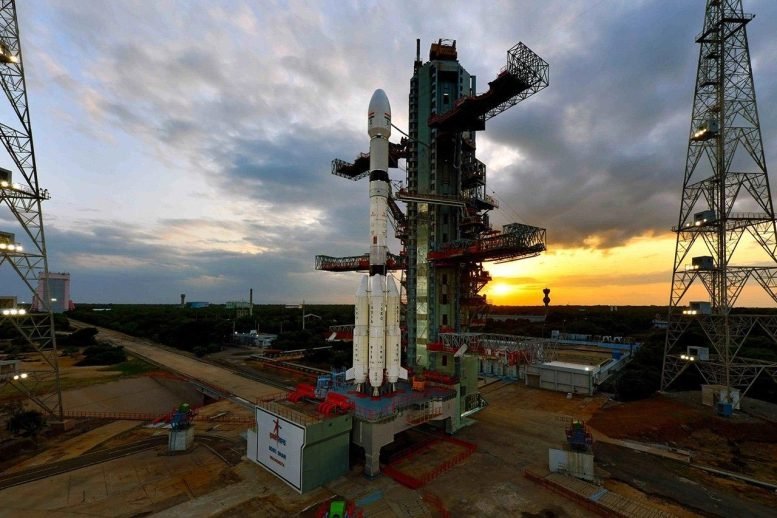
NISAR, launched on July 30, 2025, aboard India’s GSLV F-16 from the Satish Dhawan Space Centre, is the first mission jointly developed by NASA and the Indian Space Research Organisation. It is the world’s first radar imaging satellite to carry two radar frequencies — the L-band provided by NASA and the S-band developed by ISRO — to track minute changes in the Earth’s surface, including movements as small as a centimetre.
Before launch, the satellite’s science instrument payload passed through NASA-JPL’s clean rooms in Pasadena, where American and Indian space agency officials gathered for a send-off ceremony ahead of its transport to Bengaluru for further testing. According to reports from the event, officials toured the High Bay 2 clean room as engineers put the payload through final electrical testing — a moment that captured how deeply the two programmes had intertwined.
Why NASA-JPL matters to the India-US space alliance
JPL, NASA’s lead centre for robotic exploration, manages some of the agency’s most complex missions — and its collaboration with ISRO on NISAR has become the flagship of a deepening bilateral relationship. Roughly the size and weight of a fully loaded pickup truck, the satellite was placed into a near-polar Sun-synchronous orbit about 747 km above Earth, where it maps the planet every 12 days using a 240-km-wide radar swath.
The data serves scientists and disaster-response agencies worldwide, monitoring everything from glacier retreat in the Himalayas to potential landslide zones, as well as changes linked to earthquakes, volcanoes and agricultural shifts. For scientists in both countries, the NASA-JPL link has made the mission a shared scientific asset.
The partnership extends beyond a single satellite. ISRO’s former chairman S. Somanath has described how experts from NASA-JPL visited during the development of the Chandrayaan-3 spacecraft, reviewing the design before the historic soft landing — an exchange that underscored India’s growing technical standing. “Times have changed and India is capable of building the best of devices and rockets,” he said at the time.
Inside NASA-JPL’s clean rooms: where NISAR came together
At the Pasadena send-off, NASA’s NISAR project manager and ISRO’s project director marked the milestone in front of a scale model of the satellite — with fresh coconuts ceremonially broken, a nod to Indian tradition, and JPL’s director presenting the ISRO delegation with a jar of the laboratory’s famous lucky peanuts. JPL director Laurie Leshin said the mission would deliver measurements at unprecedented precision, adding that the collaboration exemplified what the two agencies could achieve together.
NASA’s deputy associate administrator Casey Swails later called NISAR a “pathfinder”, saying the Earth science mission showed the world what the two nations could do together. ISRO chairman V. Narayanan said the entire globe would benefit from the accomplishment, noting it had brought the two space agencies closer than ever before.
What the NASA-JPL partnership means for India’s space future
The joint mission has reinforced India’s profile in low-cost, high-impact spaceflight while giving NASA access to ISRO’s reliable launch and engineering capabilities. India has said it aims to build its own space station by 2035 and send astronauts to the Moon in partnership with other countries, and officials on both sides see the continuing NASA-JPL relationship as a foundation for deeper cooperation.
From clean-room testing in California to launch operations at Sriharikota, the NISAR programme demonstrates how shared technology can advance both nations’ ambitions. The satellite’s data products are expected to support research institutions and disaster-management agencies across India and the United States. As India eyes a larger share of the global space economy, the NASA-JPL partnership is likely to remain central to the story — a laboratory where Indian and American engineers quite literally build the future together.